Global Medical Equipment Exporter · UK · EU · Africa · GCC
Global Medical Equipment Exporter · UK · EU · Africa · GCC

1 / 3
CE Marked
Questions about this product?
— our team will reach out.
Therapy Equipments · Electrotherapy
Interferential Therapy Cum Stimulator
$266.50
Combined IFT and muscle stimulation: a single unit delivers both interferential therapy and muscle stimulation, supporting a broad range of pain management and rehabilitation protocols.:
Digital programme selection: multiple pre-set treatment programmes with digital display for each parameter allow precise, reproducible protocol management.:
2-pole, 4-pole vector, and 4-pole operation: selectable treatment modes support conventional two-electrode and four-electrode interferential configurations for versatile clinical use.:
Adjustable sweep pattern and beat frequency: selectable sweep patterns and frequency range options (0 to 150 Hz scan, 80 to 150 Hz, 0 to 10 Hz scan, 0 to 100 constant) provide flexible stimulation parameters.:
Top Highlights
- Device type
- Digital Interferential Therapy Unit with Muscle Stimulation
- Therapy modes
- IFT (interferential therapy) and muscle stimulation
- Electrode modes
- 2-pole, 4-pole vector, 4-pole
- Carrier frequency
- 2 kHz and 4 kHz selectable
- Beat frequency
- 0 to 150 Hz scan, 80 to 150 Hz, 0 to 10 Hz scan, 0 to 100 constant
- Sweep patterns
- Multiple selectable patterns
- Power supply
- Mains AC (110V / 220V, 50/60 Hz)
- Certifications
- CE marked
Guaranteed Safe And Secure Checkout








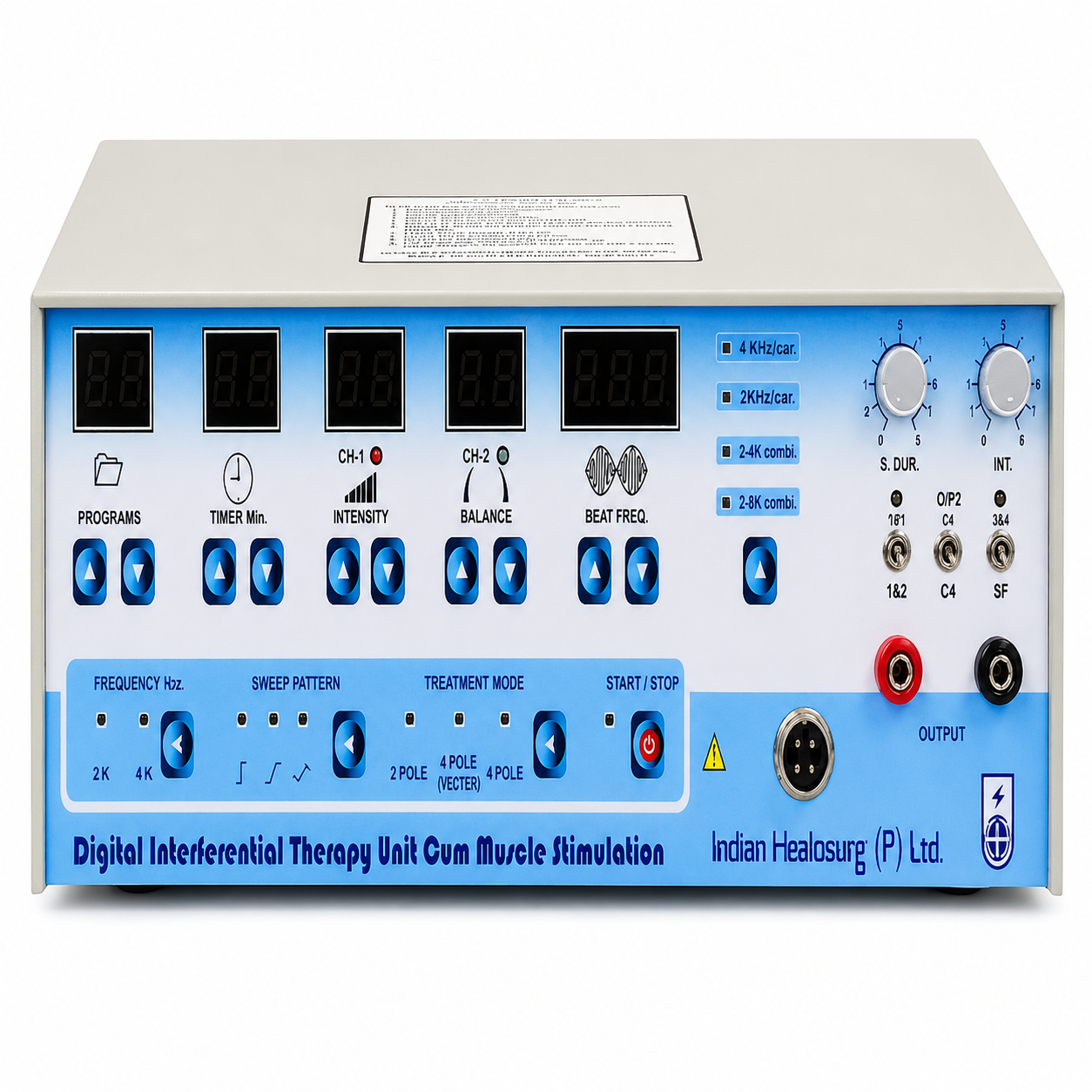
This digital interferential therapy unit combines IFT and muscle stimulation in a single desktop device, providing physiotherapy clinicians with a versatile platform for pain management, muscle re-education, and rehabilitation. Programme selection, digital displays per parameter, selectable carrier frequencies, and multiple beat frequency modes give clinicians precise control over every aspect of treatment.The unit supports 2-pole, 4-pole vector, and 4-pole treatment modes, making it suitable for both small targeted areas and larger anatomical regions. Adjustable sweep patterns and intensity balance controls, combined with a digital timer, enable reproducible sessions across a wide range of clinical indications.
IFT + MS
Combined therapy modes
2K / 4K Hz
Carrier frequency
3 modes
2-pole, vector, 4-pole
Digital
Timer and programme display
Key features
1
Combined IFT and muscle stimulation
A single device supports both interferential therapy for pain modulation and muscle stimulation for motor re-education and strengthening protocols.
2
Selectable carrier frequencies
2 kHz and 4 kHz carrier frequency options allow the clinician to select the appropriate medium-frequency current for the treatment area and depth required.
3
Four beat frequency modes
0 to 150 Hz scan, 80 to 150 Hz, 0 to 10 Hz scan, and 0 to 100 constant provide a comprehensive range of beat frequencies for acute, sub-acute, and chronic conditions.
4
Multiple sweep patterns
Selectable sweep patterns including continuous, triangular, and trapezoidal modes adapt stimulation to patient tolerance and clinical objectives.
5
2-pole, vector, and 4-pole modes
Three electrode configuration modes support conventional bipolar application, 4-pole vector scanning for automatic current rotation, and fixed 4-pole placement.
6
Intensity and balance controls
Independent channel intensity adjustment and inter-channel balance control enable precise, patient-specific stimulation delivery across both output channels.
7
Digital programme selection
Multiple pre-set programmes with individual digital displays for each parameter support standardised, reproducible treatment delivery.
8
Start / Stop control
Dedicated start and stop controls allow the clinician to initiate and pause treatment without adjusting intensity settings, supporting safe session management.
| Device type | Digital Interferential Therapy Unit with Muscle Stimulation |
| Therapy modes | Interferential therapy (IFT) and muscle stimulation |
| Carrier frequency | 2 kHz and 4 kHz (selectable) |
| Beat frequency modes | 0 to 150 Hz scan; 80 to 150 Hz; 0 to 10 Hz scan; 0 to 100 constant |
| Sweep patterns | Multiple selectable sweep modes |
| Treatment modes | 2-pole, 4-pole vector, 4-pole |
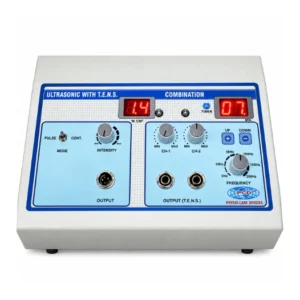
| Output | Single output socket with channel intensity and balance controls |
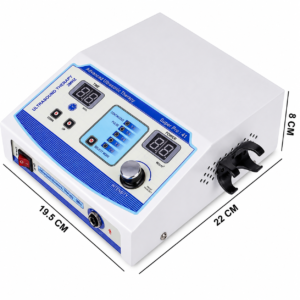
| Display | Digital display per parameter with programme selection indicator |
| Timer | Digital programmable timer (minutes) |
| Power supply | Mains AC, 110V / 220V, 50/60 Hz |
| Enclosure | Metal desktop housing with front control panel |
| Intended use environment | Professional physiotherapy and rehabilitation clinical settings |
| Control | Function |
|---|---|
| Programme selector | Selects from pre-set IFT or muscle stimulation treatment programmes |
| Timer (Min) | Sets treatment session duration in minutes; displays elapsed time on digital readout |
| Intensity (CH-1 / CH-2) | Adjusts output current intensity for each of the two treatment channels independently |
| Balance control | Adjusts the relative intensity balance between channels for targeted current distribution |
| Beat frequency selector | Selects the beat frequency mode (0-150 scan, 80-150, 0-10 scan, 0-100 constant) |
| Frequency (Hz) selector | Selects carrier frequency: 2 kHz or 4 kHz |
| Sweep pattern selector | Selects the modulation sweep pattern applied to the beat frequency output |
| Treatment mode switch | Switches between 2-pole, 4-pole vector, and 4-pole electrode configuration modes |
| Start / Stop button | Initiates or pauses the treatment session without altering intensity settings |
| Output socket | Connects electrode lead cables to the patient electrodes |
| Mains power switch | Powers the unit on or off |
| Condition / Area | Application / Protocol |
|---|---|
| Acute and chronic pain management | IFT applied to modulate pain through gate control and endorphin release mechanisms |
| Post-operative pain relief | Interferential current applied peri-incisionally under clinical supervision to support analgesic management |
| Musculoskeletal conditions | Shoulder, knee, hip, and spinal conditions responsive to medium-frequency electrotherapy |
| Muscle re-education | Muscle stimulation mode used to facilitate motor relearning following injury or neurological event |
| Oedema reduction | Low beat frequency IFT to stimulate lymphatic and venous return in acute oedema under clinical guidance |
| Sports injury rehabilitation | Pain relief and muscle activation support during sports physiotherapy programmes |
| Low back and neck pain | 4-pole vector mode applied to the lumbar or cervical region for deep tissue current penetration |
| Peripheral circulatory conditions | Vasomotor stimulation to improve local circulation as part of a supervised clinical protocol |
This interferential therapy and muscle stimulation unit is CE marked, confirming compliance with applicable European medical device directives for safety and performance. CE documentation is available on request for regulatory submissions, procurement, and import clearance purposes.
CE
Marked
1
Prepare the patient: clean and dry the skin at the treatment site. Apply conductive gel to the electrodes appropriate for the selected mode (2 or 4 electrodes).
2
Position electrodes: place electrodes at the indicated anatomical sites according to the selected treatment mode and secure them firmly to the skin surface.
3
Connect electrode leads: attach the electrode cables to the output socket on the front panel of the unit.
4
Power on and select programme: switch on the unit and select the appropriate treatment programme using the programme selector.
5
Set treatment parameters: select carrier frequency, beat frequency mode, sweep pattern, and treatment mode (2-pole, vector, or 4-pole) as required by the clinical protocol.
6
Set timer and intensity: programme the session duration using the timer control, then gradually increase intensity on each channel to the prescribed therapeutic level.
7
Start treatment: press Start. Monitor the patient throughout the session and adjust balance or intensity as clinically appropriate.
8
End session: reduce all intensity controls to zero before pressing Stop. Remove electrodes gently and clean the skin and electrode surfaces after the session.
Important: Clinical note: all treatment parameters must be selected and supervised by a qualified physiotherapist or licensed healthcare professional. Always begin from the lowest intensity setting and increase gradually to the patient-appropriate level. Never leave a patient unattended during active treatment.
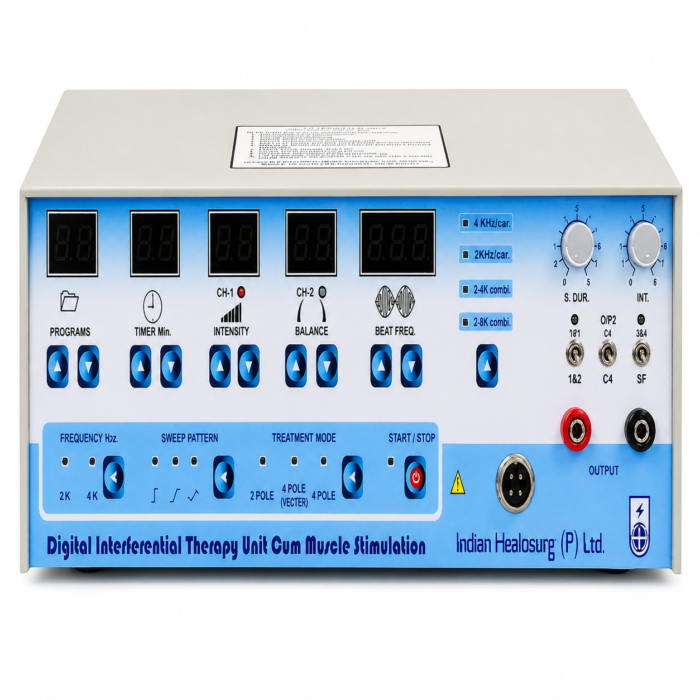
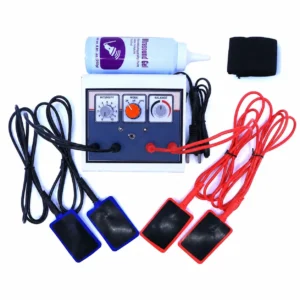
- 1 × Digital Interferential Therapy and Muscle Stimulation main unit
- 4 × surface electrodes (for 4-pole operation)
- 1 × electrode lead cable set
- 1 × AC mains power cable
- 1 × user manual
Clinical settings
Physiotherapy clinics
Rehabilitation centres
Orthopaedic departments
Sports medicine facilities
Pain management clinics
Neurological rehabilitation units
Post-surgical recovery departments
Suitable for
Physiotherapists
Rehabilitation specialists
Sports physiotherapists
Occupational therapists
Hospital therapy departments
B2B distribution
Medical equipment distributors
Hospital procurement teams
Physiotherapy equipment suppliers
Healthcare facility contractors
General Handling
✓ Handle the unit with care; avoid dropping or subjecting it to mechanical shock or vibration. ✓ Place on a stable, flat, dry surface during use and ensure ventilation slots remain unobstructed. ✓ Store in a cool, dry environment away from direct sunlight, heat sources, and moisture. ✓ Inspect all electrode cables, connectors, and the output socket before each use session. ✓ Do not place liquids on or near the unit during operation
Electrical Safety
✓ Connect to a correctly rated and earthed mains supply matching the unit's specified voltage and frequency. ✓ Never operate with a damaged power cable, plug, or electrode lead. ✓ Switch off and disconnect from mains before cleaning, servicing, or replacing electrodes. ✓ Do not use in wet environments or where liquid spillage may contact the device. ✓ Do not attempt to open the casing or carry out internal repairs; refer all servicing to qualified biomedical engineers.
Patient Safety
⚠ Always increase intensity gradually from zero; never apply stimulation at high intensity immediately. ⚠ Ensure all electrodes are firmly and correctly placed before increasing output intensity. ⚠ Reduce all channel intensities to zero before removing electrodes from the patient at the end of a session. ⚠ Never leave a patient unattended during active interferential or muscle stimulation treatment. ⚠ Discontinue immediately if the patient reports burning, pain, skin irritation, or any unusual sensation.
Cleaning & Maintenance
✓ Wipe the exterior casing with a soft cloth lightly dampened with a mild clinical disinfectant after each use. ✓ Do not immerse the unit in liquid or apply spray cleaners directly onto the panel or casing. ✓ Inspect electrode lead cables and connectors regularly and replace if insulation is damaged or connectors are corroded. ✓ Schedule periodic calibration and safety inspection by a qualified biomedical engineer in line with local clinical standards. ✓ Maintain a service log recording inspection dates, faults, and corrective actions taken.
Regulatory notice: this device is for professional clinical use only. It must be operated, maintained, and stored in compliance with local medical device regulations. Always follow the instructions provided in the supplied user manual and consult your regional regulatory authority for applicable compliance and registration requirements.
Questions
Frequently Asked Questions
Interferential therapy uses two medium-frequency currents that intersect within the tissue to produce a therapeutic beat frequency for pain modulation and tissue effects. Muscle stimulation mode delivers electrical current directly to stimulate motor nerves and muscles for re-education, strengthening, and activation purposes. This unit supports both in a single device.
In 4-pole vector mode, the interferential current automatically rotates or scans through different angles within the treatment field created by the four electrodes. This distributes the therapeutic effect more evenly across a larger tissue volume and reduces patient accommodation to a fixed stimulation direction.
Beat frequency selection depends on the clinical objective and condition. Higher frequencies (80 to 150 Hz) are typically used for acute pain management via the gate control mechanism, while lower frequencies (0 to 10 Hz) are associated with endorphin release for chronic pain. The 0 to 150 Hz scan mode cycles through the full range and is commonly used when the optimal frequency is uncertain. Always follow the supervising clinician's prescription.
Yes. The treatment mode switch selects between 2-pole (bipolar, two electrodes), 4-pole vector (four electrodes with vector scanning), and 4-pole fixed (four electrodes with fixed current direction), providing flexibility for different treatment areas and clinical protocols.
The unit offers 2 kHz and 4 kHz carrier frequencies. The 4 kHz carrier is more commonly used in European IFT practice and produces the beat frequency at the point of crossing between the two circuits within the tissue.
Yes. CE marking documentation is available on request through SnapShopHub. Contact our export team with your specific regulatory and import requirements and we will provide the necessary paperwork to support customs clearance and local registration.
Yes. SnapShopHub supplies single units for clinical evaluation as well as bulk quantities for hospital procurement, distributor orders, and clinic fit-out projects. Contact us for bulk pricing, lead times, and shipping options.
Interferential Therapy Cum Stimulator
Device type: Digital Interferential Therapy Unit with Muscle Stimulation
Quantity
Prefer a call instead? Request a callback