Global Medical Equipment Exporter · UK · EU · Africa · GCC
Global Medical Equipment Exporter · UK · EU · Africa · GCC

1 / 3
CE Marked
Questions about this product?
— our team will reach out.
Therapy Equipment · Continuous Passive Motion
CPM Knee Machine for Physical Therapy Rehab
$399.99
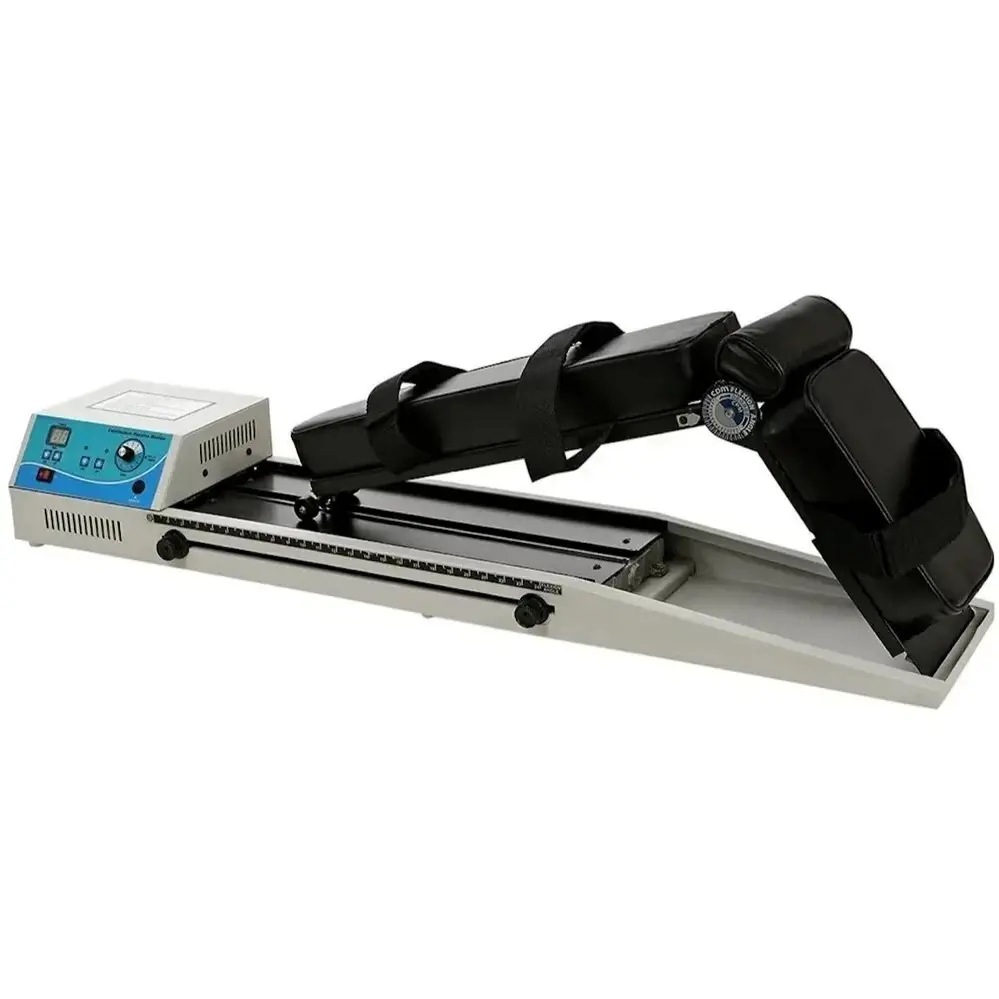
Motorised continuous passive motion: delivers controlled, repetitive flexion and extension of the knee joint without patient muscle effort, supporting post-operative joint recovery and rehabilitation.:::
Adjustable range of motion: graduated angle scale on the rail allows precise setting of flexion and extension limits to match the patient's current clinical tolerance and prescribed protocol.:::
Digital display with speed and delay timer: the integrated control unit displays operational parameters and allows speed and session delay to be set accurately for each treatment session.:::
Padded limb support with adjustable straps: contoured thigh and calf support pads with securing straps keep the limb correctly positioned throughout treatment, supporting patient comfort and safety.:::
Top Highlights
- Device type
- Continuous Passive Motion (CPM) knee rehabilitation unit
- Joint
- Knee (flexion and extension)
- Range of motion
- Adjustable via graduated scale on the rail
- Speed control
- Adjustable motor speed
- Display
- Digital display with delay timer
- Limb support
- Padded thigh and calf cradle with adjustable securing straps
- Power supply
- Mains AC (110V / 220V, 50/60 Hz)
- Certifications
- ISO 13485, CE marked, documentation available
Guaranteed Safe And Secure Checkout








This CPM knee machine delivers motorised continuous passive motion to the knee joint, moving it through a controlled arc of flexion and extension without requiring active muscle contraction from the patient. It is designed for post-operative rehabilitation following knee arthroplasty, ligament reconstruction, and other surgical procedures, supporting joint recovery under the supervision of a physiotherapist or orthopaedic team.The adjustable range of motion via a graduated rail scale, variable motor speed, digital display, and delay timer enable clinicians to set precise, progressive treatment parameters as the patient advances through the rehabilitation programme. Padded thigh and calf support cradles with securing straps keep the limb correctly positioned for patient comfort and safety during extended sessions.
CPM
Continuous passive motion
Adjustable
Range of motion
Variable
Motor speed
Digital
Display and delay timer
Key features
1
Motorised passive knee motion
The motor drives the limb cradle along the rail to flex and extend the knee joint repeatedly through a set arc, requiring no active effort from the patient.
2
Graduated angle scale
A calibrated scale on the rail allows the clinician to set precise flexion and extension limits, enabling controlled, progressive increases in range of motion over the rehabilitation course.
3
Adjustable motor speed
Variable speed control allows the cycle rate to be matched to patient tolerance and clinical stage, supporting comfortable progression through early and mid-stage rehabilitation.
4
Digital display and delay timer
The control unit digital display shows operational parameters; the built-in delay timer enables pauses at the end-range positions for therapeutic stretch and patient comfort.
5
Padded limb support cradle
Contoured thigh and calf support pads provide comfortable limb positioning throughout the session, reducing pressure points during extended treatment periods.
6
Adjustable securing straps
Multiple securing straps hold the thigh and calf firmly in the support cradle, maintaining correct limb alignment and preventing unwanted movement during motion cycles.
7
Mains-powered operation
Stable mains AC power supply ensures consistent motor performance throughout extended clinic sessions without battery dependency.
8
Robust metal rail construction
The linear rail and metal chassis provide structural stability and durability for continuous clinical use on a hospital bed or treatment plinth.
| Device type | Continuous Passive Motion (CPM) knee rehabilitation unit |
| Target joint | Knee (flexion and extension) |
| Motion type | Motorised continuous passive motion |
| Range of motion | Adjustable via graduated scale; full range set by clinician per protocol |
| Speed control | Variable motor speed adjustment |
| Delay timer | Adjustable end-range pause (delay timer) |
| Display | Digital display on integrated control unit |
| Limb support | Padded thigh and calf cradle with multiple adjustable securing straps |
| Angle scale | Graduated scale on linear rail for ROM limit setting |
| Construction | Metal rail and chassis; upholstered limb support pads |
| Power supply | Mains AC, 110V / 220V, 50/60 Hz |
| Intended environment | Hospital wards, orthopaedic units, physiotherapy clinics, and rehabilitation centres |
| Control | Function |
|---|---|
| Digital display | Shows operational parameters including speed and timer values during treatment |
| Speed control knob | Adjusts the motor speed to set the rate of knee flexion and extension cycles per minute |
| Delay timer control | Sets the end-range pause duration, allowing a brief hold at maximum flexion or extension before returning |
| Power switch | Switches the unit on and off from the mains supply |
| Direction controls (Up / Down) | Select the direction of motion or initiate and pause the CPM cycle |
| Flexion stop adjuster | Mechanical stop on the rail sets the maximum knee flexion angle for the session |
| Extension stop adjuster | Mechanical stop on the rail sets the minimum knee extension angle for the session |
| Securing straps | Adjustable straps on the thigh and calf support cradle maintain limb position during motion cycles |
| Condition / Area | Application / Protocol |
|---|---|
| Total knee arthroplasty (TKA) | Early post-operative passive mobilisation to promote joint recovery, reduce stiffness, and maintain surgical range of motion |
| Anterior cruciate ligament (ACL) reconstruction | Controlled passive knee motion in early rehabilitation to support graft healing and reduce joint stiffness |
| Posterior cruciate ligament (PCL) repair | Gradual passive mobilisation under surgical team guidance following ligament repair or reconstruction |
| Tibial plateau fracture | Passive joint motion initiated at appropriate post-operative stage following surgical fixation, under orthopaedic supervision |
| Patellofemoral surgery | Controlled passive flexion and extension following patella procedures to maintain joint mobility |
| Knee stiffness and arthrofibrosis | Progressive passive mobilisation programme to improve restricted range of motion under physiotherapy supervision |
| Post-traumatic knee rehabilitation | Passive mobilisation following significant knee trauma managed conservatively or surgically |
This CPM knee rehabilitation machine is CE marked, confirming compliance with applicable European medical device directives for safety and performance. CE documentation is available on request for regulatory submissions, hospital procurement, and import clearance purposes.
CE
Marked
1
Position the machine: place the CPM unit on a firm, flat surface such as a hospital bed or treatment plinth. Ensure the unit is stable and will not slide during operation.
2
Set range of motion limits: using the graduated angle scale on the rail, set the flexion and extension mechanical stops to the range prescribed by the clinician for the current treatment stage.
3
Position the patient's limb: place the patient's leg in the padded thigh and calf support cradle, aligning the knee joint with the pivot point of the machine.
4
Secure the limb: fasten all securing straps over the thigh and calf to hold the limb firmly in position without excessive compression. Check that circulation is not impaired.
5
Set speed and delay: adjust the speed control to the prescribed cycle rate and set the delay timer for any required end-range pause.
6
Power on and start: switch the unit on, confirm the digital display is active, and initiate the CPM cycle. Monitor the patient throughout the session.
7
End the session: stop the machine and return the cradle to the full extension position before releasing the securing straps and carefully removing the patient's limb.
Important: Clinical note: CPM treatment parameters including range of motion, speed, delay, and session duration must be prescribed by the treating orthopaedic surgeon or physiotherapist. Increase range of motion only as clinically directed. Never force movement beyond the patient's pain tolerance. Always supervise the patient during treatment.
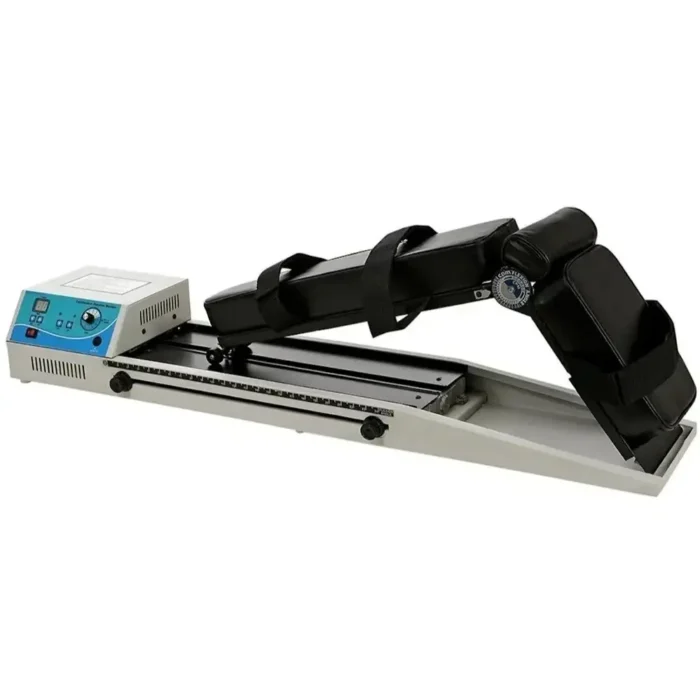
- 1 × CPM knee machine main unit (rail, cradle, and motor assembly)
- 1 × integrated digital control unit (pre-fitted to the rail)
- Padded thigh and calf support cradles with securing straps (pre-fitted)
- 1 × AC mains power cable
- 1 × user manual
Clinical settings
Orthopaedic wards
Post-operative recovery units
Physiotherapy departments
Rehabilitation centres
Sports medicine clinics
Private physiotherapy practices
Day surgery units
Suitable for
Orthopaedic surgeons
Physiotherapists
Rehabilitation nurses
Occupational therapists
Hospital therapy teams
B2B distribution
Hospital procurement departments
Medical equipment distributors
Rehabilitation equipment suppliers
Healthcare facility contractors
General Handling
✓ Transport and position the CPM unit carefully; it is a heavy mechanical device and requires two-person handling for safe repositioning. ✓ Place on a firm, flat, stable surface such as a hospital bed or treatment plinth before use. ✓ Inspect the rail, motor, cradle, straps, and power cable before each session for signs of damage or wear. ✓ Store in a clean, dry environment when not in use; protect the upholstered limb supports from moisture and sharp objects. ✓ Do not exceed the stated weight capacity of the limb support cradle.
Electrical Safety
Connect only to a correctly rated and earthed mains supply matching the unit's specified voltage. ✓ Route the power cable safely to prevent a trip hazard or accidental disconnection during operation. ✓ Switch off and disconnect from the mains before cleaning, servicing, or repositioning the unit. ✓ Never operate with a damaged power cable, plug, or control unit. ✓ Do not open the control unit casing; refer internal servicing to qualified biomedical engineers only.
Patient Safety
⚠ Always confirm range of motion settings with the prescribing clinician before each session; never exceed the prescribed limits. ⚠ Check that securing straps are firm but not so tight as to restrict circulation; inspect limb colour and sensation before starting. ⚠ Never leave a post-operative patient unattended during an active CPM session. ⚠ Stop the machine immediately if the patient reports sudden pain, increased swelling, wound dehiscence, or any unusual sensation. ⚠ Ensure the machine is stopped and the cradle returned to the extension position before the patient attempts to move or transfer.
Cleaning & Maintenance
✓ Wipe upholstered support pads and straps with a damp cloth and approved clinical disinfectant after each patient use. ✓ Wipe the rail, chassis, and control unit exterior with a lightly dampened cloth; do not allow liquid to enter the control unit or motor housing. ✓ Inspect the rail mechanism, motor operation, and mechanical stops regularly for smooth, consistent function. ✓ Schedule periodic servicing and calibration by a qualified biomedical engineer in line with local clinical device maintenance standards. ✓ Replace worn or damaged straps immediately; do not use the unit with defective securing straps.
Regulatory notice: this device is intended for clinical use under professional supervision only. It must be operated, maintained, and stored in compliance with local medical device regulations and hospital infection control policies. Always follow the instructions provided in the supplied user manual and consult your regional regulatory authority for applicable compliance and registration requirements.
Questions
Frequently Asked Questions
Continuous passive motion (CPM) delivers repetitive, motorised flexion and extension of the knee joint without requiring active muscle contraction from the patient. Following knee surgery, CPM is used to reduce joint stiffness, promote synovial fluid circulation, support cartilage nutrition, and help maintain or regain range of motion during the early post-operative period under clinical supervision.
This CPM knee machine is commonly used following total knee arthroplasty (TKA), anterior and posterior cruciate ligament reconstruction, tibial plateau fracture fixation, patellofemoral procedures, and other surgical interventions on the knee joint. Its use in any individual case must be prescribed by the treating surgeon and physiotherapy team.
The range of motion is set using mechanical stops on the linear rail, calibrated against a graduated angle scale. The clinician sets the maximum flexion and minimum extension limits appropriate for the patient's current rehabilitation stage. The CPM motor moves the cradle only within this set range.
The delay timer introduces a brief pause at the end-range positions (maximum flexion or full extension) before the machine reverses direction. This allows a gentle therapeutic stretch to be held at the limit of the prescribed range and gives the patient a moment to accommodate the position before the next cycle begins.
No. This is a clinical-grade mains-powered device intended for supervised professional use in hospital wards, orthopaedic units, and physiotherapy settings. All treatment parameters must be set by a qualified clinician and the patient must be monitored during active sessions. Home use is not appropriate for this unit.
Yes. CE marking documentation is available on request through SnapShopHub. Contact our export team with your specific regulatory and import requirements and we will provide the necessary paperwork to support customs clearance and local registration.
Yes. SnapShopHub supplies single units for clinical evaluation as well as bulk quantities for hospital procurement, distributor orders, and rehabilitation facility fit-out projects. Contact us for bulk pricing, lead times, and shipping options.
CPM Knee Machine for Physical Therapy Rehab
Device type: Continuous Passive Motion (CPM) knee rehabilitation unit
Quantity
Prefer a call instead? Request a callback