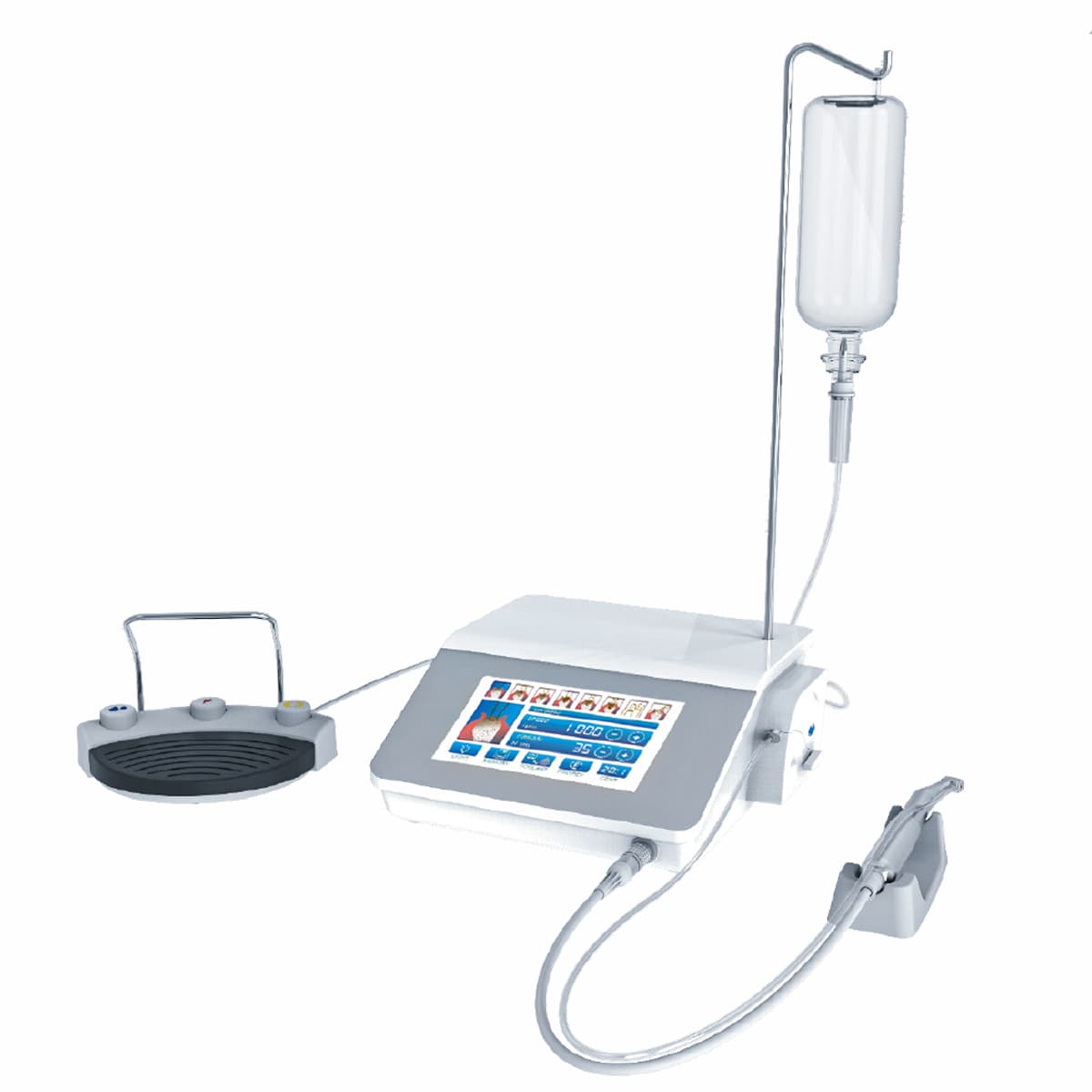
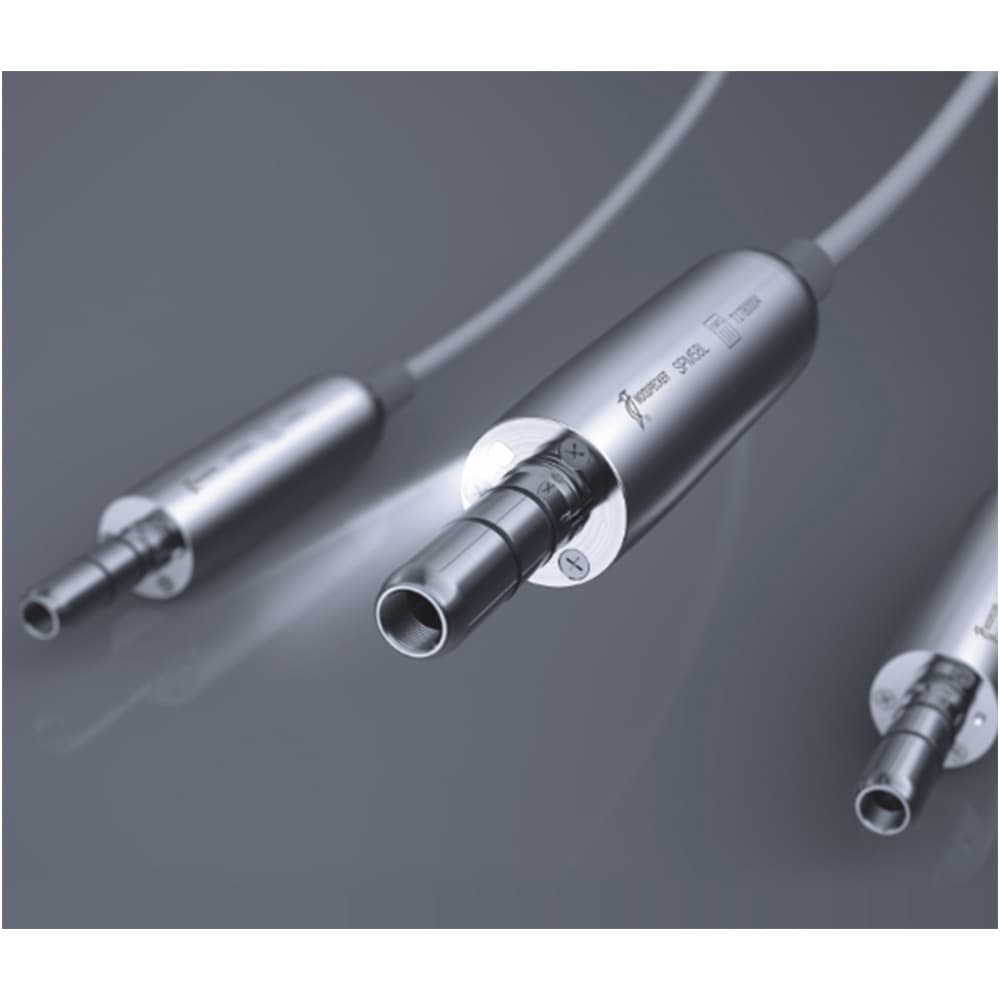
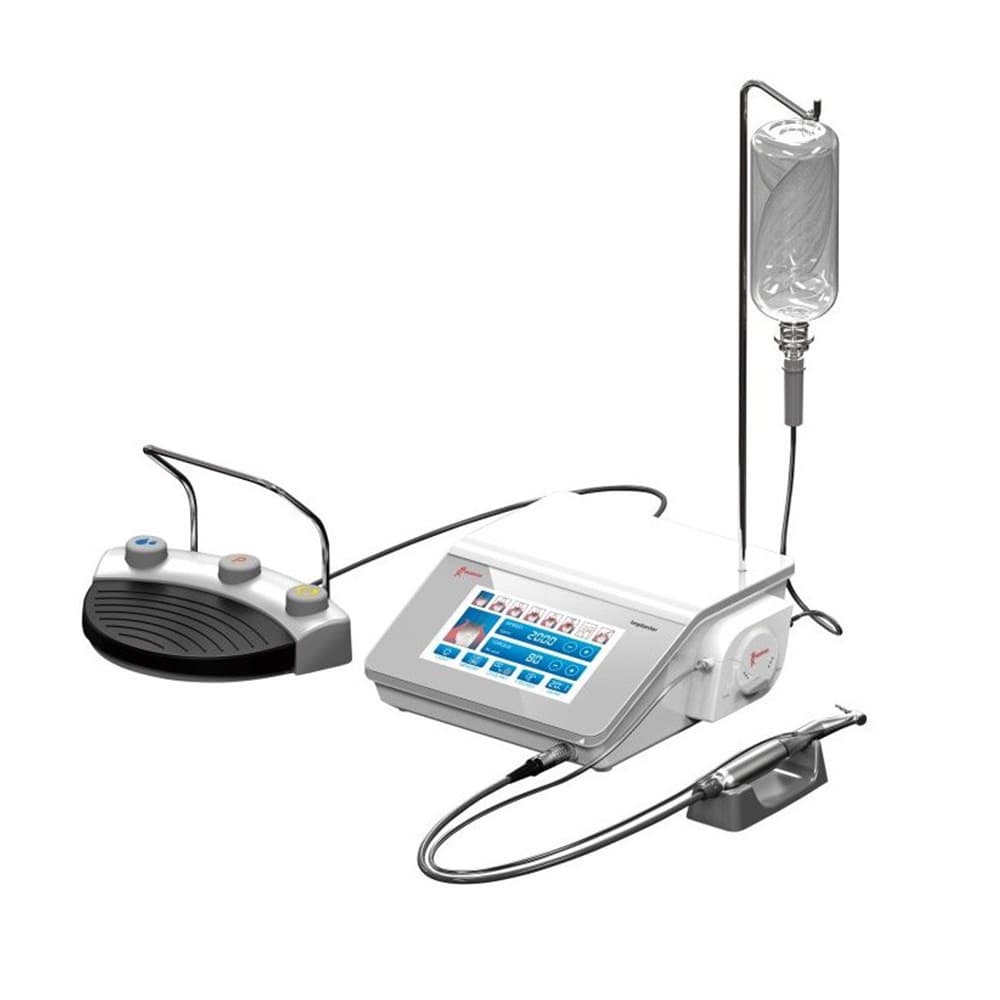
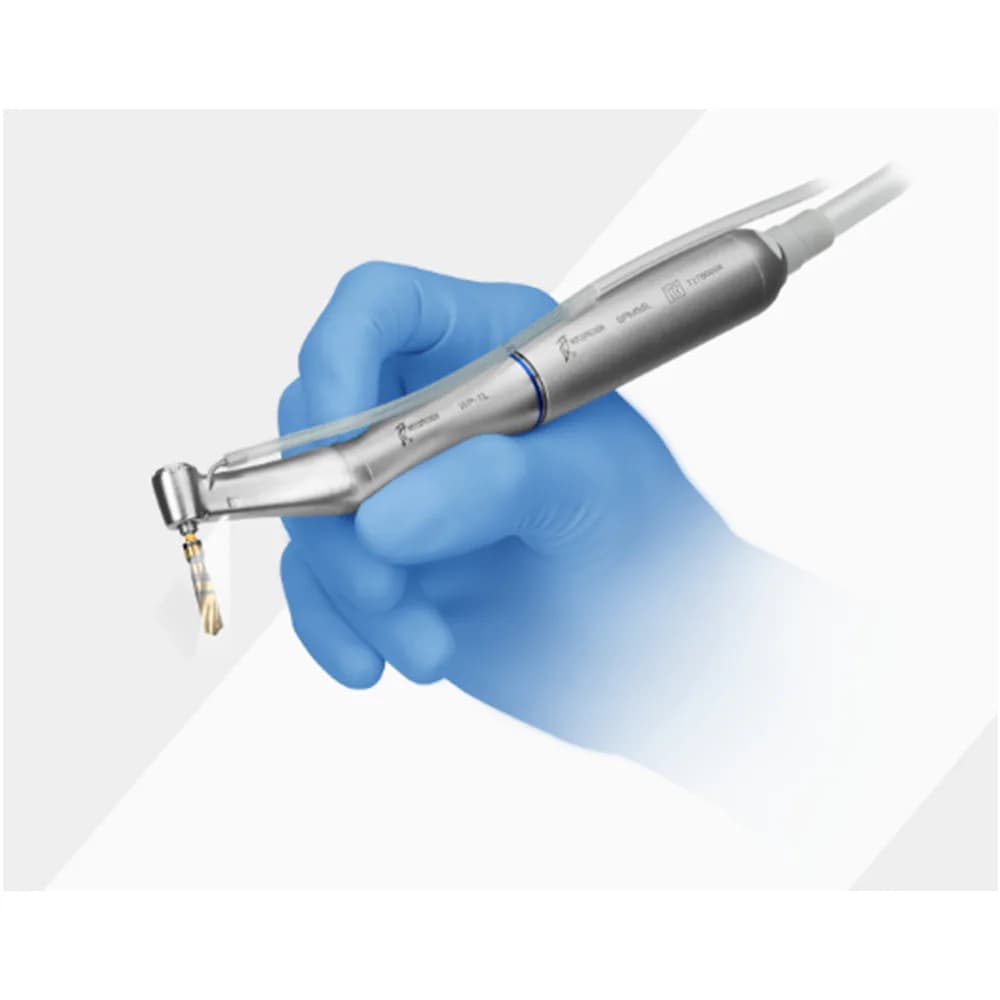
The Woodpecker Implanter Physiodispenser Fiber Optic is a machine that prepares the implant bed and places the implant in the mouth. There is a main control unit, a contra-angle handpiece with LED fiber-optic lighting, a foot pedal, and a handpiece stand in the system. The Swiss motor runs at speeds of 300 to 40,000 revolutions per minute for different stages of implant surgery and always provides the same amount of torque.
The main unit is 276 by 267 by 110 millimeters and has a seven-inch colour touchscreen that shows operating parameters and lets you change the speed and torque in real time. The handpiece is 23.4 mm wide and 140 grams heavy. It features a base motor torque of 6.2 Ncm and uses a 20:1 gear reduction system to deliver a reliable output torque of 5 to 80 newton-centimeters. The peristaltic pump can move 110 milliliters of water per minute for irrigation, and it can move up to 135 milliliters per minute at its highest speed.
At normal sterilization temperatures, both the motor and cable can be fully autoclaved. The Woodpecker implant motor has fiber-optic LED lights that make it much easier to see when putting in deeper implants. The glass surface of the touchscreen makes it easy to clean. Because of these features, this dental physiodispenser is useful for surgery every day. When considering dental implant machine price and value, this implant machine offers comprehensive features at a reasonable cost.
Product Uses
- Prepare the implant bed for standard and wide-diameter implants using the right burs and irrigation.
- Cutting and sectioning bone during complex osteotomies or surgical extractions.
- Sectioning teeth and extracting broken roots during impaction surgeries using precision tools such as dental extraction forceps for controlled and atraumatic removal.
- Sinus lift augmentation surgeries with controlled bone removal.
- Alveolar ridge contouring and osteoplasty prior to implant placement.
- Site preparation for guided bone regeneration (GBR) and bone grafting procedures.
- In cases of multi-implant surgery, consistent speed and torque make things more efficient.
- Placing implants safely in dense posterior maxillary or mandibular bone.
How to Use
- Make sure the main unit is on a flat surface, and the power cord is plugged into an outlet that is properly grounded. Check that the voltage is between 200 and 240 volts AC and 50 or 60 hertz, as the device says it should be.
- Before using, check the handpiece, cables, and accessories for any visible damage. Make sure that all parts that can be autoclaved have been properly cleaned.
- When you're not using the handpiece, put it in the stand to keep it from getting damaged.
- Push the button on the main control unit to turn it on. In 10 to 15 seconds, the colour touchscreen will light up and show the operating interface.
- Use the touchscreen menu to choose the implant program. Use the controls to check and change the speed and torque settings for your situation.
- Choose the right speed setting: lower speeds from 300 to 800 RPM for initial bone engagement, medium speeds from 1,200 to 2,400 RPM for sequential widening, and higher speeds for cutting through bone.
- Change the torque setting on the screen. Preparing an implant bed usually takes 20 to 50 newton-centimeters, depending on how dense the bone is. Check the value you chose on the screen.
- When you are at the surgery site and ready to start, press the foot pedal. The handpiece turns when you push the pedal.
- During the procedure, keep an eye on the touchscreen display to make sure the handpiece works as it should. If you hear or feel vibrations or strange sounds, let go of the pedal right away.
- Follow the suggested operating cycle of three minutes on and ten minutes off to give the motor time to cool down between cases.
- Let go of the foot pedal when you're done, and let the handpiece stop completely before taking it away from the surgical site.
- To turn off the device, press the power button and unplug the power cord.
Product Features
- A Swiss motor with high precision that provides stable torque without vibration at all speeds.
- The speed range is wide, from 300 to 40,000 RPM, which is good for pilot drilling, sequential widening, and bone sectioning.
- The torque can be changed from 5 to 80 newton-centimeters with a 20-to-1 gear reduction.
- A quiet peristaltic pump system that delivers an adjustable irrigation flow, with a maximum water volume output of up to 135 ml/min.
- Fiber optic LED lighting that lets you see the surgical site directly without any outside light.
- A glass surface colour touchscreen that shows parameters and makes it easy to clean.
- The 140-gram lightweight contra-angle handpiece reduces hand fatigue during long procedures.
- A foot pedal with multiple functions that lets you work without using your hands to improve aseptic technique.
- The motor and cables can be fully autoclaved, which means they can be sterilized without being damaged.
- Ergonomic balance that eases strain on the neck and shoulders during multi-implant cases.
Technical Specification
| Specification | Detail |
| Rotation Speed Range | 300 to 40,000 RPM |
| Torque Range (20:1 Gear) | 5 to 80 N·cm |
| Maximum Pump Output | 110 ml/min |
| Maximum Water Volume | 135 ml/min |
| Motor Diameter | 23.4 mm |
| Motor Length | 91 mm |
| Motor Weight | 140 g |
| Main Unit Dimensions | 276 x 267 x 110 mm |
| Power Supply Voltage | 200 to 240V AC |
| Power Supply Frequency | 50/60 Hz |
| Input Power | 150 VA |
| Operation Mode | Intermittent (3 min ON / 10 min OFF) |
| Software Version | Implant-V1 |
| Fuses | 2 x T1.6AL 250V |
| Maximum Operating Temperature | 41.8°C |
| Case Material | PC + ABS |
| Handpiece Material | Brass |
| Operating Temperature Range | +5°C to +40°C |
| Relative Humidity (Operating) | 30% to 75% |
| Atmospheric Pressure Range | 70 to 106 kPa |
| Storage Temperature Range | -20°C to +55°C |
| Storage Humidity | 10% to 93% |
| Handpiece Feature | LED Fiber Optic Illumination |
| Autoclavable Components | Motor, Cable, Handpiece |
Handling Tips
- Always check the electrical grounding before plugging in the device to make sure it will work safely.
- Check the handpiece and cable for cracks, exposed wires, or other damage before each use.
- When you're not using the handpiece, put it in the stand to keep it from falling and getting damaged.
- Allow sufficient time for the device's motor to cool down between surgeries. Follow the recommended 3-minute ON / 10-minute OFF cycle during sequential cases to prevent overheating.
- Keep an eye on the touchscreen temperature display during longer procedures. Stop using the system if it says the motor is getting close to its maximum temperature.
- Use the right surgical burs for the speed and use you want. Sharp burs cut well and keep the temperature down.
- Clean the surgery site often to get rid of bone chips and other debris that make it hard to see and irrigate.
- Apply steady, controlled apical pressure during drilling. Jerky movements or excessive pressure will cause vibration and reduce surgical accuracy.
- Use a soft, damp cloth with mild soap to clean the touchscreen right after the procedures. Do not use cleaners that are rough or corrosive.
- After using, wipe the outside of the case and the handpiece with a damp cloth to get rid of blood and other debris. Before putting it away, make sure it is completely dry.
- Keep in a clean, dry, well-ventilated place that doesn't get too hot or too wet and isn't in direct sunlight.
- Check connections and make sure the foot pedal works every month as part of basic maintenance.
Packaging
- 1 x Physiodispenser
- 1 x Handpiece
- 1 x Foot Pedal with cable
- 1 x Handpiece Stand
Medical and Legal Disclaimer
Only trained dental professionals should use this dental implant machine. Only licensed dentists or oral surgeons who are familiar with implantology protocols should operate this equipment. The device is intended to prepare the implant bed and modify bone structure. Clinical outcomes depend on utilizing the correct surgical technique. Improper use or failure to follow the operating instructions could result in bone necrosis, implant failure, or nerve damage. Always obtain the patient's informed consent before starting surgery.
The seller will not be liable for product replacement; any replacement or service responsibility lies solely with the manufacturer/importer under their original warranty terms and conditions.
Support and Warranty
The Woodpecker Implanter Physiodispenser fiber Optic comes with a one-year warranty from the manufacturer that covers defects in the way it was made. The warranty covers the handpiece, motor, and main control unit. The manufacturer takes care of service and warranty issues directly. Proof of purchase is required for any warranty claims.
Certifications
The device meets the electrical safety standards for dental equipment and follows the rules for medical devices in the US and the EU. The device has been checked for basic safety, electromagnetic compatibility, and electrical safety. The motor and parts that can be autoclaved are safe for use in dental surgery.
FAQs
Q: What is the difference between the Woodpecker Implanter and the Implant-X?
A: The main difference is in the external design and dimensions (the Implanter measures 276 × 267 × 110 mm). However, their core functionality, surgical programs, and accessories are highly similar.
Q: How does the Woodpecker Implanter differ from other surgical systems?
A: The Woodpecker Implanter has a touchscreen that is easy to use, high-precision motor control, integrated LED fiber-optic lighting, and parts that can be autoclaved. The Swiss motor gives steady torque at all speeds.
Q: Is it possible for this dental physiodispenser to work with different types of handpieces?
A: The 20:1 contra-angle handpiece is the main tool used by this implant machine. Compatible 1-to-1 straight handpieces might work with software changes, but you should check the manufacturer's specifications first.
Q: How does the LED fiber optic lighting make things work better?
A: The built-in LED lets you see the surgical site directly, which gets rid of shadows and makes it easier to see when preparing the implant bed.
Q: What are the benefits of the Swiss motor?
A: Swiss motors give you steady torque across the whole speed range, which stops slipping and makes your hands less tired.
Q: Can you put the motor and cable in an autoclave?
A: Yes. Both are made with materials that can be used in an autoclave and can be sterilized at normal dental autoclave temperatures without being damaged.
Q: How does the peristaltic pump keep the irrigation going?
A: The peristaltic pump moves the solution forward by compressing the tubes one after the other, which keeps the flow steady at 110 milliliters per minute.
Q: Why does the device use an intermittent operation cycle?
A: The three-minute-on, ten-minute-off cycle keeps the motor from overheating by giving the coils time to cool down between tasks.
Q: Can this machine for dental implants handle implants with a wide diameter?
A: Yes. The maximum torque of 80 newton-centimeters can handle implants with a diameter of up to 6.5 millimeters.
Conclusion
The Woodpecker Implanter Physiodispenser fiber Optic is a useful dental implant machine for implant surgeons who follow modern surgical protocols. This dental implant equipment is good for both simple and complicated cases because it has precise motor control, enough irrigation, built-in visualization, and easy-to-use controls. The fiber optic lighting makes it easier to see when preparing the implant bed, and the autoclavable parts make it easier to control infections. For practices that want to do efficient implant surgery, this dental implant machine is a good investment.