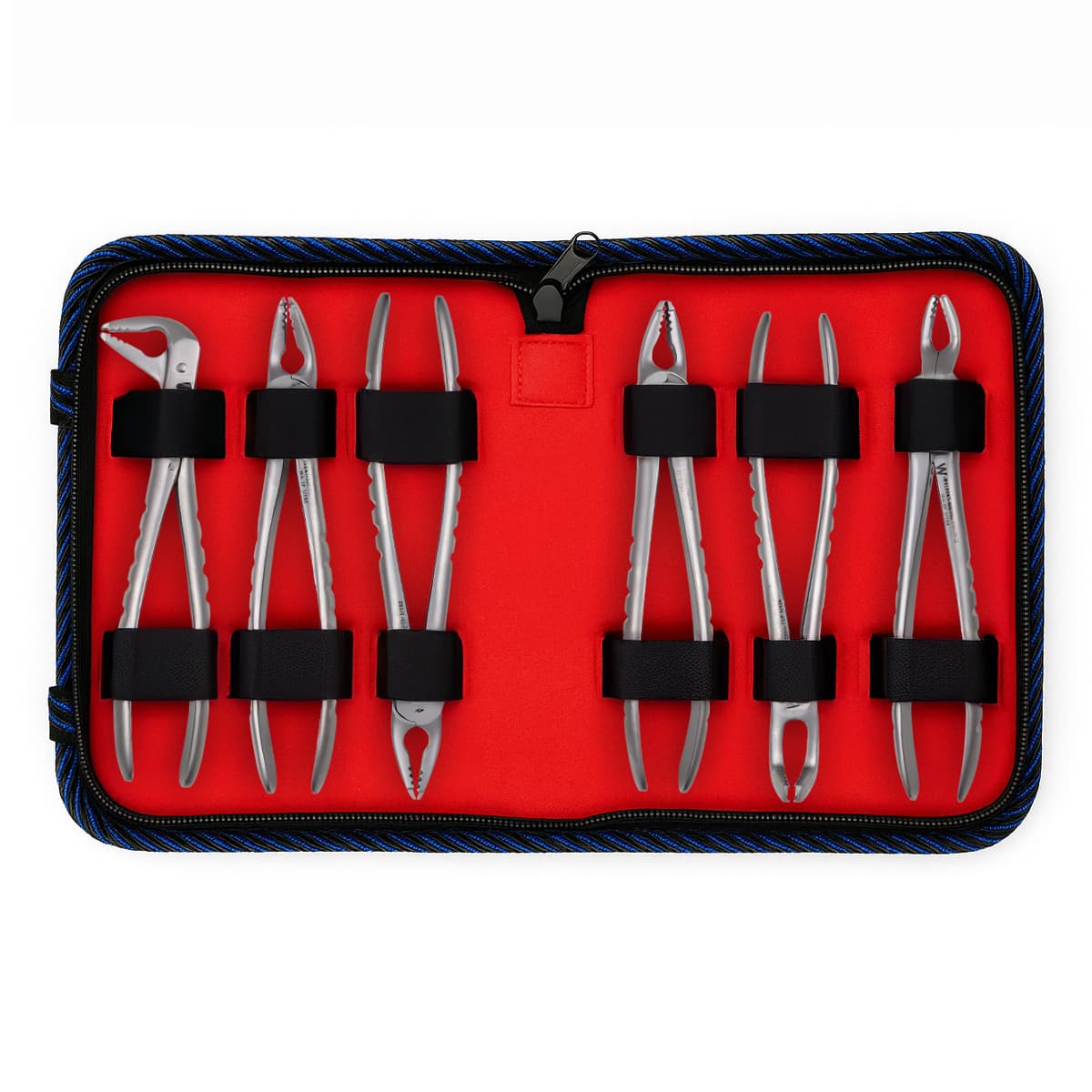
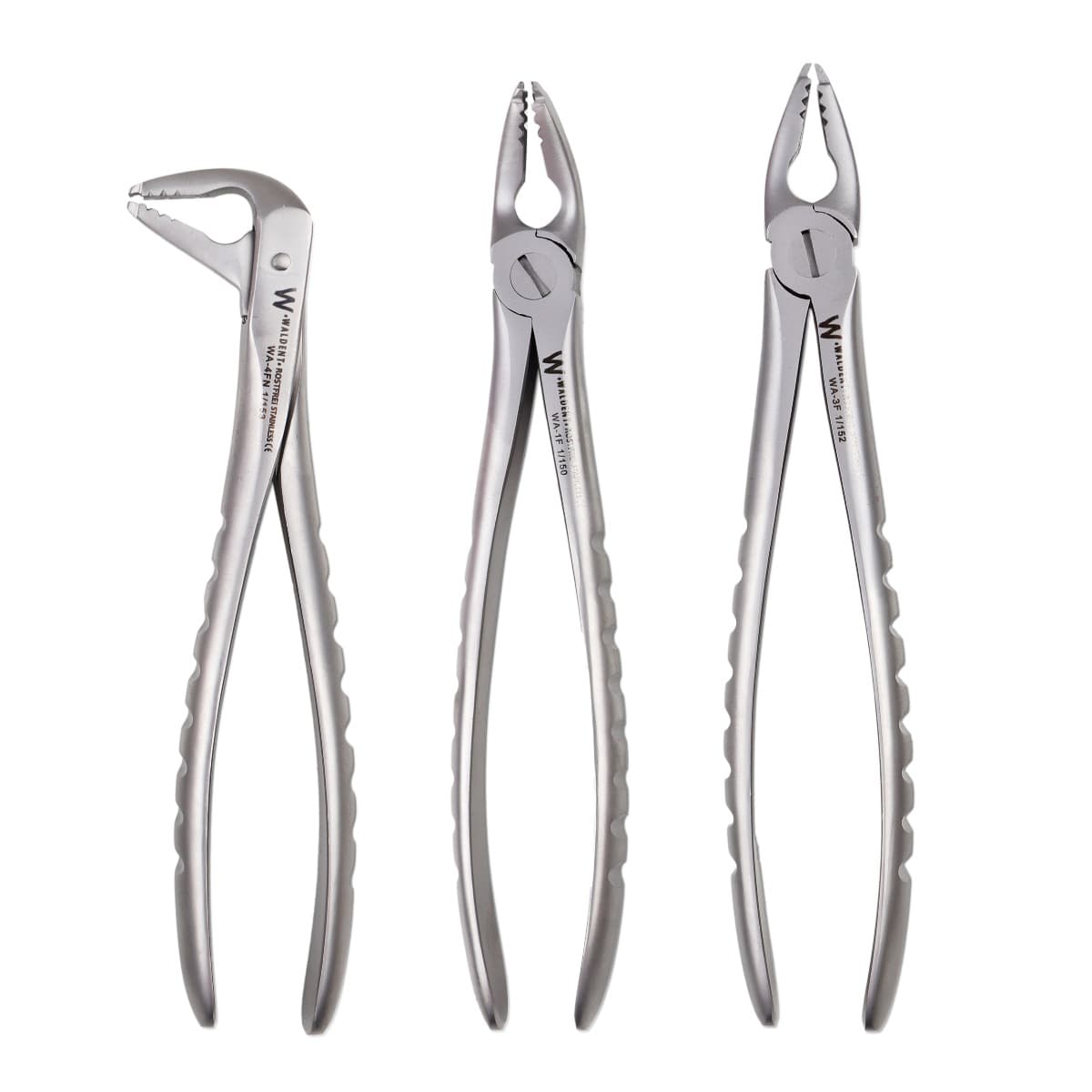
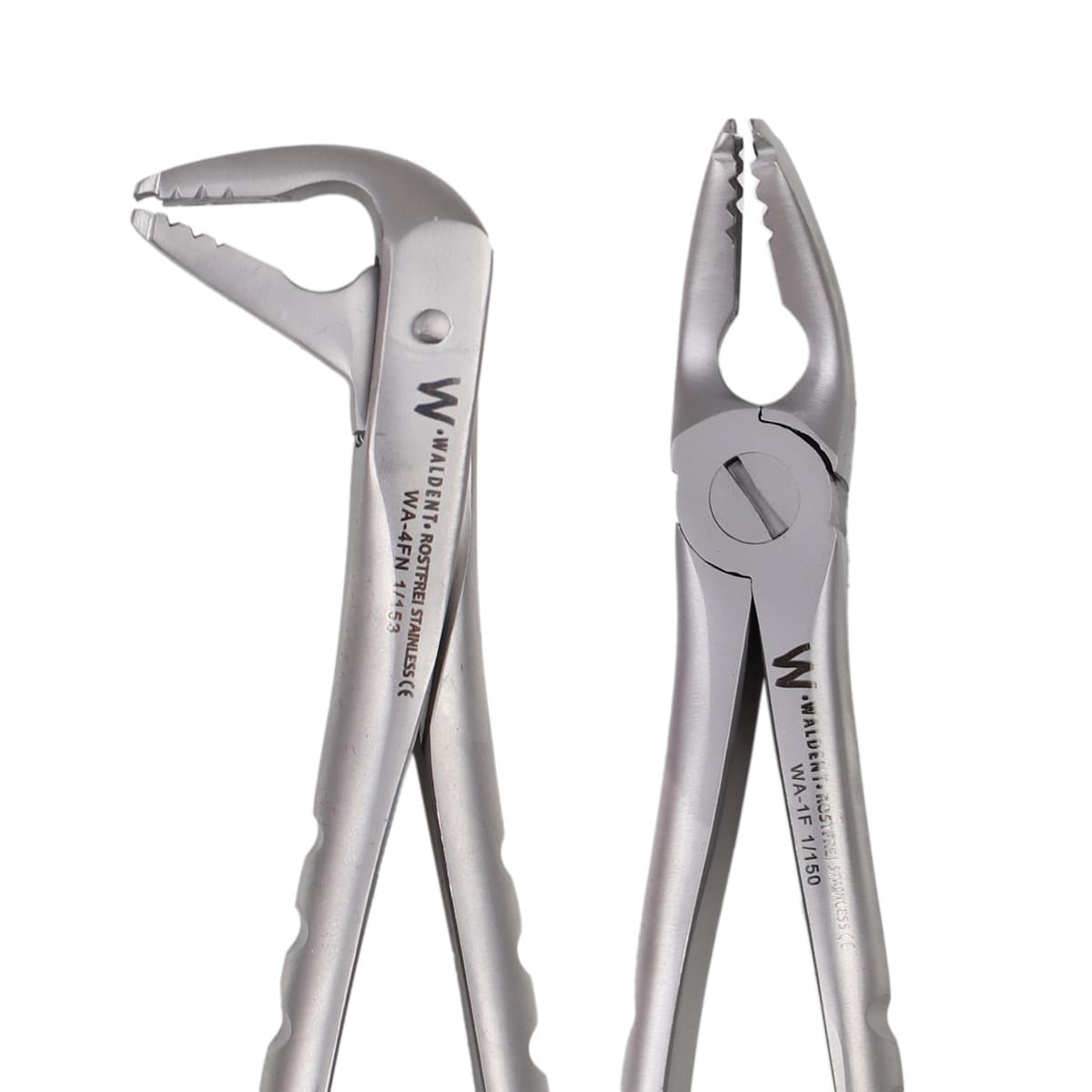
Waldent Atraumatic Dental Forceps Kit is a perfect choice for extractions in minor oral surgery. You get six extraction forceps with this kit. It's built from surgical-grade stainless steel and designed for tooth extractions in minor oral surgery. The main thing about this dental extraction forceps kit is the coarse serrations on the beaks. They grip the tooth properly without you having to muscle it out. That means less trauma to the bone and less chance of breaking root tips.
The waldent extraction forceps come with six different sizes and shapes because teeth are in different places and come in different sizes. You pick the right one for the job. The handles are weighted so you can apply force through your arm instead of just your wrist, which matters when you're doing this all day. Grip wears out your hand. Using your body weight doesn't.
You'll notice the difference on day one. These aren't the forceps that slip off at the last second and bang into the gingiva. They hold. Once you've got the tooth, it stays. That's what the serrations do. They bite into the surface without damaging it. For a reusable instrument, that's important because you're using the same forceps hundreds of times.
Product Uses
- Maxillary (upper) tooth extractions
- Mandibular (lower) tooth extractions
- Working with anterior teeth that need careful handling
- Molar extractions where you need to save bone
- General practice extractions
- Oral surgery clinics
- Hospital settings
- When bone is compromised, and you can't afford to lose more
- Extractions before implants or orthodontic work
- Cases where the tooth is tough to grab with regular forceps
How to Use
Before You Start
Make sure the instruments are sterilized. They go in the autoclave at 135 degrees Celsius. Don't use them wet. Get them completely dry first.
Setting Up the Patient
For upper teeth, tilt the chair so the occlusal plane is about 45 to 60 degrees from the floor. Get your patient's mouth at or just below your elbow height. This gives you the right angle and keeps you from straining.
For lower teeth, have the patient sit more upright. When they open their mouth wide, the plane should be flat. Lower the chair more than you would for upper teeth. You need better access down there.
Using the Forceps
Grab the forceps handle firmly. Push through your arm and shoulder, not your wrist. Your hand and wrist just guide it. This matters for your hands, especially after 20 years of extractions.
You basically do five things with the forceps:
- Push down on the apex. You're really just holding the tooth.
- Rock it toward the buccal side. The wedge-shaped beak starts opening the socket on that side.
- Rock it toward the lingual side. Same thing on this side.
- Rotate it gently. You're separating the periodontal ligament as you go.
Apply steady tractional forces to deliver the tooth from the socket. The primary goal is to utilize the wedge-shaped beaks to systematically expand the bony socket, rather than removing the tooth through sheer force. If excessive strain is required, re-evaluate the ligament attachment or consider utilizing a different instrument.
Product Features
- Coarse serrations grip the tooth without slipping
- Sharp beak stays sharp longer
- Handles are comfortable and reduce hand strain
- Ergonomic design minimizes hand fatigue during repetitive clinical use
- Saves bone during extractions
- Root tips break less often
- Manufactured from high-grade, durable surgical stainless steel
- Fully reusable and designed for long-term clinical application
- Safe for patients with latex allergies
- Works in a standard autoclave at 135 degrees
- Six different forceps cover all tooth positions
Technical Specification
| Specification | Detail |
| Instrument Name | Atraumatic Extraction Forcep |
| Product Type | Dental Extraction Forceps kit |
| Category | Oral Surgery |
| Material Composition | High-grade surgical stainless steel |
| Reusable/Disposable | Reusable |
| Sterility Status | Non-Sterile (requires sterilization before use) |
| Latex Content | Latex-Free |
| Autoclave Temperature | 135 degrees Celsius |
| Number of Instruments | 6 pieces |
| Beak Design | Coarse serrated |
| Handle Type | Ergonomic design |
| Weight | Lightweight |
Handling Tips
After You Use Them
Clean this dental extraction forceps kit in an ultrasonic bath for 10 minutes. Use a general-purpose solution with a rust inhibitor included. Keep the tips open while they're cleaning. Never use tap water during cleaning or sterilization. Tap water leaves mineral deposits that cause severe corrosion, particularly within the hinge joints.
Getting Ready for Autoclave
After the ultrasonic cleaning, let them dry or drain. Put them in an instrument solution. When you load the tray, make sure the tips stay open. Closed tips trap moisture, and moisture ruins sterilization. Moisture trapped within the hinge joints can compromise the sterilization cycle and lead to internal corrosion.
Sterilizing and Storing
Follow what your autoclave manual says. After it's done and cooled, take them out and make sure they're dry. Instruments stored wet are highly susceptible to corrosion. Do not leave them in a warm sterilization tray where condensation can form. They need actual air drying.
Put a light coat of silicon lubricant on them. This keeps them from rusting and keeps the hinges moving smoothly. Store them dry. Not in drawers where they collect moisture. Not in a case that's damp. Just dry. If you notice the hinge getting stiff, that's usually because moisture got in there or you skipped the lubrication.
Consistent adherence to water quality guidelines (using distilled/demineralized water) will significantly extend the life of your surgical instruments.
Product Packaging
The Waldent Atraumatic Extraction Instruments Forceps Kit Set of 6 includes the following instruments:
- 1 x WA-1F: Upper Universal
- 1 x WA-2F: Lower Universal
- 1 x WA-3F: Upper Anteriors
- 1 x WA-4NF: Lower Anteriors
- 1 x WA-6F: Upper Molars
- 1 x WA-7CF: Lower Molars
Medical Disclaimer
This product is intended for professional use only by trained and qualified dental professionals and oral surgeons. Improper use, lack of appropriate sterilization, or failure to follow established clinical protocols may result in patient injury or complications. Users must be thoroughly trained in extraction techniques and understand proper instrument handling. Proper sterilization, maintenance, and clinical protocols must be followed strictly during all uses. The manufacturer assumes no liability for complications resulting from improper use, inadequate training, or failure to maintain instruments according to the provided guidelines.
Warranty and Support
The kit comes with a manufacturer's warranty that covers defects in materials and workmanship under normal use. If the beak cracks from a defect, they'll replace it. If you drop it and crack the beak, that's not covered. Damage from improper sterilization isn't covered. Call the manufacturer if something goes wrong with an instrument you didn't damage yourself.
Certifications
These instruments are manufactured from high-quality surgical-grade stainless steel and meet standard compliance requirements for professional dental and oral surgery equipment.
FAQ
Q: Are these really better than the cheaper extraction forceps?
A: If you perform extractions regularly, yes. The serrations grip better, so you don't slip off the tooth. You use less force overall. Your hands hurt less at the end of the day. If you do two extractions a month, maybe not worth the upgrade. If you do 20, it is. After a few weeks of using good forceps, going back to the cheap ones feels like you're wrestling.
Q: Do I really need six different ones?
A: You don't technically need all six. But when you have the right forceps for the tooth you're working on, it goes faster and easier. Different teeth sit at different angles. Universal ones work, but they're a compromise. The anteriors forceps are much smaller and let you get better control of the front teeth. The molars' forceps are wider because molars are wider. When you've got the right shape, your technique is better.
Q: How long do these last?
A: Years. Depends on how much you use them and how careful you are. If you're banging them around or dropping them, they won't last as long. If you keep them clean and lubricated, they keep working. The beaks do wear down eventually from gripping. When they get dull, and you notice slipping starting, it's usually two or three years of regular use. When they start slipping, you know it's time.
Q: Can I use these for impacted teeth?
A: Not really the best choice. These are for straightforward extractions. Impacted teeth usually need surgical flap work and might need burring. You'd be using different tooth extraction instruments anyway. Save these for teeth that are reasonably accessible.
Q: How much force can I actually apply with these?
A: It's not about maximum force. It's about smart force. A tooth should come out with steady, controlled pressure. If you're muscling it, something's wrong. Either the ligaments aren't ready, you need a different instrument, or you need to loosen them more first. The whole point of using good forceps is that you don't need to wrestle the tooth out.
Q: Are they really atraumatic?
A: They help reduce trauma compared to using a forceps that slips off and bangs the gum. But no extraction is completely without trauma. The tooth's coming out. You're disrupting the ligament. What atraumatic means here is you're doing it efficiently without extra damage. You're not stripping the gingiva because your grip slipped.
Q: Can students use this dental extraction forceps kit?
A: Only if they've been trained properly. This isn't a learn-as-you-go tool. You need to know what you're doing before you pick it up. A student can use them, but only under supervision with proper instruction.
Q: Will the extraction forceps kit work if I don't sterilize it properly?
A: While the mechanical function remains the same, utilizing non-sterile instruments violates fundamental clinical protocols and poses severe infection risks to the patient. Strict adherence to proper autoclave sterilization guidelines is mandatory before every use.
Q: Do I have to buy the whole set?
A: That's a question for the supplier. You can technically use just one or two of them if that's all you do. But the set's priced as a set. It's worth buying the full kit because eventually you'll need all of them.
Q: How often should I replace them?
A: Not on a schedule. When the beaks get dull and start slipping, it's time. Usually, a few years of regular use. When you notice you're having to work harder to grip the same way you used to, that's when. Don't wait until they're completely shot.
Q: Does this kit help preserve surrounding bone?
A: Yes, the atraumatic design with coarse serrations supports firm gripping without excessive wedging, which aids in preserving the alveolar bone during extractions.
Conclusion
The Waldent Atraumatic Dental Forceps Kit provides a predictable and efficient solution for minor oral surgery. The ergonomic design, lightweight handling, and coarse serrations ensure a secure grip, reducing hand fatigue and minimizing trauma to the socket. This 6-piece dental extraction forceps kit is a practical, durable, and highly effective investment for any dental professional performing regular extractions.