Global Medical Equipment Exporter · UK · EU · Africa · GCC
Global Medical Equipment Exporter · UK · EU · Africa · GCC

1 / 4
CE Marked European conformity for medical devices
ISO 13485 Medical device quality management system
Questions about this product?
— our team will reach out.
Dental Equipment · Extraction Forceps
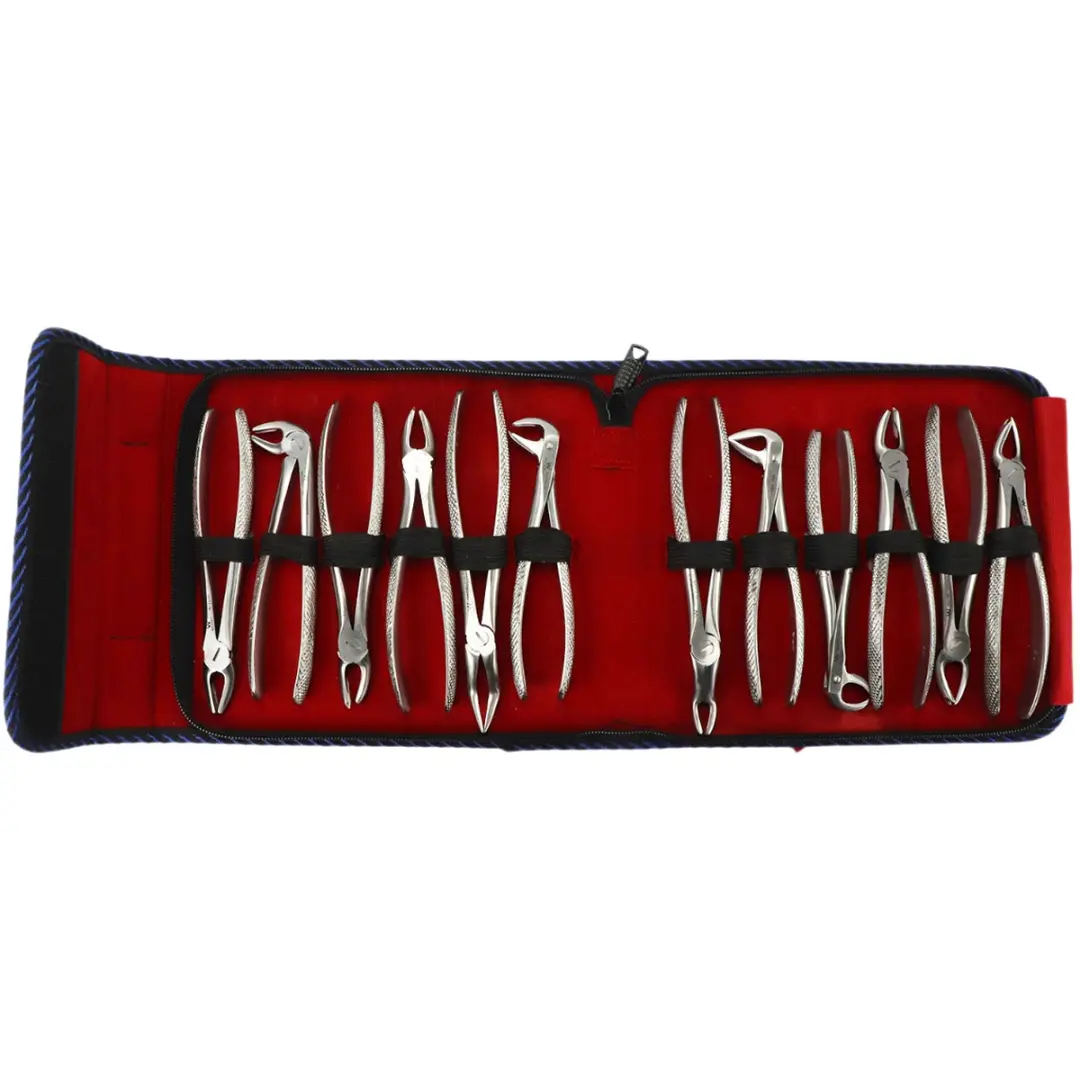
Waldent Extraction Forceps Kit Set of 12
$149
Complete clinical coverage: 12 dedicated instruments for anterior teeth, premolars, molars, retained roots, and third molars.:
Precision anatomical design: tooth-specific beaks adapt accurately to natural anatomy for secure engagement and controlled extractions.:
Premium stainless steel: medical-grade passivated construction for corrosion resistance and repeated high-temperature autoclave sterilization.:
Ergonomic serrated handles: provide superior grip and control, reducing hand fatigue during demanding extraction procedures.:
Top Highlights
- Product Type
- Dental Extraction Forceps Set
- Brand
- Waldent
- Model
- K1/1
- Quantity
- 12 Instruments
- Material
- Medical Grade Stainless Steel
- Sterilization
- Autoclavable at 135°C
- Latex-Free
- Yes
- Intended Use
- Professional Dental Surgery (Rx)
- Quality
- CE Marked, ISO 13485
Guaranteed Safe And Secure Checkout








The Waldent Extraction Forceps Kit K1/1 provides 12 dedicated instruments covering virtually every routine tooth extraction procedure. Rather than relying on universal forceps, this set includes right- and left-specific molar forceps, dedicated root fragment instruments, third molar forceps, and instruments for anterior and premolar teeth across both arches. Anatomical concave beaks distribute extraction forces evenly across the tooth structure, helping minimize trauma to surrounding tissue and reducing the risk of crown or root fracture.
12
Dedicated forceps
Full
Anatomical beak coverage
135°C
Autoclave rated
L/R
Dedicated left and right molars
Key features
1
Tooth-Specific Design
Each forceps is shaped to match individual tooth anatomy for better grip, control, and more even force distribution.
2
Concave Anatomical Beaks
Cradle the tooth structure to distribute pressure evenly and reduce the risk of crown or root fracture during removal.
3
Right and Left Molar Coverage
Dedicated right- and left-sided instruments improve access and control for upper molar extractions.
4
Corrosion-Resistant Finish
Passivated stainless steel surface protects against rust while maintaining smooth hinge movement through years of use.
| Instrument Type | Reusable Surgical Instrument |
| Material | Medical Grade Stainless Steel |
| Surface Finish | Passivated, Corrosion Resistant |
| Sterilization Temperature | 135°C |
| Latex Content | 100% Latex-Free |
| Sterility Status | Non-Sterile. Sterilize before first and all subsequent uses. |
CE
Marked European conformity for medical devices
ISO
13485 Medical device quality management system
1
Select the Forceps: Refer to the Tooth Identification Guide and select the correct instrument for the tooth being extracted.
2
Seat the Beaks: Position the beaks as apically as possible along the root surface, below the gingival margin.
3
Apply Apical Pressure: Apply firm apical pressure to seat the beaks securely before beginning any luxation movement.
4
Luxate the Socket: Use controlled buccal and lingual movements to progressively expand the socket and loosen the periodontal ligament.
5
Complete Extraction: Apply steady traction with gentle rotation where anatomy permits to complete the extraction.
6
Clean and Sterilize: Process instruments through ultrasonic cleaning with hinges open, then autoclave at 135°C before next use.
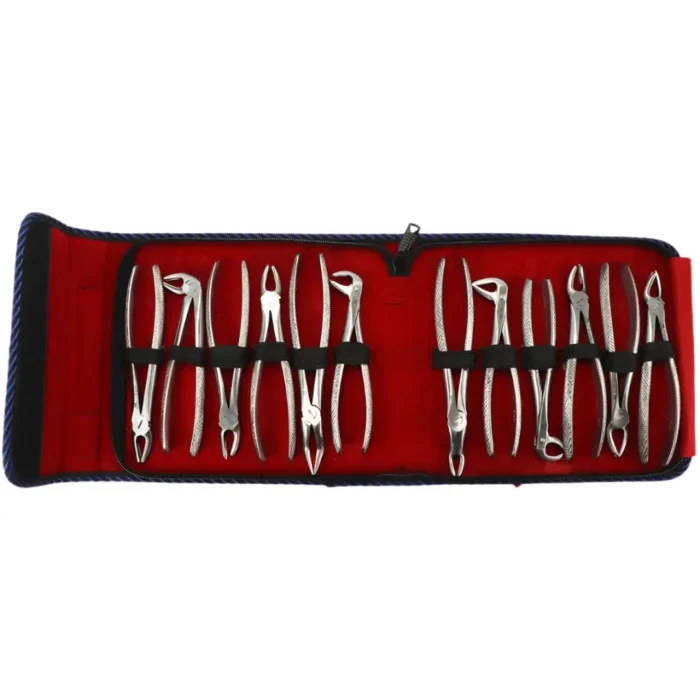
- 1 × Upper Anterior No. 1
- 1 × Upper Premolars No. 7
- 1 × Lower Premolars No. 13
- 1 × Upper Molars Right No. 17
- 1 × Upper Molars Left No. 18
- 1 × Upper Roots Forceps No. 51
- 1 × Upper Third Molars No. 67
- 1 × Lower Molars No. 73
- 1 × Lower Anteriors & Roots No. 74
- 1 × Lower Molars No. 86
- 1 × Upper Right Molars No. 89
- 1 × Upper Left Molars No. 90
- 1 × Protective Zippered Storage Case
Clinicians
General Dentists
Oral Surgeons
Dental Students (supervised)
Settings
General Dental Clinics
Oral Surgery Centres
Dental Colleges
Teaching Hospitals
Multi-Chair Dental Practices
Procedures
Anterior Tooth Extraction
Premolar Extraction
Upper Molar Extraction
Lower Molar Extraction
Root Fragment Retrieval
Third Molar Extraction
Sterilize Before First Use
Instruments are supplied non-sterile. Clean and autoclave at 135°C before initial and all subsequent clinical uses.
Inspect Before Use
Check beaks and hinge joints before each procedure. Worn beaks or faulty pivots should be replaced before clinical use.
Maintain Hinge Joints
Apply medical-grade lubricant to hinge joints after cleaning when required to maintain smooth operation.
Store in Case
Return all instruments to the protective zippered case after sterilization to prevent contact damage to beaks.
Professional use only: These are prescription-grade dental surgical instruments intended exclusively for use by qualified dental professionals. All instruments are supplied non-sterile and must be cleaned and autoclaved at 135°C before first and all subsequent clinical uses. Incorrect instrument selection, improper beak seating, or excessive force may result in root fracture, alveolar bone damage, or patient injury. Always follow current infection control standards and applicable local regulatory requirements for your market.
Questions
Frequently Asked Questions
A complete set provides dedicated instruments for each tooth anatomy, improving precision and reducing the need to adapt universal forceps during treatment.
Tooth-specific forceps fit individual tooth anatomy more accurately, allowing better grip, more even force distribution, and reduced risk of crown or root fracture during extraction.
No. 17 is designed for routine upper right molar extractions, while No. 89 features an asymmetrical beak for improved engagement around complex molar root anatomy.
Concave beaks distribute pressure across a larger surface area of the tooth, reducing concentrated stress that could contribute to crown or root fracture during removal.
Root-specific forceps (No. 51 and No. 74) feature narrow beaks that securely engage retained root fragments while minimizing unnecessary removal of surrounding bone.
Yes. The medical-grade stainless steel construction is designed for standard steam autoclave sterilization at 135°C.
Clean instruments thoroughly after each procedure with hinges open, dry completely, and apply medical-grade lubricant to hinge joints periodically to maintain smooth movement.
Yes. The standardized instrument numbering, comprehensive tooth coverage, and consistent material quality make this kit well suited for dental college and teaching hospital procurement.
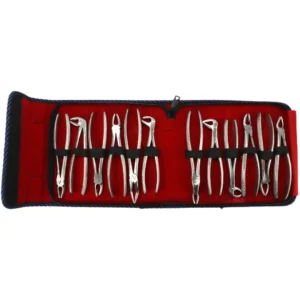
Waldent Extraction Forceps Kit Set of 12
Product Type: Dental Extraction Forceps Set
Quantity
Prefer a call instead? Request a callback