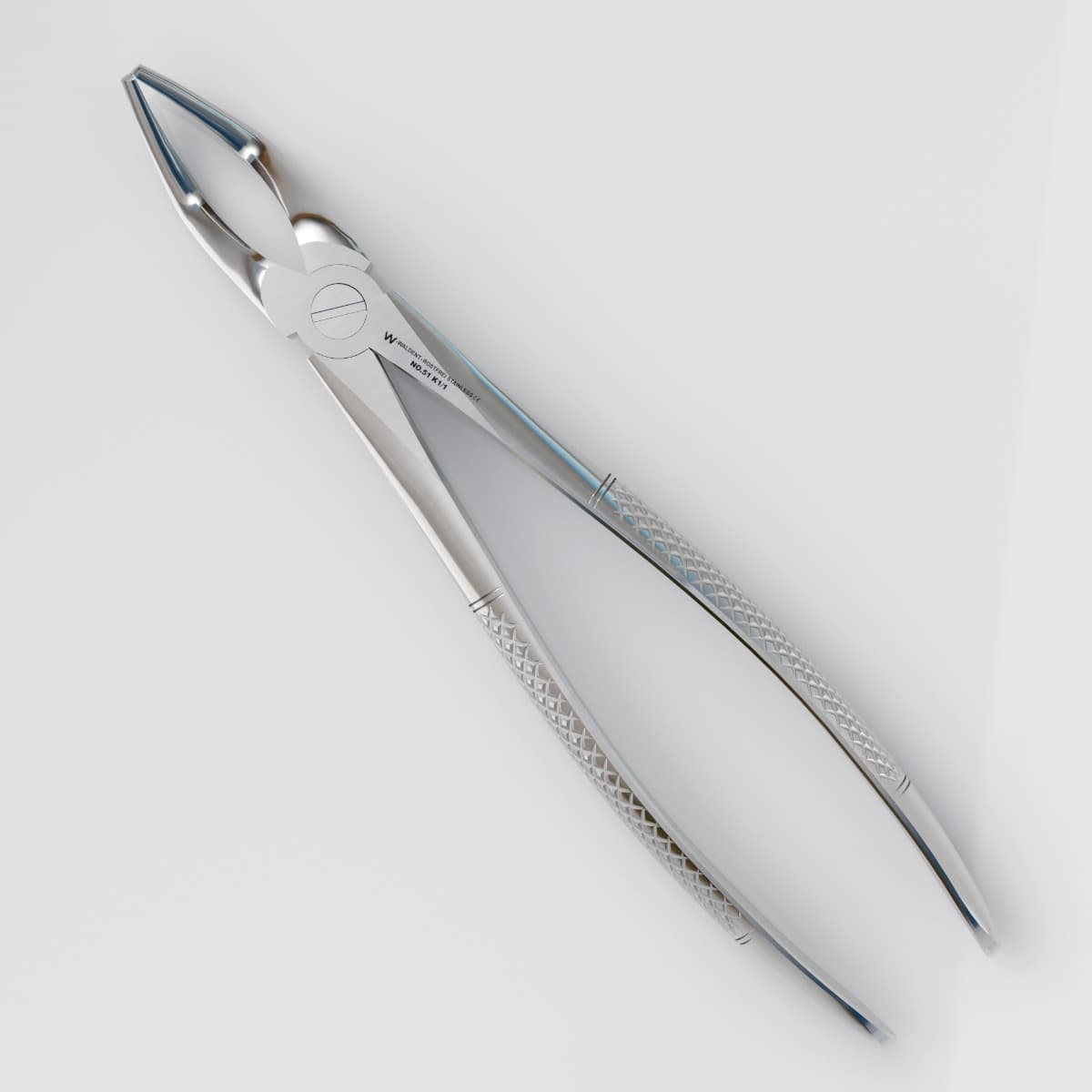
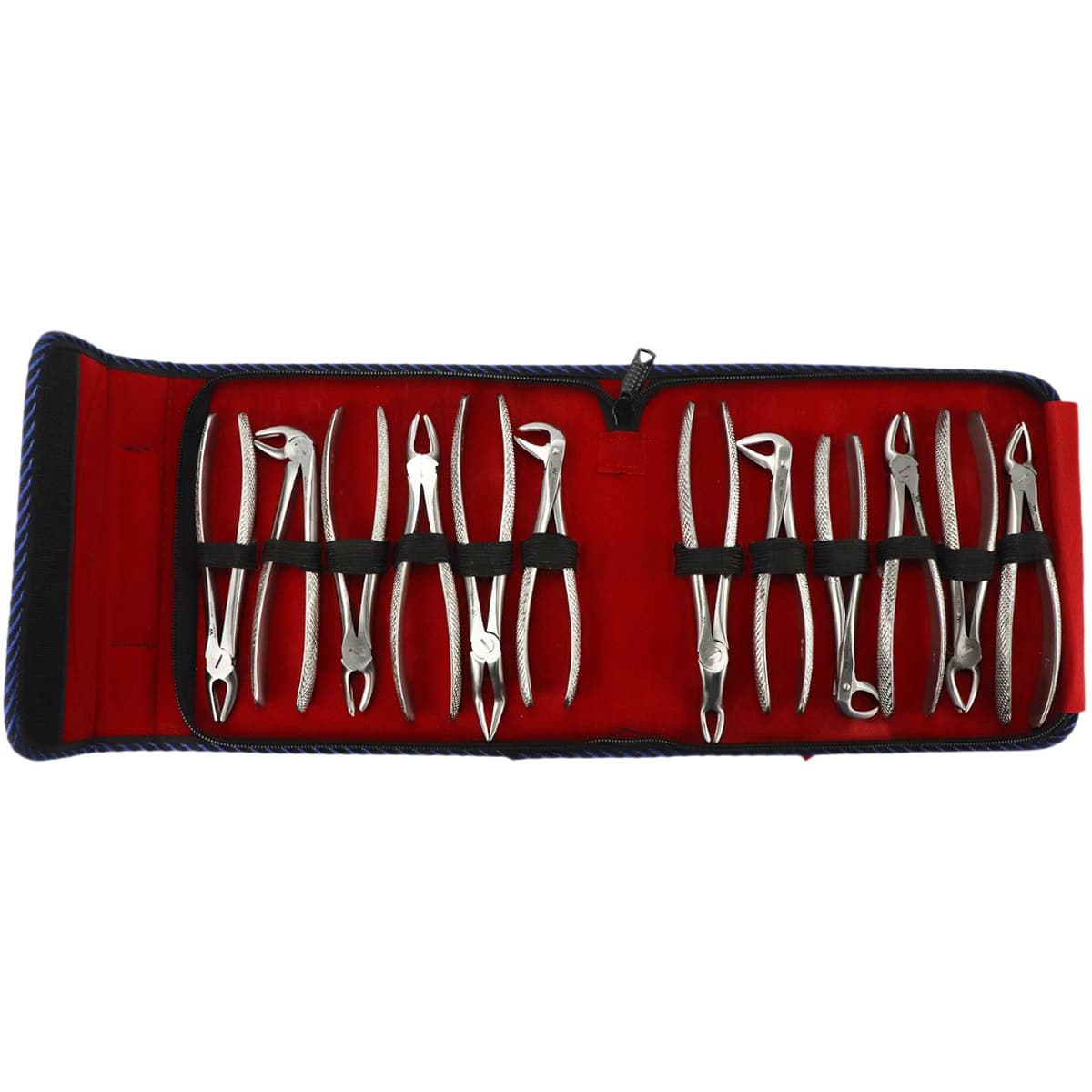
The Waldent extraction forceps set comprises 12 instruments manufactured from surgical-grade stainless steel. This kit provides comprehensive coverage for extractions across all tooth types and locations: upper and lower anteriors, premolars, molars, root stumps, and third molars. The set includes both right and left-specific instruments for molar extractions, along with dedicated instruments for complex cases requiring specialized beak geometry.
Each dental instruments for tooth extraction in this extraction forceps set features serrated handles for improved grip stability and sharp beaks shaped to conform to root surface anatomy. The concave inner-surface design cradles the tooth structure rather than concentrating force at single points, reducing the risk of fracture and minimising trauma to surrounding tissues. This anatomical design consideration distinguishes the set from universal forceps options.
The primary advantage of a 12-piece set over smaller kits is the availability of right and left-specific molars forceps. While general practitioners can function with universal instruments, having tooth-specific and side-specific forceps improves procedural efficiency, reduces operator fatigue, and decreases the force required during extraction. The material has been passivated to resist corrosion, which is critical for maintaining hinge joint function and preventing loss of control during procedures.
Product Uses
- Extraction of upper central and lateral incisors
- Removal of upper premolars with right and left-specific instruments
- Extraction of lower premolars bilaterally
- Upper right molar extraction
- Upper left molar extraction
- Removal of upper root stumps and retained root fragments
- Extraction of upper third molars
- Lower molar extraction with specialized bifurcation-specific beak geometry
- Removal of lower anterior teeth
- Extraction of lower retained root pieces
- Upper molar extraction with asymmetrical beak design
- Use in dental clinics, oral surgery centers, and hospital-based surgical environments
How to Use
Pre-Operative Assessment and Preparation
Before initiating the extraction procedure, review the patient's medical history to identify any relevant conditions or contraindications. Ensure adequate anesthesia has been administered and is effective. Sterilize all instruments in the extraction forceps set according to established protocols. Verify that instruments are completely dry before use and that sterilization indicators confirm proper sterilization has been achieved.
Instrument Selection
Examine the tooth to be extracted and identify its anatomical position. Select the appropriate instrument from the extraction forceps set based on tooth type and location. Upper anterior teeth require the anterior-specific forceps. Upper molars require right or left-specific instruments. Lower premolars and molars have dedicated instruments. Root stumps and third molars have specialized forceps designed for their specific anatomy.
Patient Positioning and Visualization
Position the patient in the dental chair to allow optimal access and visibility of the extraction site. The occlusal plane should be positioned at approximately 45 to 60 degrees from horizontal for maxillary teeth, and parallel to the floor for mandibular teeth. Use retractors and mouth props to maintain visibility and access throughout the procedure.
Instrument Application and Technique
Grasp the selected forceps firmly with the dominant hand. Position the instrument beaks around the tooth crown at the cervical region, ensuring complete engagement before initiating any movement. Apply controlled rocking motions in buccal and lingual directions to gradually expand the alveolar socket. Implement gentle rotational movements to separate the periodontal ligament from the root surface.
Distribute pressure gradually and systematically rather than applying force in a single direction. The concave beak design distributes pressure across the tooth surface. Allow adequate time for the tooth to loosen naturally before applying axial traction. Once sufficient mobility is achieved, apply steady upward pressure along the tooth's long axis to deliver it from the socket.
Post-Extraction Management
Following tooth removal, inspect the extraction socket for retained root fragments, granulation tissue, or other debris. Remove any remaining material using appropriate instruments. Provide postoperative instructions to the patient regarding expected healing, activity modification, and any necessary follow-up appointments.
Product Features
- Serrated handles provide enhanced grip and prevent instrument slippage during the procedure
- Sharp beaks conform to root surface anatomy for improved beak-to-tooth adaptation
- Concave inner beak surface distributes pressure across the tooth surface rather than concentrating at single points
- Passivated stainless steel resists corrosion and maintains hinge joint integrity
- Right and left specific forceps for molar extractions improve procedural efficiency
- Specialized pointed beaks for lower molar bifurcation areas
- Asymmetrical beak designs for specialized anatomical engagement
- Ergonomic handle design allows force application through the forearm rather than being dependent on the wrist
- Large handle dimensions provide operator comfort during extended procedures
- Systematic load distribution across blade surfaces reduces trauma to tooth structure
- Reusable instruments with durable stainless steel construction
- Comprehensive 12-piece set covers all tooth types and positions
- Latex-free construction suitable for patients with sensitivities
Technical Specification
| Specification | Detail |
| Instrument Name | Extraction Forceps Kit 12 |
| Product Type | Dental Extraction Instruments |
| Category | Oral Surgery |
| Material | Surgical-grade stainless steel |
| Pieces in Set | 12 instruments |
| Reusable/Disposable | Reusable |
| Sterility Status | Non-Sterile (requires sterilization before use) |
| Latex Content | Latex-Free |
| Autoclave Temperature | 135 degrees Celsius |
| Handle Design | Serrated ergonomic handles |
| Beak Design | Sharp with a concave inner surface |
| Corrosion Resistance | Passivated stainless steel |
Handling Tips
Cleaning Protocol
Remove gross debris immediately following use. Dehydrated tissue material becomes difficult to remove and compromises the instrument surface. Place instruments in an ultrasonic cleaner with a general-purpose solution containing a rust inhibitor. Process for 10 minutes with instrument tips in open position to ensure effective cleaning of all surfaces, including hinge areas. Do not use tap water for rinsing; residual minerals cause corrosion of stainless steel. Use distilled water if additional rinsing is required. Dry instruments completely after cleaning.
Pre-Sterilization Preparation
After drying, place the instruments in the instrument solution. When loading onto sterilization trays, maintain tips in the open position throughout sterilization. Closed tips trap moisture within the hinge joint, creating conditions for corrosion and staining. Moisture interference compromises sterilization effectiveness.
Sterilization Process
Follow autoclave manufacturer specifications for time and temperature parameters. Standard protocol requires 135 degrees Celsius. Allow the autoclave to depressurize completely before opening. Permit instruments to cool to room temperature. Placing hot instruments into containers or drawers creates condensation and moisture accumulation on the instrument surface.
Storage and Maintenance
Apply light silicon lubricant to hinges and working surfaces after complete drying. This prevents corrosion and maintains smooth hinge joint function. Store instruments in a dry environment with adequate air circulation. Avoid humid storage conditions, sealed containers, or damp cases. If hinge movement becomes stiff or restricted, the instrument likely contains trapped moisture. Soak in lubricant solution and work the hinge repeatedly to remove moisture.
Product Packaging
The Waldent forceps set includes 12 instruments:
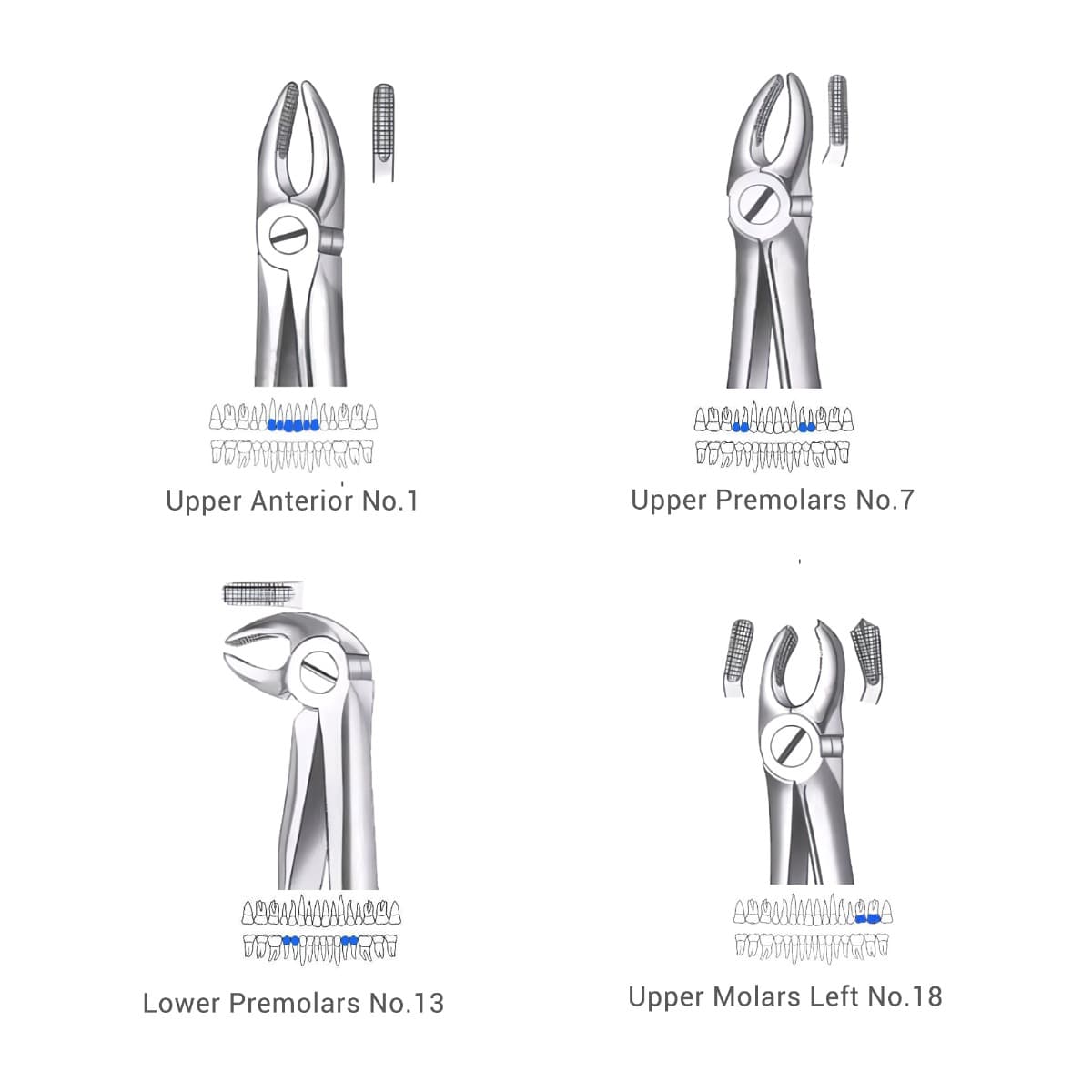
- 1 x Upper Anterior No.1
- 1 x Upper Premolars No.7
- 1 x Lower Premolars No.13
- 1 x Upper Molars Right No.17
- 1 x Upper Molars Left No.18
- 1 x Upper Roots Forceps No.51
- 1 x Upper third Molars No.67
- 1 x Lower Molars No.73
- 1 x Lower Anteriors and Roots No.74
- 1 x Lower Molars No 86
- 1 x Upper Molars Right No.89
- 1 x Upper Molars Left No.90
Medical Disclaimer
This dental forceps set is intended for use by trained dental professionals and qualified oral surgeons only. Users must possess current knowledge and skills in extraction procedures and proper instrument handling. Improper sterilization, inadequate instrument maintenance, or failure to follow established extraction protocols may result in patient injury, infection, tooth fracture, or damage to surrounding tissues. The manufacturer assumes no liability for complications resulting from improper use, inadequate operator training, or failure to maintain instruments according to established clinical standards and manufacturer guidelines.
Warranty and Support
The dental forceps set is covered under the manufacturer's warranty for defects in materials and workmanship under normal use conditions. Warranty coverage includes hinge joint defects and beak defects resulting from manufacturing. Warranty does not cover damage resulting from operator error, improper sterilization, inadequate maintenance, or failure to follow handling guidelines. For warranty service inquiries, contact the manufacturer with documentation of the defect.
Certifications
Instruments are manufactured from surgical-grade stainless steel, meeting international standards for dental and surgical instruments. Materials comply with specifications for biocompatibility and corrosion resistance. Instruments meet requirements for sterilization at 135 degrees Celsius.
FAQ
Q: What is the advantage of a 12-piece set compared to smaller extraction forceps kits?
A: The 12-piece set includes right and left-specific molar forceps, dedicated root stump instruments, and third molar forceps. This comprehensive range eliminates the need to adapt universal forceps to different anatomical situations, improving procedural efficiency and operator control.
Q: How do tooth-specific instruments compare to universal extraction forceps?
A: Universal forceps function across multiple applications but represent a compromise in beak geometry and fit. Tooth-specific instruments provide optimal beak shape for individual tooth anatomy, resulting in better adaptation, reduced force requirements, and improved procedural outcomes.
Q: What is the functional difference between No.17 and No.89 upper molar forceps?
A: No.17 is designed specifically for right upper molars with standard beak geometry. No.89 features asymmetrical beaks with one cylindrical tapering tip designed to engage the buccal trifurcation area, providing enhanced grip for molars with complex root anatomy.
Q: What is the expected functional lifespan of this forceps set?
A: With proper maintenance, including appropriate cleaning, sterilization, and lubrication, instruments typically remain functional for 3 to 5 years of regular use. Beak wear occurs gradually from repeated gripping. When slippage begins during routine extractions, beak replacement or instrument retirement is indicated.
Q: Is this dental extraction instruments set appropriate for general dental practices?
A: Yes. The 12-piece set provides comprehensive coverage for all extraction scenarios encountered in general practice. Specialists performing high-volume extractions may develop specific preferences for certain instruments, but this set serves the full range of general practice needs.
Q: Must all 12 forceps be used, or can practitioners select specific instruments?
A: Individual practitioners can utilize specific instruments based on their patient population and extraction frequency. However, having the complete set available ensures the ability to select the optimal instrument for each clinical situation. Most practitioners find all 12 instruments necessary over time.
Q: How does the concave beak design improve extraction outcomes?
A: The concave inner surface distributes pressure across a broader tooth surface area rather than concentrating force at discrete points. This distribution reduces the risk of tooth fracture, decreases trauma to surrounding tissues, and improves overall procedural control.
Q: Are root-specific forceps necessary, or can standard forceps handle retained roots?
A: Root-specific instruments have specialized beak geometry designed for the smaller diameter and different surface characteristics of root fragments. Using appropriate instruments improves efficiency in root removal and reduces the need for additional surgical intervention.
Q: How can practitioners identify when the hinge joint requires maintenance?
A: Test hinge movement by opening and closing the instrument several times. Movement should be smooth with moderate pressure. Stiffness or resistance indicates trapped moisture in the joint. Prolonged soaking in lubricant solution combined with repeated hinge movement typically restores normal function.
Q: Is sterilization at 135 degrees Celsius safe for these instruments?
A: Yes. This temperature is standard protocol for dental and surgical instruments. Ensure instruments are completely dry before sterilization, as moisture interferes with sterilization effectiveness. Instruments must be dry after sterilization before storage to prevent condensation-related corrosion.
Conclusion
For dental practices performing regular extractions, this 12-piece extraction forceps set provides comprehensive instrumentation for all clinical scenarios. The inclusion of right and left-specific molar forceps, dedicated root instruments, and third-molar forceps eliminates the need to adapt universal instruments.
Proper maintenance, including appropriate cleaning, sterilization, and lubrication, ensures reliable instrument function for several years. Having the dental extraction instruments appropriate for each tooth type and location improves procedural efficiency and reduces operator fatigue. This is the best dental extraction forceps set that represents a practical investment for practices seeking to optimize extraction outcomes and operator experience.
-2026-02-06.webp&w=3840&q=75 "Waldent Extraction Forceps Kit Set of 12 (K1/1) - View 2")