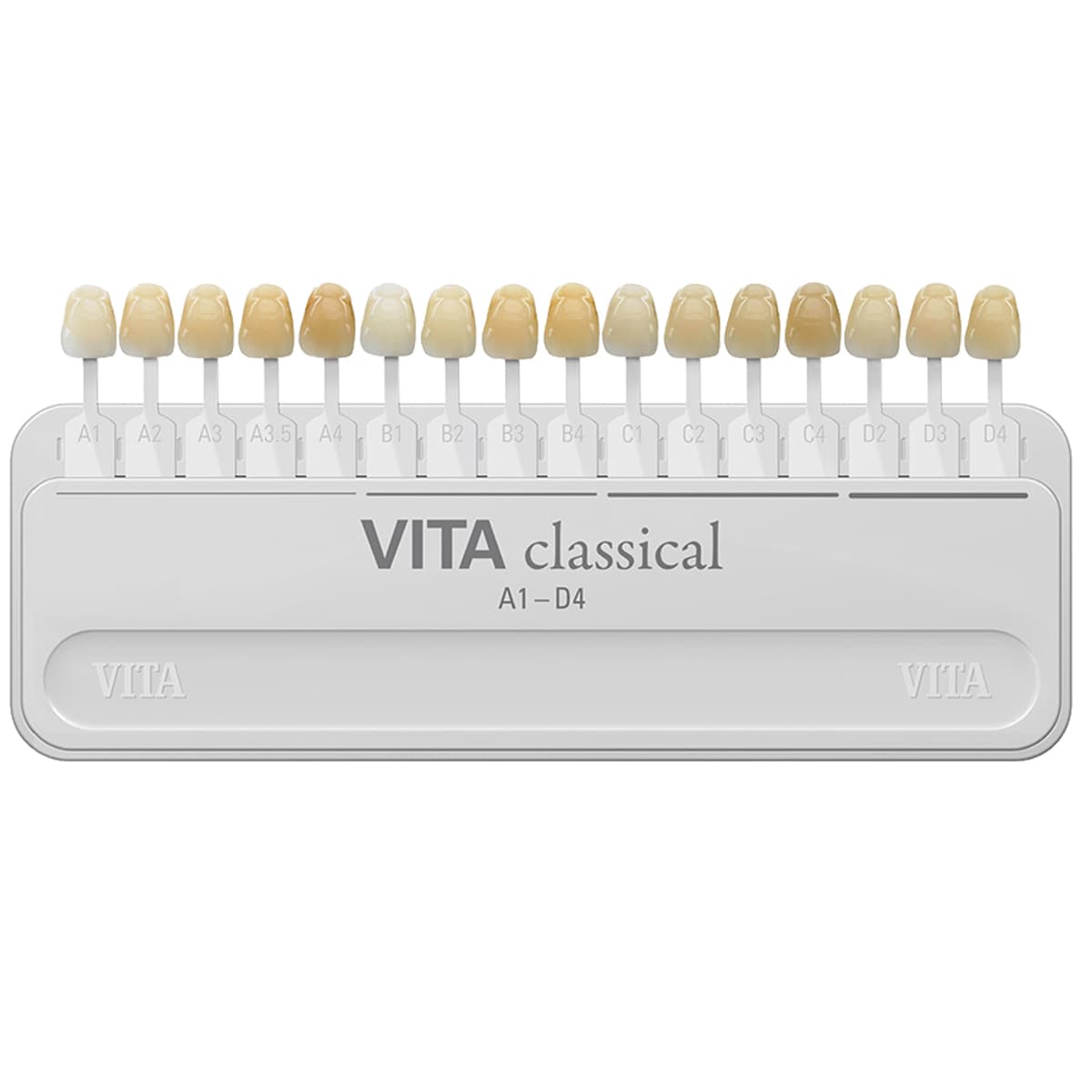
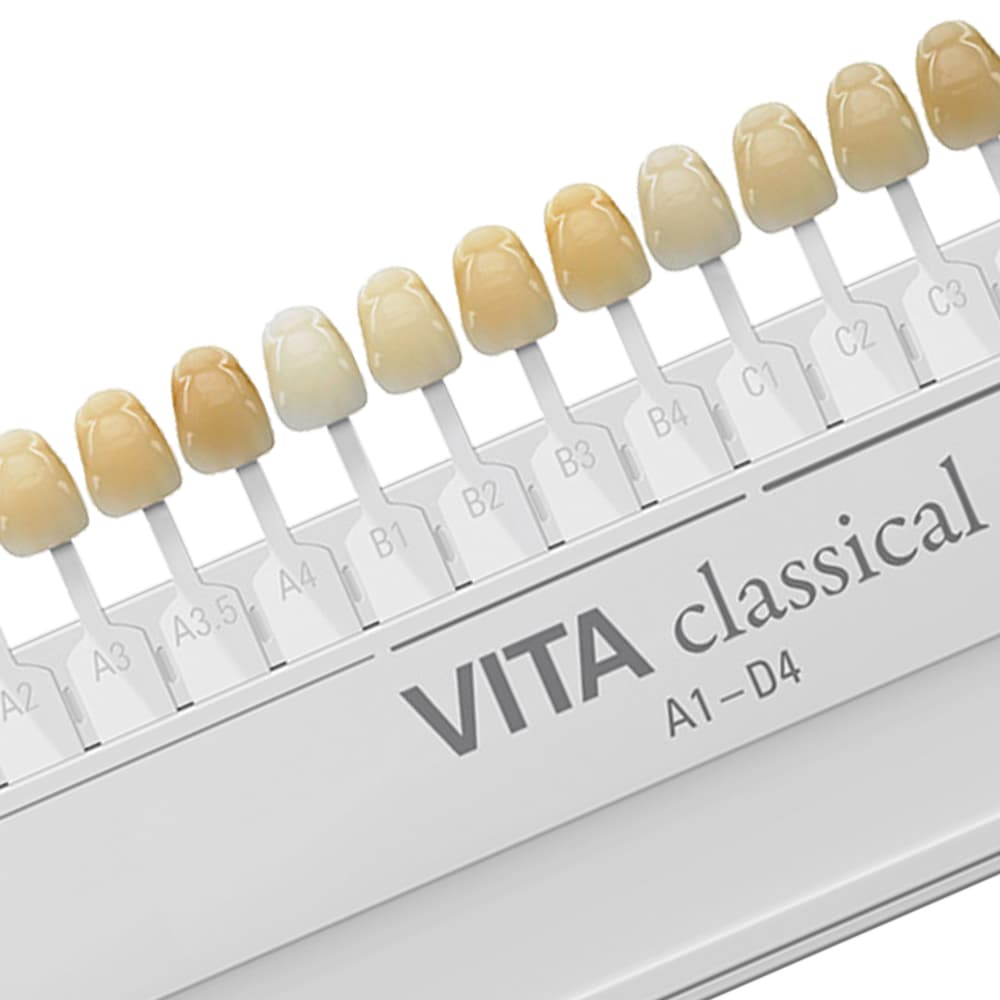
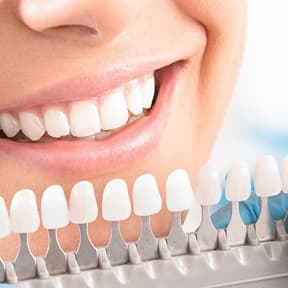
The Vita Classical Shade Guide is the standard tool dentists use for matching tooth color during restorative and cosmetic procedures. It contains 16 shade tabs organized into four color groups: A (reddish-brownish), B (reddish-yellowish), C (grayish), and D (reddish-grayish). The tabs run from A1 (lightest) through D4 (darkest), covering the full range of natural tooth colors. This makes it practical for selecting shades for crowns, veneers, bridges, and composite restorations.
The vita guide works because the acrylic samples approximate natural tooth color and translucency accurately. The tabs are high-quality and temperature-resistant, withstanding autoclave sterilization and repeated disinfection without color change. Unlike digital shade systems that require calibration, this classical vita shade guide is straightforward and doesn't depend on technology. You hold it up, compare it to the tooth, and select the closest match. Many practices use this guide alongside digital systems because it's reliable and fast.
Shade selection accuracy depends on proper technique. The tooth must be undehydrated, which is why shade assessment before preparation is critical. Once prepared, the tooth dehydrates and appears lighter. The surrounding lighting matters significantly. Standard daylight at 5500K to 6500K is necessary for accurate color matching. Yellow or warm lighting distorts shade selection. Your environment also affects results. Bright clothing, red lipstick, or colored walls reflect light and skew your perception. Using this vita classical a1 d4 shade guide correctly means controlling these variables.
Product Uses
- Shade selection for ceramic crowns on anterior teeth, where esthetic matching is critical.
- Shade determination for multiple crowns or full-mouth restorations.
- Veneer shade selection prior to tooth preparation to capture the actual tooth color.
- Bridge restoration shade matching when replacing multiple teeth.
- Composite restoration shade selection for anterior and visible restorations.
- Implant abutment restoration shade matching to replicate natural tooth color.
- Shade verification at the laboratory communication stage.
How to Use
- Before shade selection, ensure the patient's teeth are clean and free of stain. Ask the patient to remove any bright lipstick or lip gloss, as it reflects color onto teeth and distorts perception.
- Position yourself and the patient in proper lighting. Natural daylight or standardized daylight at 5500K to 6500K is ideal. Avoid warm artificial lighting that shifts colors toward yellow.
- Have the patient relax their lips in a natural position. The tooth should not be stretched or pulled back artificially.
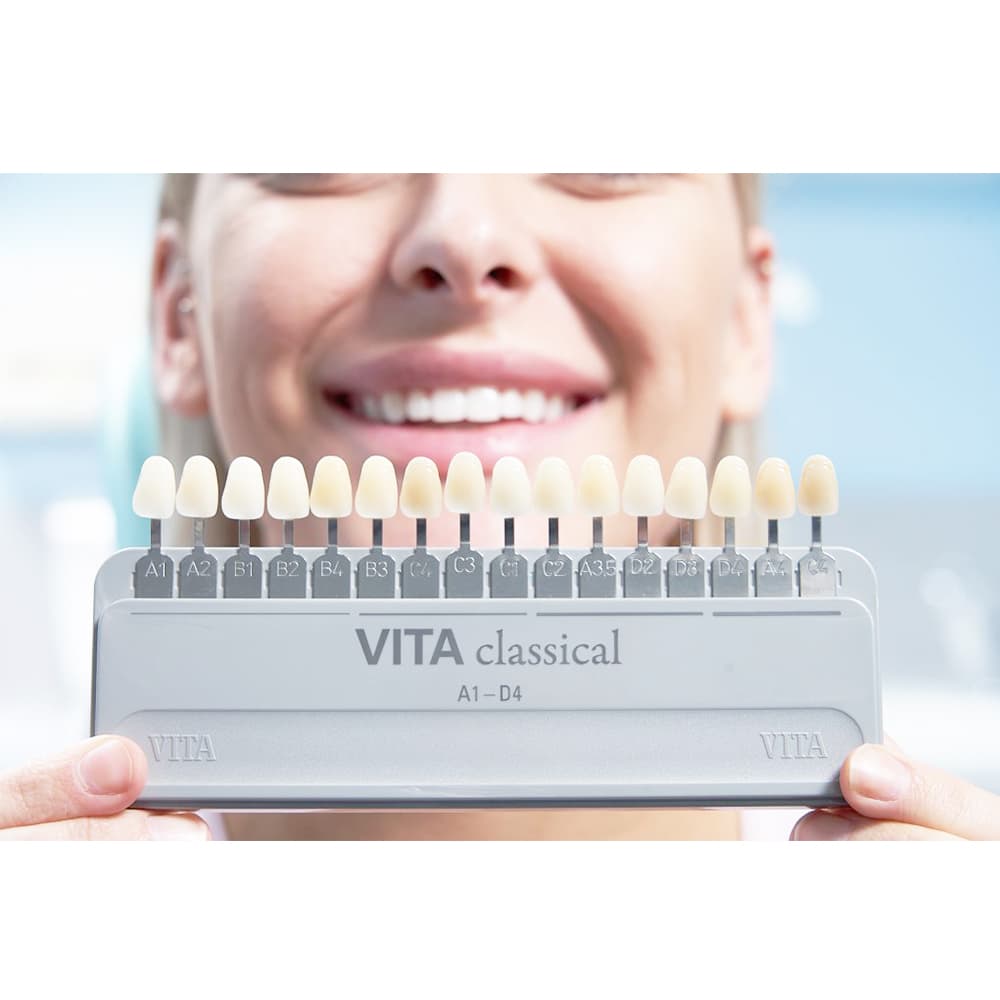
- Hold the vita guide at approximately 25 to 30 centimeters from the tooth. Keep your arm comfortably bent. The distance and angle matter for accurate color perception.
- Begin with A group of shades (A1 through A4) since most anterior teeth fall into this group. Look quickly between the tooth and shade tabs without staring, as prolonged viewing causes eye fatigue and degrades color perception.
- Compare the middle third of the shade tab to the middle third of the tooth. The middle third shows the most representative color. The incisal edge is more translucent and lighter, while the cervical can be darker.
- When you identify a close shade in the A group, move to the B group (B1, B2, B3, B4) and compare. Sometimes what looks like an A shade is actually more yellow and fits better in the B group.
- Make your final shade selection within a few seconds after identifying the closest match. Hesitation and prolonged comparison cause eye fatigue and reduce accuracy. Trust your initial impression.
- Record the selected shade in the patient's chart using the exact designation. Include a note about whether the tooth appeared dehydrated or had special characteristics affecting the final restoration. This documentation is essential for future reference with any vita tooth shade guide comparison.
Product Features
- Comprehensive 16-tab shade range covering A1 (lightest) through D4 (darkest) for all natural tooth colors.
- Four distinct shade groups (A, B, C, D) organized by color tone, streamlining the selection process.
- High-quality acrylic accurately representing natural tooth translucency and color.
- Temperature-resistant material tolerating autoclave sterilization up to 132 degrees Celsius.
- Easy disinfection with mild surface disinfectants or wipes between patients.
- Lightweight and portable for transport between operatories.
- Color-stable tabs maintain shade accuracy over the years without fading.
- Smooth acrylic tabs resistant to scratching during normal handling.
Technical Specification
| Specification | Detail |
| Product Type | Dental shade matching guide |
| Total Shades | 16 (A1-D4) |
| Shade Groups | A, B, C, D |
| Material | Temperature-resistant acrylic |
| Viewing Distance | 25 to 30 centimeters |
| Ideal Lighting | 5500K to 6500K daylight |
| Autoclave Temperature | Up to 132 degrees Celsius |
| Color Stability | Resistant to fading |
| Storage | Cool, dry location away from sunlight |
| Disinfection | Mild disinfectant wipes |
Handling Tips
- Perform shade selection before tooth preparation. Once prepared, the tooth appears lighter than its actual shade.
- Use only natural daylight or standardized 5500K to 6500K lighting. Yellow-toned lighting ruins accuracy.
- Maintain a neutral-colored environment. Bright colors and clothing reflect onto the tooth and distort perception.
- Ask patients to remove lipstick or bright lip gloss before shade selection.
- Compare shades quickly without prolonged staring. Eye fatigue happens within 10 to 15 seconds of viewing.
- Hold the guide at the recommended 25 to 30 centimeter distance from the tooth.
- Focus on the middle third of the shade tab and tooth. The incisal edge is more translucent.
- Clean the shade tabs immediately after use with mild disinfectant wipes.
- Dry tabs completely before storing to prevent water spotting.
- Store in a cool, dry place away from direct sunlight that can shift acrylic colors.
- Inspect tabs periodically for scratches or discoloration. Replace if worn.
- Use only mild disinfectants. Avoid harsh chemicals that damage acrylic.
Product Packaging
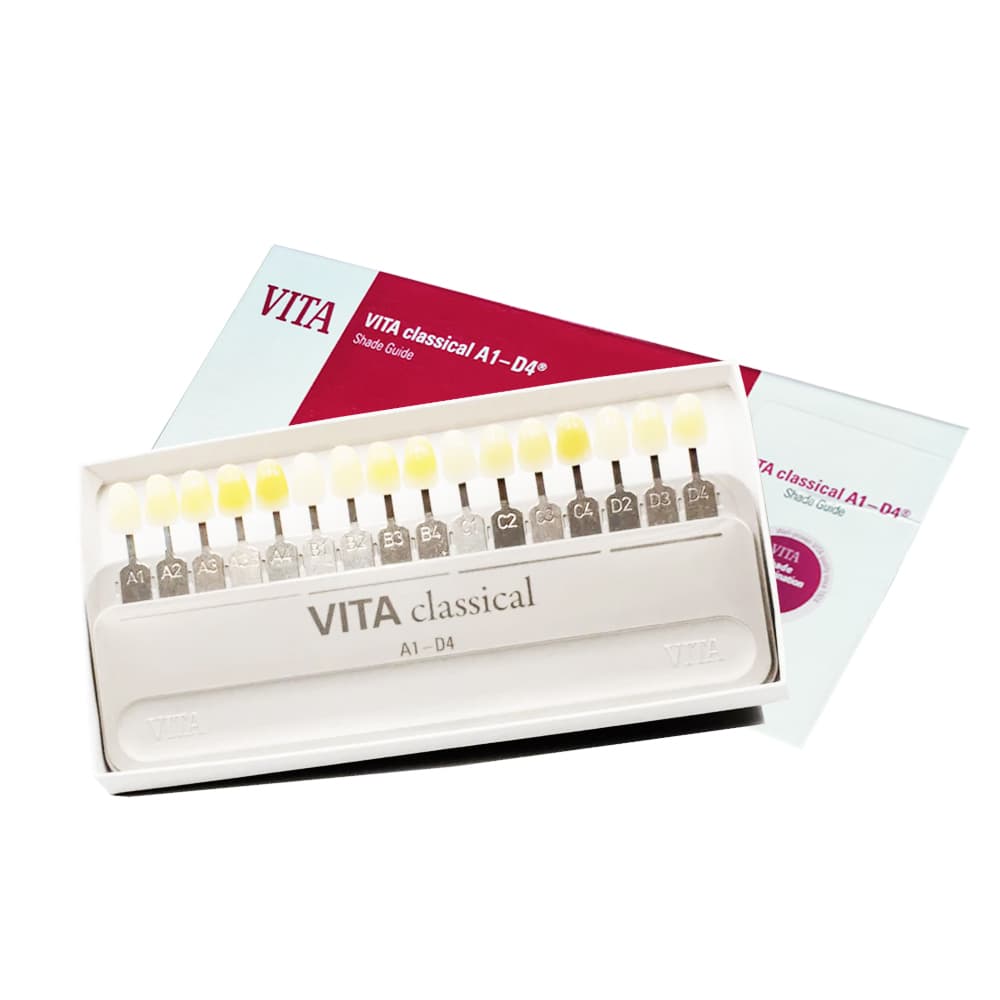
- The Vita Classical Shade Guide comes as a single unit containing all 16 shade tabs in an organized case.
- The shade tabs are arranged in groups: A shades (A1, A2, A3, A3.5, A4), B shades (B1, B2, B3, B4), C shades (C1, C2, C3, C4), and D shades (D2, D3, D4).
- The protective case keeps the tabs organized and protects them from damage during storage and transport. The case is designed to fit easily in a desk drawer or operatory cabinet.
Medical Disclaimer
Only licensed dentists can use this product. The results of shade selection depend on the right technique, the lighting, and the patient. The way a tooth looks can change depending on the light, the age of the patient, whether they are dehydrated, and the position of the tooth. This guide is a visual reference, but it doesn't guarantee that the colors will match perfectly in every case. The results may be different depending on the structure of the tooth, how clear it is, and the properties of the restoration material.
Warranty and Support
This product carries no formal warranty. The guide is designed for professional clinical use and should be handled and stored according to manufacturer recommendations.
Certifications
The Vita Classical Shade Guide meets applicable standards for dental shade-matching devices. The acrylic material is biocompatible and suitable for intraoral use when properly disinfected. The product complies with dental equipment regulations in the United States.
FAQ
Q: What are the 16 shades included in the vita shade guide?
A: The guide includes A1, A2, A3, A3.5, A4, B1, B2, B3, B4, C1, C2, C3, C4, D2, D3, and D4 organized into four groups by color tone.
Q: When should I perform shade selection for a crown?
A: Always perform shade selection before tooth preparation. Once prepared, the tooth dehydrates and appears lighter than its actual shade.
Q: What lighting is best for accurate shade matching?
A: Natural daylight or standardized daylight at 5500K to 6500K is ideal. Avoid warm incandescent or yellow-toned fluorescent lighting.
Q: Can the classic vita shade guide be autoclaved?
A: Yes. The shade tabs are temperature-resistant acrylic and can be autoclaved up to 132 degrees Celsius.
Q: How should I position the guide for accurate results?
A: Hold the guide at approximately 25 to 30 centimeters from the patient's tooth with your arm comfortably bent.
Q: Why is a neutral environment recommended?
A: Bright colors in your surroundings reflect light onto the tooth and distort color perception. A neutral background helps you see true shade.
Q: How long do shade tabs last before needing replacement?
A: With proper care, the acrylic tabs maintain accuracy for years. Replace the guide if tabs become scratched, cracked, or discolored.
Conclusion
The vita classical shade guide is the easiest tool for dentists to use to match shades. There are 16 shade tabs that cover all the natural colors of teeth, and they are grouped in a way that makes it easy to choose. This Vitapan classical shade guide doesn't need any technology or batteries to work, unlike digital systems that need to be maintained and calibrated. The acrylic is strong and keeps its colour for a long time. It is very important for any dentist who puts on crowns, veneers, or bridges to have a well-kept shade guide in the operatory. When used correctly with the right lighting and technique, it gives patients the shade accuracy they expect.