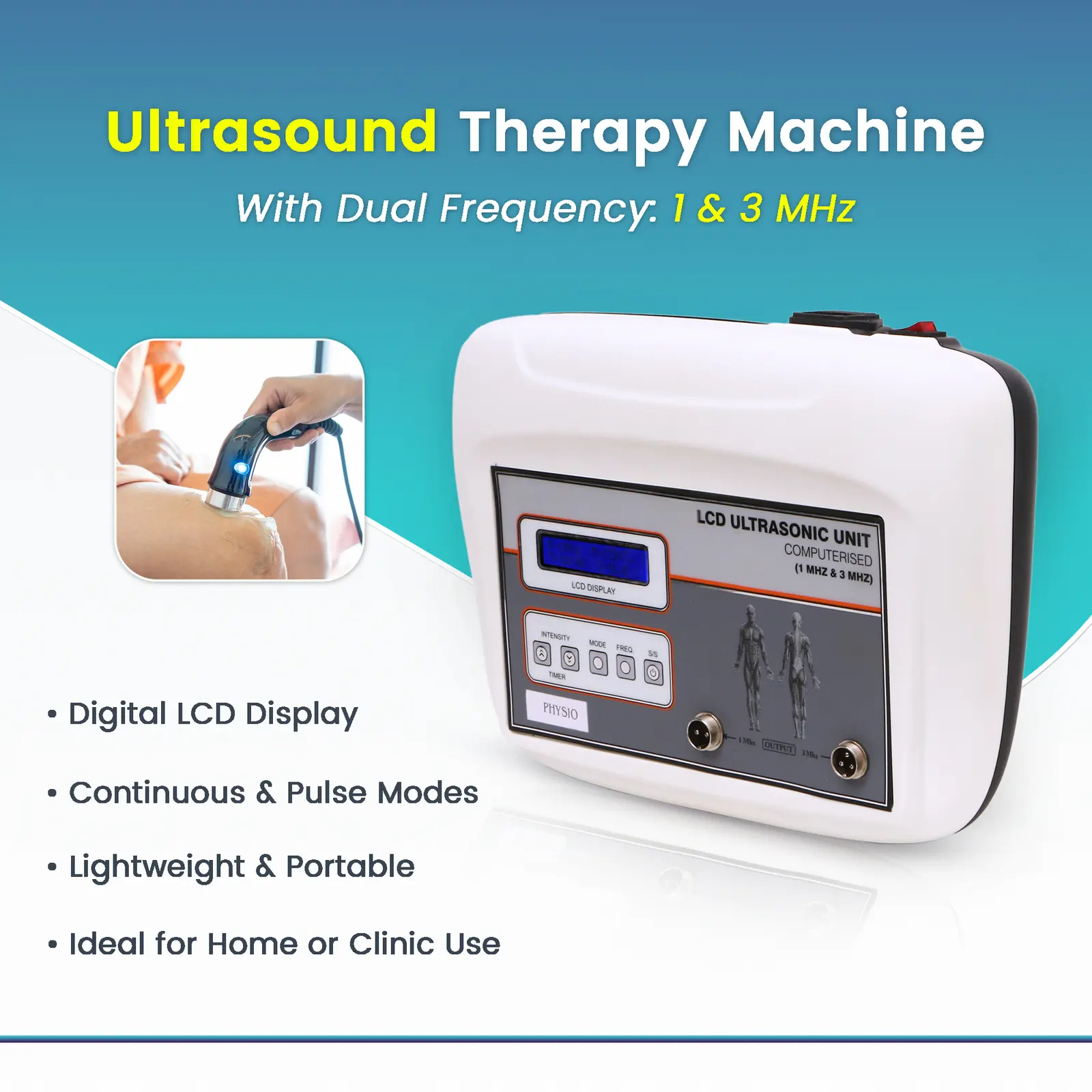
The LCD Ultrasonic Therapy Unit (1 MHz & 3 MHz) is a professional computerised physiotherapy device designed to provide effective pain relief and accelerated tissue healing through therapeutic ultrasound technology. Featuring dual-frequency operation, this advanced system delivers both deep tissue and superficial treatment, making it suitable for a wide range of musculoskeletal conditions.
With an LCD display, adjustable intensity control, and precision therapy settings, this unit ensures safe, targeted, and consistent treatment for clinics, rehabilitation centers, and professional physiotherapy use.
Key Features
- Computerised dual-frequency operation — 1 MHz and 3 MHz selectable at the press of a button
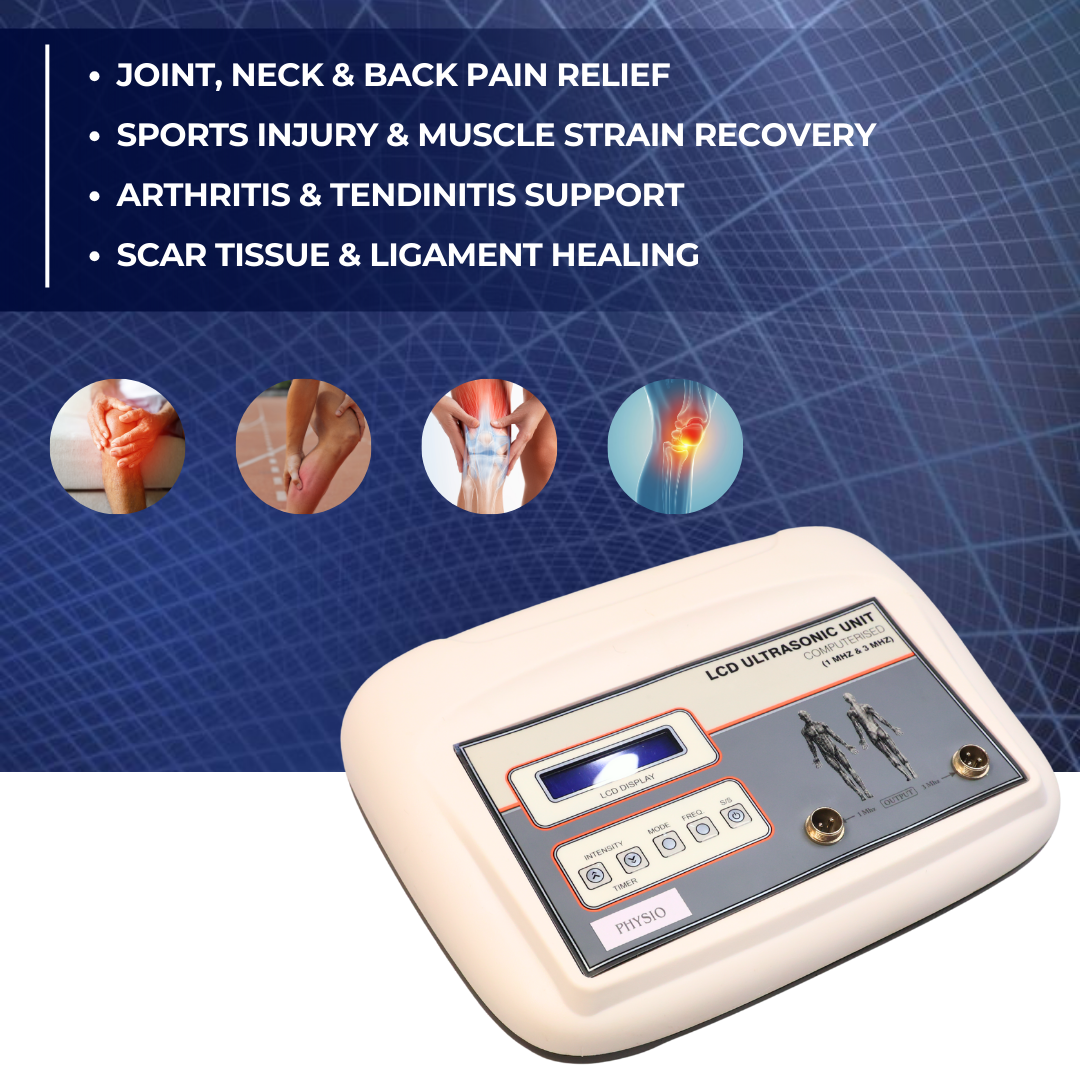
- Blue backlit LCD display — all parameters (frequency, mode, intensity, timer) shown simultaneously on one screen
- Simple 4-button digital control interface: INTENSITY / MODE / FREQ / S/S (Start/Stop)
- Two dedicated output ports (1 MHz left, 3 MHz right) and two matched transducer probes
- Continuous and Pulsed output modes with software-controlled duty cycle selection
- Digital timer with LCD countdown — accurate session management
- Anatomical body graphic on panel for quick treatment site reference
- Compact rounded white ABS enclosure — clinic-friendly and portable
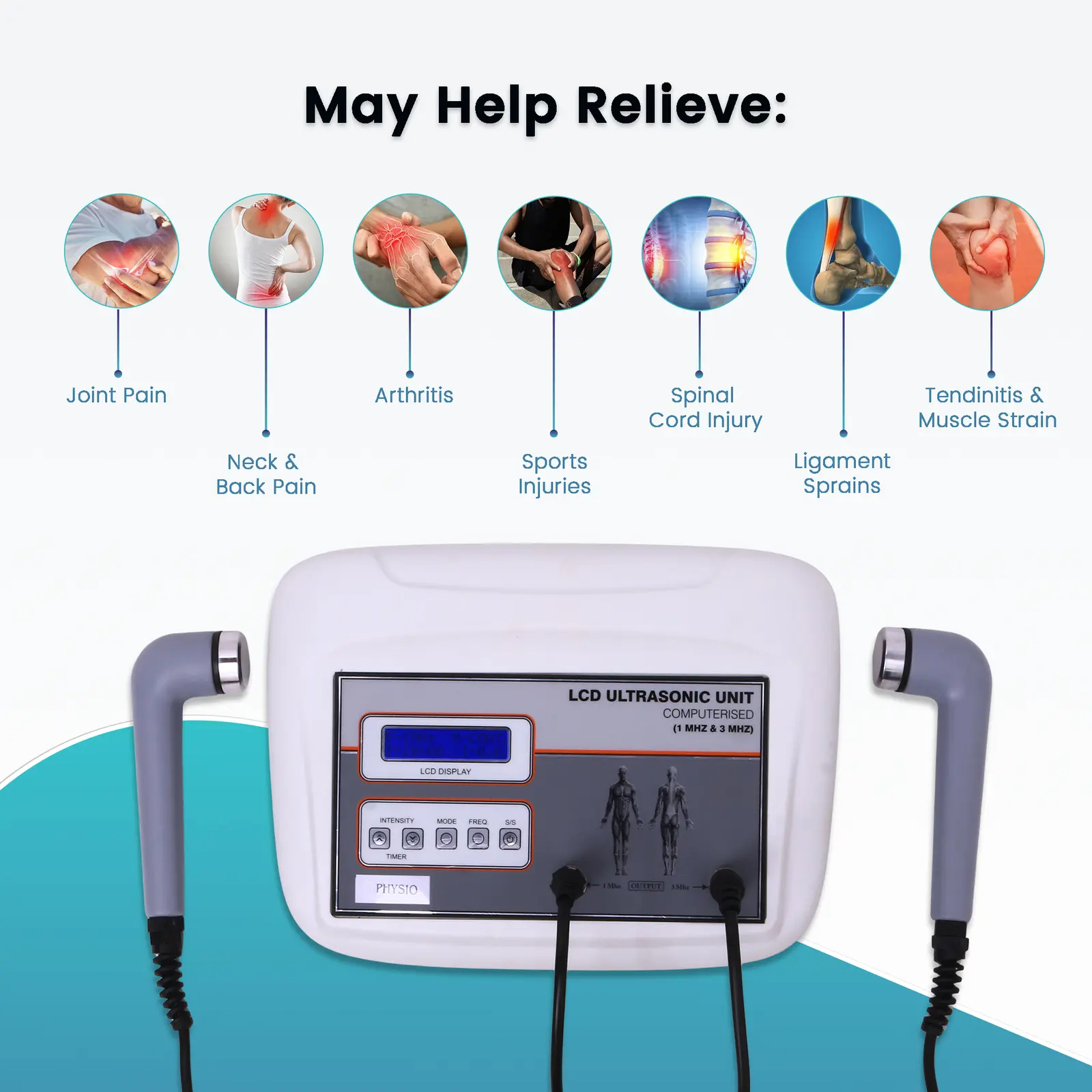
- Versatile clinical indications: joint pain, arthritis, sports injuries, spinal conditions, tendinitis, ligament sprains
Technical Specification
| Parameter | Specification |
| Product Name | LCD Ultrasonic Unit — Computerised Physiotherapy System |
| Operating Frequencies | 1 MHz and 3 MHz — dual frequency, selectable via FREQ button |
| Number of Probes | 2 × Dedicated transducer probes (1 MHz left port, 3 MHz right port) |
| Output Modes | Continuous and Pulsed — selectable via MODE button |
| Pulse Ratios | Multiple ratios (software-controlled via computerised panel) |
| Intensity Range | 0.1 – 3.5 W/cm² — adjustable via INTENSITY push-button control |
| Timer | Digital countdown — set via TIMER push-button; shown on LCD |
| Display | Blue backlit LCD DISPLAY — shows all parameters simultaneously |
| Controls | 4 × push-buttons: INTENSITY, MODE, FREQ, S/S (Start/Stop); TIMER button |
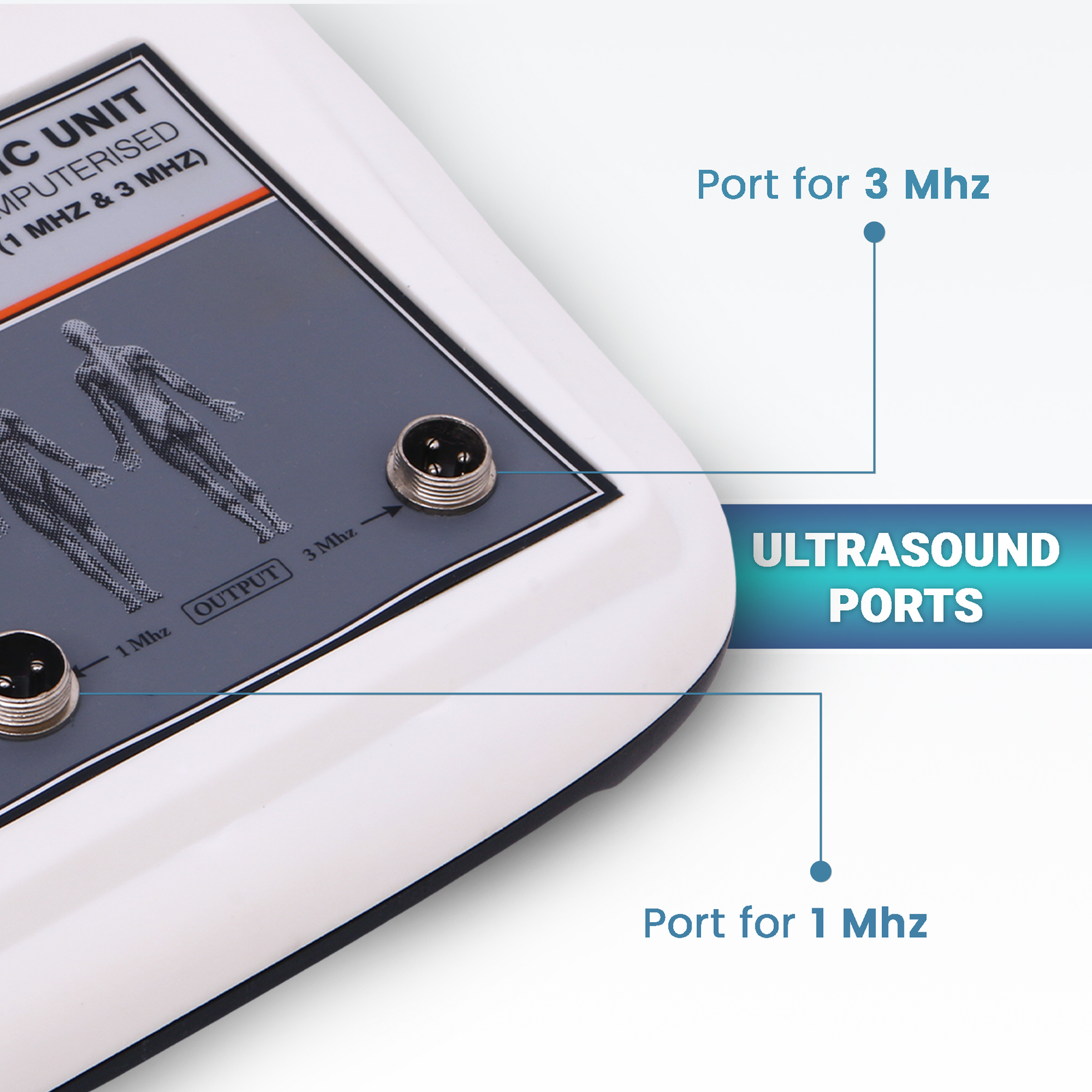
| Output Ports | 2 × Front-panel OUTPUT jacks labelled 1 MHz and 3 MHz |
| Construction | Rounded white ABS desktop enclosure with dark brushed front panel |
| Human Body Graphic | Anatomical reference graphic on panel for treatment site guidance |
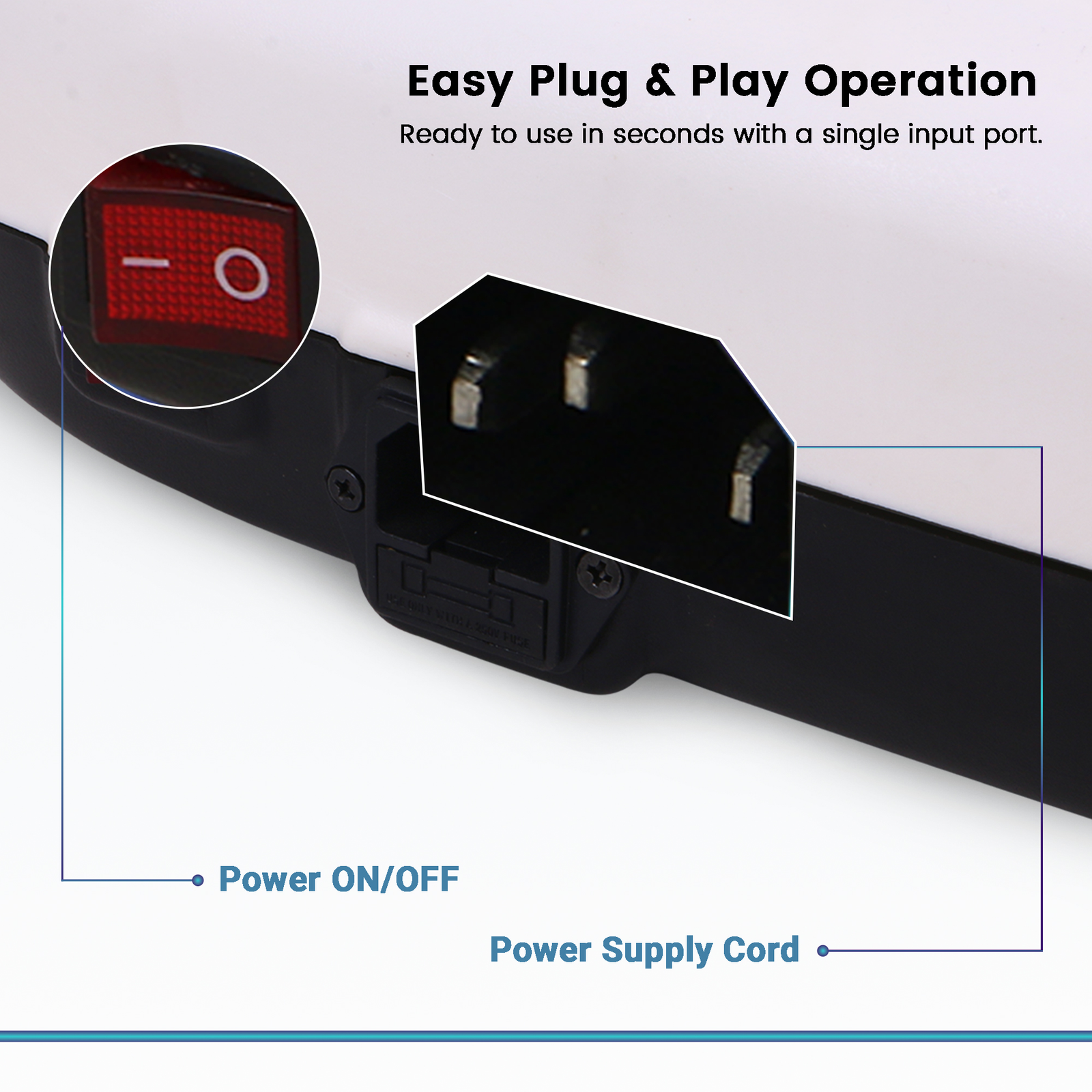
| Power Supply | AC Mains 110V/ 220V (50Hz/ 60Hz) |
| Helps to relieve | Joint Pain, Neck & Back Pain, Arthritis, Sports Injuries, Spinal Cord Injury, Ligament Sprains, Tendinitis & Muscle Strain |
Control Panel Functions
| Control / Component | Function & Description |
| LCD DISPLAY | Blue backlit alphanumeric/graphic LCD screen showing all active treatment parameters simultaneously: frequency, mode, intensity (W/cm²), and timer countdown. |
| INTENSITY Button | Push-button to step the output power up/down through the intensity range (0.1–3.5 W/cm²). Current value shown on LCD. |
| MODE Button | Push-button to cycle between output modes — Continuous and available Pulse duty cycles. Active mode shown on LCD. |
| FREQ Button | Push-button to toggle between 1 MHz and 3 MHz frequency channels. Activates the corresponding probe output port. Selection shown on LCD. |
| S/S Button (Start/Stop) | Push-button to start or pause/stop the active treatment session. Acts as the primary session control. |
| TIMER Button | Push-button to set treatment duration. Countdown is displayed on the LCD during treatment. |
| OUTPUT — 1 MHz (Left Port) | Front-panel probe connection jack for the 1 MHz transducer probe. Active when 1 MHz is selected via FREQ button. |
| OUTPUT — 3 MHz (Right Port) | Front-panel probe connection jack for the 3 MHz transducer probe. Active when 3 MHz is selected via FREQ button. |
Frequency Selection
| Frequency | Depth | Tissue Targeted | Best Clinical Use |
| 1 MHz | Up to ~4–5 cm | Deep muscles, large joints, hip, shoulder, lumbar spine | Low back pain, deep muscle spasm, shoulder, hip OA, neck pain |
| 3 MHz | Up to ~2–3 cm | Tendons, ligaments, small joints, superficial muscles | Ankle sprain, tennis elbow, carpal tunnel, plantar fasciitis, finger joints |
Uses & Therapeutic
The LCD Ultrasonic Unit Computerised is indicated for a wide range of musculoskeletal and pain management conditions as highlighted in its clinical marketing. Its dual-frequency capability allows the clinician to address both deep and superficial structures in a single device
Joint Pain
- Osteoarthritis of the knee, hip, shoulder, elbow, wrist, and small finger/toe joints
- Periarticular pain and joint capsule tightness
- Post-traumatic joint stiffness and synovitis
- Acromioclavicular and glenohumeral joint dysfunction
Neck & Back Pain
- Cervical spondylosis and cervicogenic headache
- Chronic and subacute low back pain
- Lumbar disc syndromes and facet joint pain
- Paravertebral muscle spasm and thoracic pain
- Postural neck pain and upper trapezius tension
Arthritis
- Osteoarthritis — pain modulation and joint mobility improvement
- Rheumatoid arthritis — localised symptom relief in stable (non-acute flare) phases
- Psoriatic arthritis joint involvement — with medical supervision
- Ankylosing spondylitis — peripheral joint involvement management
Sports Injuries
- Acute and sub-acute muscle strains (hamstring, quadriceps, calf)
- Ligament sprains — Grade I and II (ankle, knee, wrist)
- Contusions and soft tissue haematoma resorption
- Post-exercise DOMS and muscle recovery
- Sports-related bursitis and periarthritis
Spinal Cord Injury Sequelae
- Peripheral soft tissue pain management associated with SCI
- Shoulder overuse injuries in wheelchair users
- Spasticity-related muscle pain in para/tetraplegic conditions
- Note: Ultrasound must not be applied directly over the spinal cord. This indication refers to peripheral musculoskeletal consequences of SCI. Always consult with the specialist team.
Ligament Sprains
- Ankle lateral ligament complex sprains (ATFL, CFL)
- Medial and lateral collateral ligament injuries of the knee
- Wrist ligament sprains and TFCC involvement
- Shoulder acromioclavicular ligament injury
- Finger and toe collateral ligament sprains
Tendinitis & Muscle Strain
- Rotator cuff tendinopathy and impingement syndrome
- Achilles tendinopathy — mid-portion and insertional
- Lateral epicondylitis (tennis elbow) and medial epicondylitis
- Patellar tendinopathy (jumper's knee)
- De Quervain's tenosynovitis
- Plantar fasciitis and insertional heel pain
- Iliopsoas, adductor, and hamstring tendinopathy
Additional Indications
- Scar tissue softening and post-surgical adhesion breakdown
- Phonophoresis — transdermal topical drug delivery (follow prescribing guidelines)
- Carpal tunnel syndrome — median nerve entrapment
- Temporomandibular joint (TMJ) dysfunction
Package Contents
- 1 × LCD Ultrasonic Unit Computerised Main Unit
- 1 × 1 MHz Transducer Probe with connecting cable
- 1 × 3 MHz Transducer Probe with connecting cable
- 1 × AC Mains Power Cable
- 1 × Ultrasound Coupling Gel
- 1 × User / Operating Manual
- 1x Universal Adaptor
How to Use
Setup
- Place the unit on a stable, flat surface. Ensure the slotted ventilation areas are unobstructed.
- Connect the appropriate probe to the correct OUTPUT port: 1 MHz probe to the left port, 3 MHz probe to the right port.
- Plug the AC power cable into a properly earthed mains socket.
- Power on the unit — the LCD display will illuminate and run a self-check.
Patient Preparation
- Confirm the clinical indication and screen for all contraindications.
- Position the patient comfortably with the treatment area exposed, clean, and accessible.
- Inspect skin integrity — do not treat over broken or compromised skin.
- Apply a generous amount of therapeutic ultrasound coupling gel to the treatment area or directly to the transducer face.
Select Frequency
- Press the FREQ button to select the desired frequency — 1 MHz or 3 MHz.
- The LCD will confirm the active frequency. The corresponding OUTPUT port becomes active.
- Use 1 MHz for deep structures (>2 cm depth). Use 3 MHz for superficial structures (<2–3 cm depth).
Select Output Mode
- Press the MODE button to cycle between Continuous and available Pulse modes.
- LCD will display the active mode. Continuous = maximum thermal effect; Pulsed = reduced thermal, mechanical effects.
- Select the appropriate pulse duty cycle for the clinical condition using repeated MODE presses.
Set Timer
- Press the TIMER button to set treatment duration. Typical session: 5–10 minutes per area.
- Timer value is shown on the LCD. Do not exceed 10 minutes on a single treatment site.
Set Intensity
- Press the INTENSITY button to step up the output power. The LCD shows the live W/cm² value.
- Start at 0.5 W/cm² and increase gradually based on patient feedback and clinical indication.
- Continuous mode: 1.0–2.5 W/cm² for chronic conditions. Pulsed mode: 0.1–1.0 W/cm² for acute.
- Never exceed 3.0 W/cm².
Start Treatment
- Press S/S (Start/Stop) to begin the session. The LCD timer will count down.
- Apply the probe firmly and flatly against the gel-covered skin.
- Move the probe continuously in slow, overlapping circular or stroking motions — NEVER hold it stationary during active output.
- Monitor the patient continuously — reduce intensity or stop if the patient reports pain, burning, or unusual heat.
End of Treatment
- The unit will alert and stop when the timer reaches zero, or press S/S to stop early.
- Reduce intensity to zero via INTENSITY button before removing the probe.
- Power off the unit.
- Remove gel from the patient's skin. Clean the transducer face with a soft damp cloth or approved disinfectant wipe.
- Record all parameters (frequency, mode, intensity, time) in the patient's clinical record.
Safety Instructions
- This device must only be operated by a qualified physiotherapist or trained healthcare professional.
- Inspect the device, LCD display, probes, cables, and output ports before every session.
- Always apply coupling gel before activating output — never operate without gel as this damages the crystal and risks burns.
- Always move the probe during output — stationary use causes periosteal burns and tissue overheating.
- Do not operate the probe in air (no patient contact) at therapeutic intensity levels.
- Never leave the patient unattended during an active treatment session.
- Stop treatment immediately if the patient reports burning, unusual pain, or discomfort.
- Keep the device away from liquids, flammable materials, and direct heat sources.
- Do not attempt to open, modify, or self-repair the device.
Precautions
- Always perform a skin sensation check on the treatment area prior to treatment.
- Use pulsed mode for all acute-phase injuries to minimise thermal accumulation.
- Reduce intensity near bony prominences and areas of minimal soft tissue coverage.
- Older patients and those with circulatory impairment are more thermally sensitive — begin at lower intensities.
- Use only approved ultrasound coupling gel — do not substitute with ordinary lotions or gels.
- Disinfect probe faces between patients using a suitable non-alcohol medical disinfectant wipe.
FAQs
1. What is this device?
Answer: A portable ultrasound wellness device with adjustable 1-3MHz frequency for personal home wellness routines.
2. Is this a medical device?
Answer: No. This is a personal wellness product, not a medical device.
3. Who can use this?
Answer: Adults 18 years and older for personal home wellness use.
4. What's the difference between 1MHz and 3MHz?
Answer: Different frequencies are suitable for different applications. Follow user manual guidelines for proper selection.
5. Do I need gel?
Answer: Yes, always use appropriate ultrasound coupling gel for proper contact.
6. How long can I use it?
Answer: Follow user manual guidelines. Avoid prolonged continuous use. Typically 10-15 minutes per area maximum.
7. Can pregnant women use this?
Answer: No. Do not use during pregnancy or nursing.
8. Can I use with a pacemaker?
Answer: No. Do not use if you have any implanted electronic devices.
9. Is this portable?
Answer: Yes, the compact design makes it portable and convenient for home use.
10. How do I clean it?
Answer: Wipe with soft, damp cloth after each use. Do not immerse in water unless specified.
Disclaimer
This product is for general wellness purposes only. Not intended to diagnose, treat, cure, or prevent any disease. Not a medical device. Consult healthcare professionals for medical concerns.