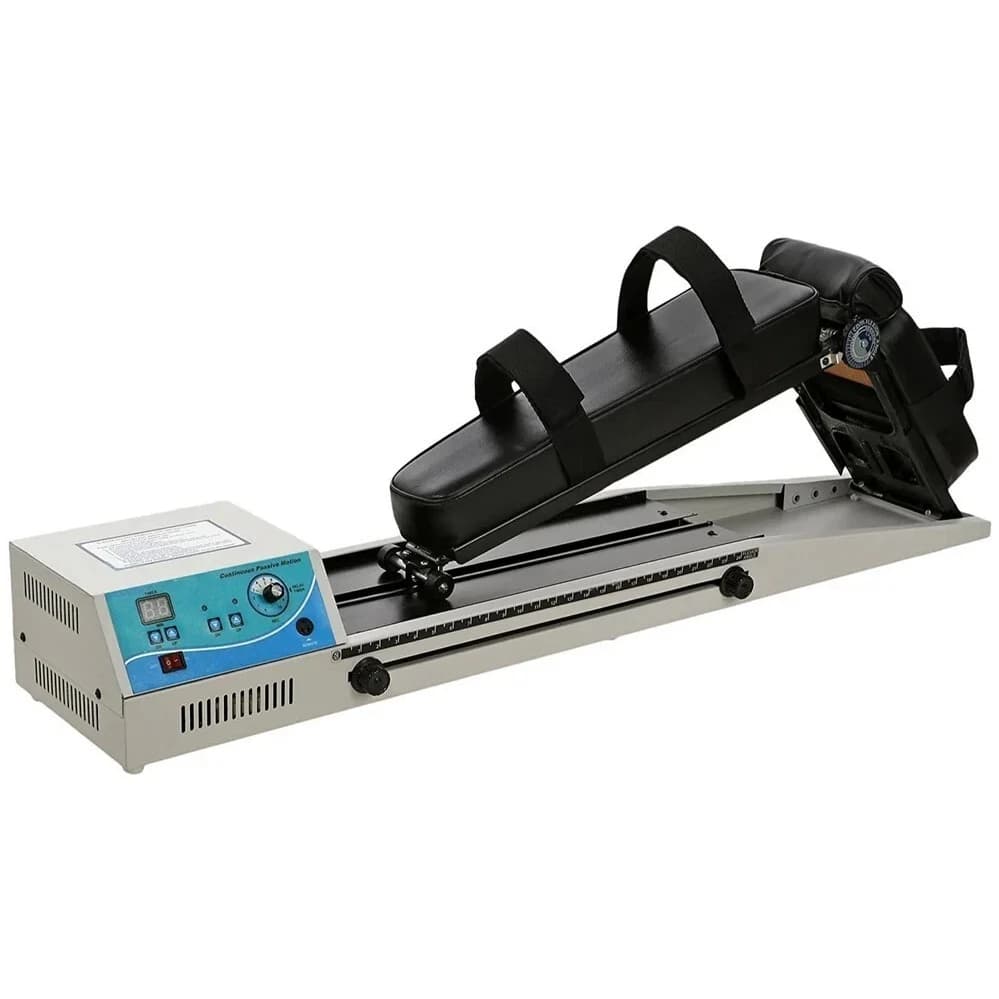
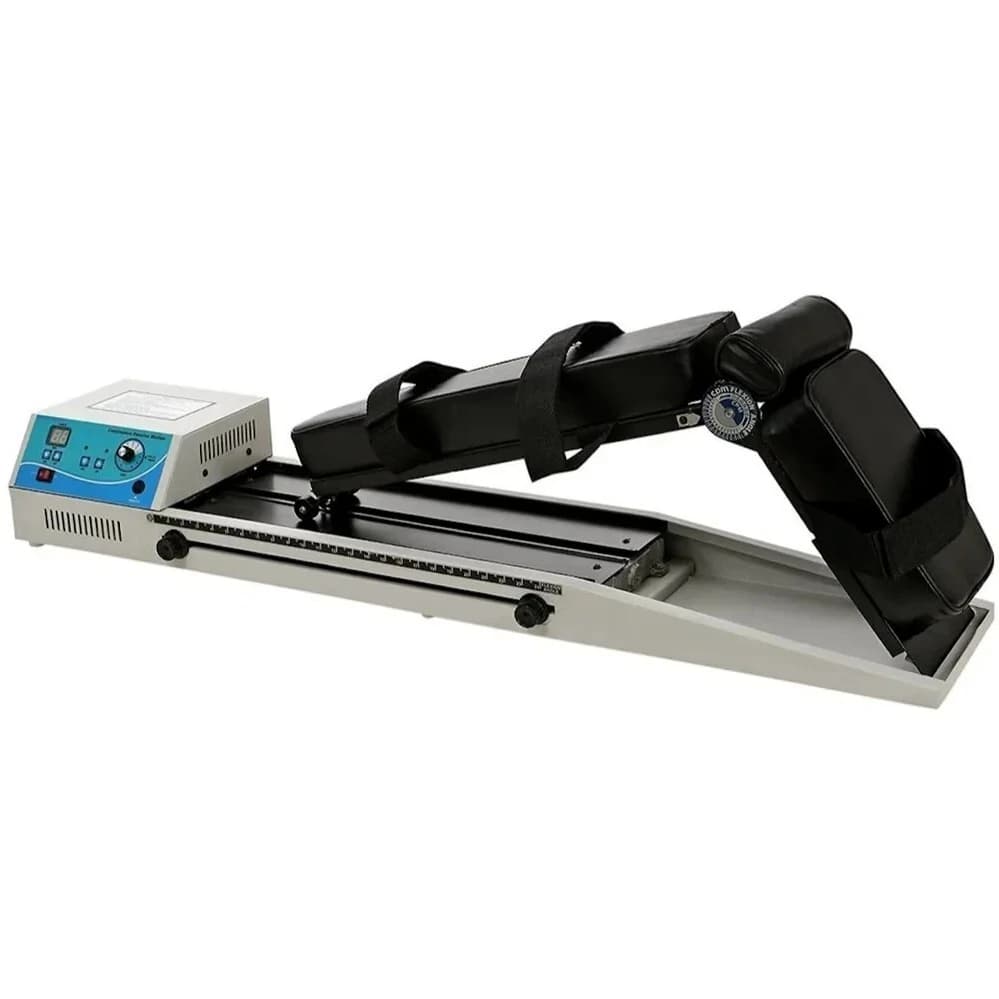
A continuous passive motion (CPM) knee rehabilitation device that moves the knee through a controlled range of flexion and extension without active muscle effort from the patient. A CPM for knee replacement and other knee procedures, it fits continuous passive motion knee replacement rehabilitation protocols and supports prescribed range-of-motion exercises to maintain joint mobility and reduce post-operative stiffness. Microprocessor-controlled with adjustable settings and an automatic safety reversal, it suits hospitals, rehabilitation centers, physiotherapy clinics, and home use under professional guidance.
At a Glance
| Product Type | Continuous passive motion (CPM) knee device |
| Therapy Type | Continuous passive motion |
| Joint Target | Knee (tibiofemoral joint) |
| Range of Motion - flexion | Up to 120° |
| Range of Motion - extension | -5° to 0° |
| Limb Compatibility | Left or Right Leg |
| Operation Mode | Motorized continuous passive motion |
| Control Interface | Wired digital hand controller |
| Safety Feature | Automatic load reversal |
| Material | Mild-steel frame with ABS enclosures |
| Input Voltage | 110–220V AC, 50 Hz |
| Power Consumption | 35 W max |
| Net Weight | 10 kg |
Certifications
Supported by CE certification and an ISO 13485-certified quality management system for medical devices.
Key Features
Key features of this CPM for knee replacement device:
- Adjustable range of motion: Flexion up to 120° and extension from -5° to 0°, set to the prescribed protocol.
- Programmable passive movement: Continuous flexion and extension through the session, with no muscle effort needed.
- Microprocessor control: Digital settings for consistent, repeatable rehabilitation sessions.
- Automatic safety reversal: Reverses movement if it detects excessive resistance.
- Digital hand controller: Wired controller with an emergency stop function.
- Bilateral compatibility: Switches between left and right leg with no extra hardware.
- Durable build: this CPM orthopedic machine has a mild-steel frame with ABS components for routine clinical and home use.
- Smooth, quiet operation: Low-vibration movement for patient comfort.
CPM Machine vs Manual Range-of-Motion Exercises
Why a CPM machine is often chosen for early post-operative recovery:
| CPM Knee Machine | Manual ROM Exercises |
| Movement | Continuous passive motion | Manual-assisted |
| Patient Effort | None required | Active participation needed |
| Range of Motion | Adjustable to the prescribed program | Depends on therapist/patient |
| Consistency | Controlled and repeatable | May vary between sessions |
| Typical Use | Early post-operative knee rehab | General mobility exercises |
Pricing: the CPM machine price varies by model, included accessories, specifications, and regional supply — contact us for current pricing and availability.
Usage: Both are used under professional guidance; the right choice depends on the recovery stage and the prescribed plan.
How to Use
- Position — place the machine on a stable, flat surface such as a hospital bed or treatment couch.
- Adjust supports — set the thigh and calf supports to the patient's leg length, aligning the knee with the machine's pivot point.
- Secure the leg — rest the leg on the supports and fasten the straps so the limb is stable without restricting circulation.
- Set parameters — switch on and use the hand controller to set the prescribed flexion, extension, speed, and duration.
- Start — begin the passive cycle and watch the first movements to confirm alignment and comfort.
- Monitor — observe the patient throughout; stop immediately for discomfort, unusual resistance, or any problem.
- Finish — at session end, stop the machine, release the straps, and carefully remove the leg.
Where It's Used
A CPM for knee replacement and post-surgical knee rehabilitation tool, it manages post-operative stiffness after total or partial knee replacement, ACL and PCL reconstruction, meniscus repair, and post-traumatic stiffness. Used in hospitals, rehabilitation centers, and physiotherapy clinics, and at home when prescribed by a qualified healthcare professional.
Handling & Safety
- Professional guidance — operate this CPM orthopedic machine per the prescribed rehabilitation protocol and the healthcare professional's instructions.
- Inspect before use — check the frame, leg supports, straps, power cord, and hand controller; don't use if anything is damaged or loose.
- Keep it clean — wipe with a soft cloth and hospital-approved disinfectant after each use; keep liquids out of the motor housing and controller.
- Lift by the frame — never carry by the leg supports, moving carriage, cables, or controller.
- Store dry — clean, dry place away from moisture, dust, sunlight, and temperature extremes.
- Routine maintenance — periodically check moving parts, adjustment mechanisms, and electrical connections per the manufacturer's guidance.
- Intended use only — for passive knee rehabilitation; do not modify or repurpose the device.
| Medical Disclaimer: Use only under the guidance of a qualified healthcare professional. Therapy duration, range of motion, and rehabilitation protocol should follow the treating physician's or physiotherapist's recommendations. |
What's in the Box
- 1 × CPM knee rehabilitation machine with integrated leg supports
- 1 × wired digital hand controller
- 1 × power adapter / power cord (country-specific plug)
- 1 × user manual
FAQ
Can it be used at home?
Yes, when recommended by a qualified professional — follow the prescribed therapy settings and schedule.
How soon after surgery can CPM therapy begin?
It varies by procedure and recovery plan; start only when the treating surgeon or physiotherapist recommends.
What range of motion does it support?
Flexion up to 120° and extension from -5° to 0°, with exact settings set by the healthcare professional.
What affects the price?
The CPM machine price depends on the model, included accessories, specifications, and regional supply — contact us for current pricing.
Can facilities buy in bulk?
Yes — hospitals, clinics, and rehab centers looking to buy CPM machine units in bulk can contact our team about this CPM for knee replacement device's availability.
Is this CPM machine suitable for ACL or ligament reconstruction recovery?
Yes. Continuous passive motion therapy may be included in rehabilitation programs following ACL, PCL, and other ligament reconstruction procedures, depending on the surgeon's recommendations.
Does the machine move the knee automatically?
Yes. The CPM machine provides continuous passive movement of the knee joint through a controlled range of motion without requiring the patient to actively move the leg.
-2026-04-16.webp&w=3840&q=75 "CPM Knee Machine Continuous Passive Motion Physical Therapy Rehab - View 3")