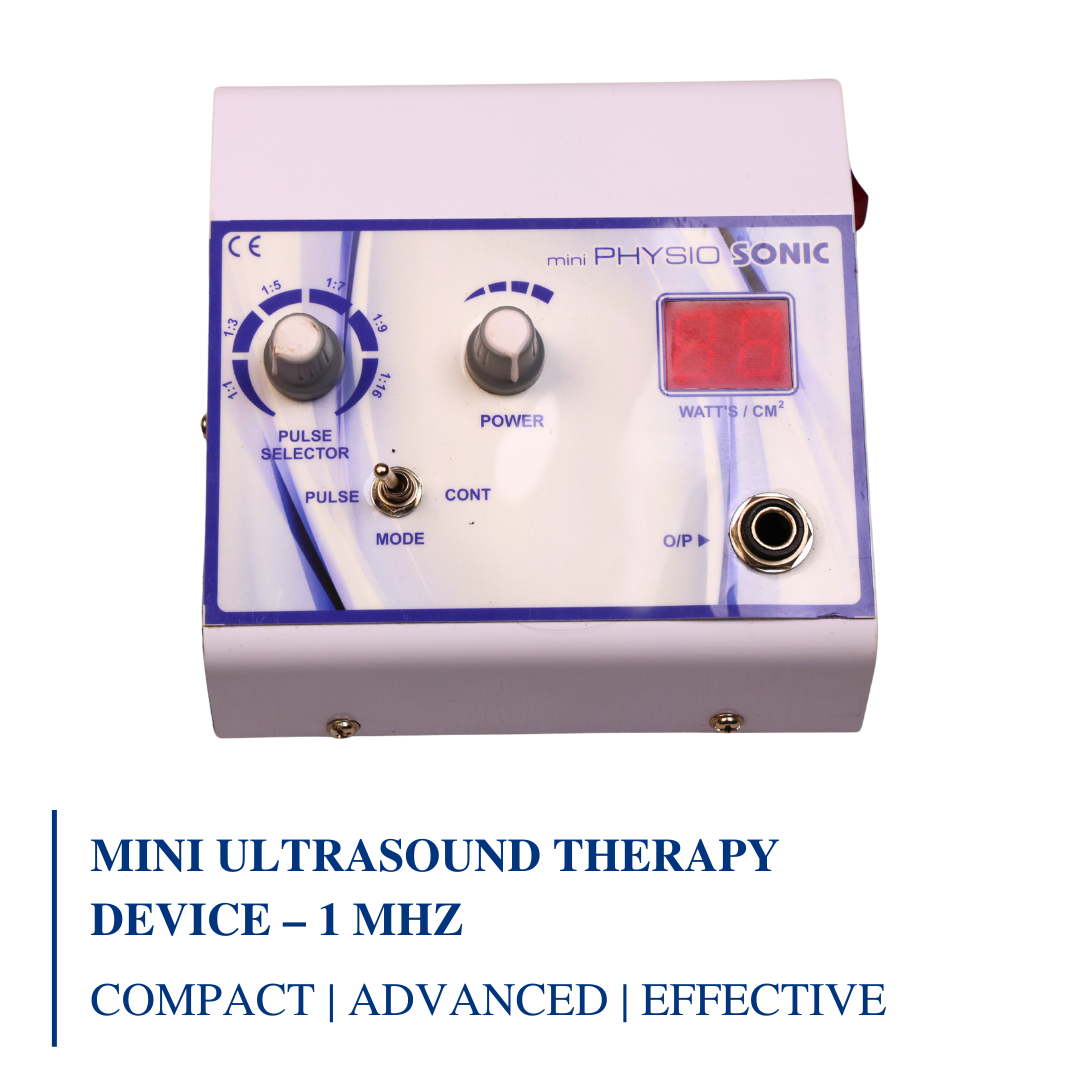
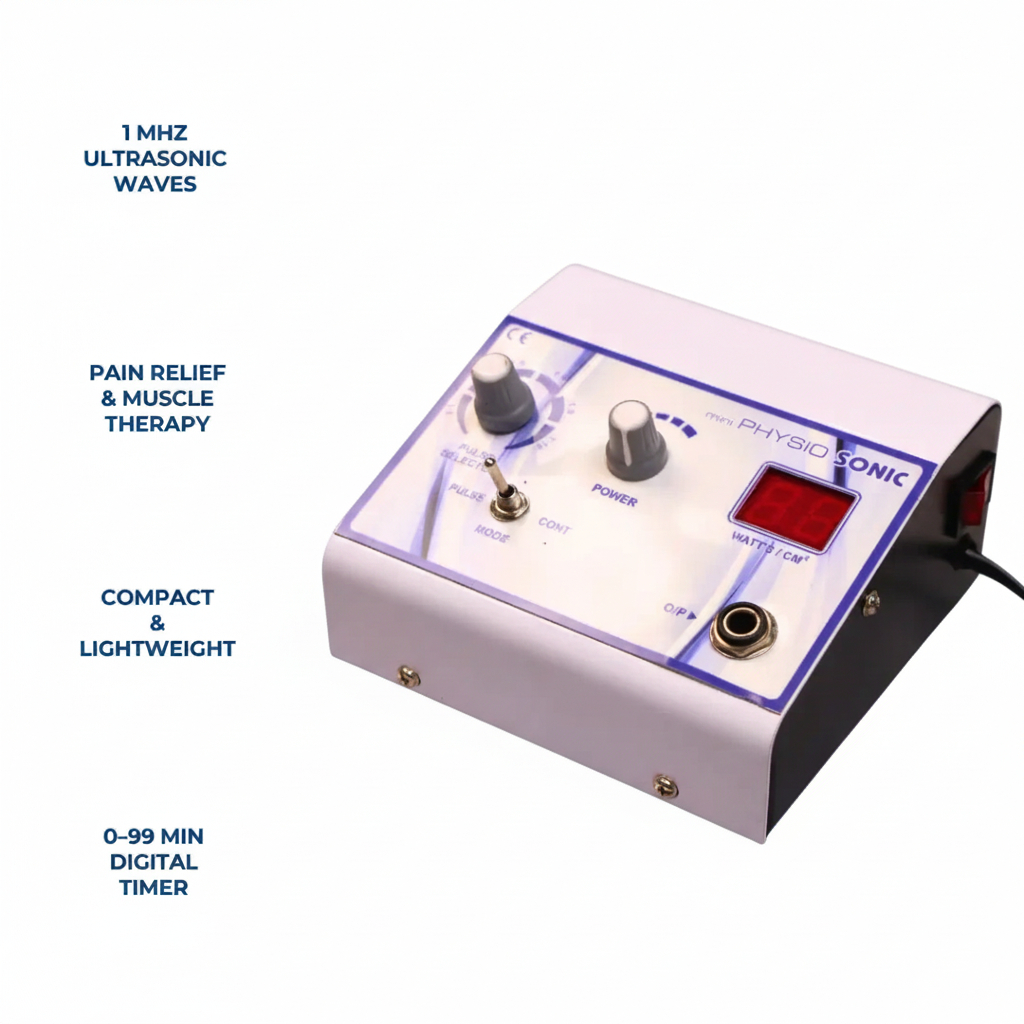
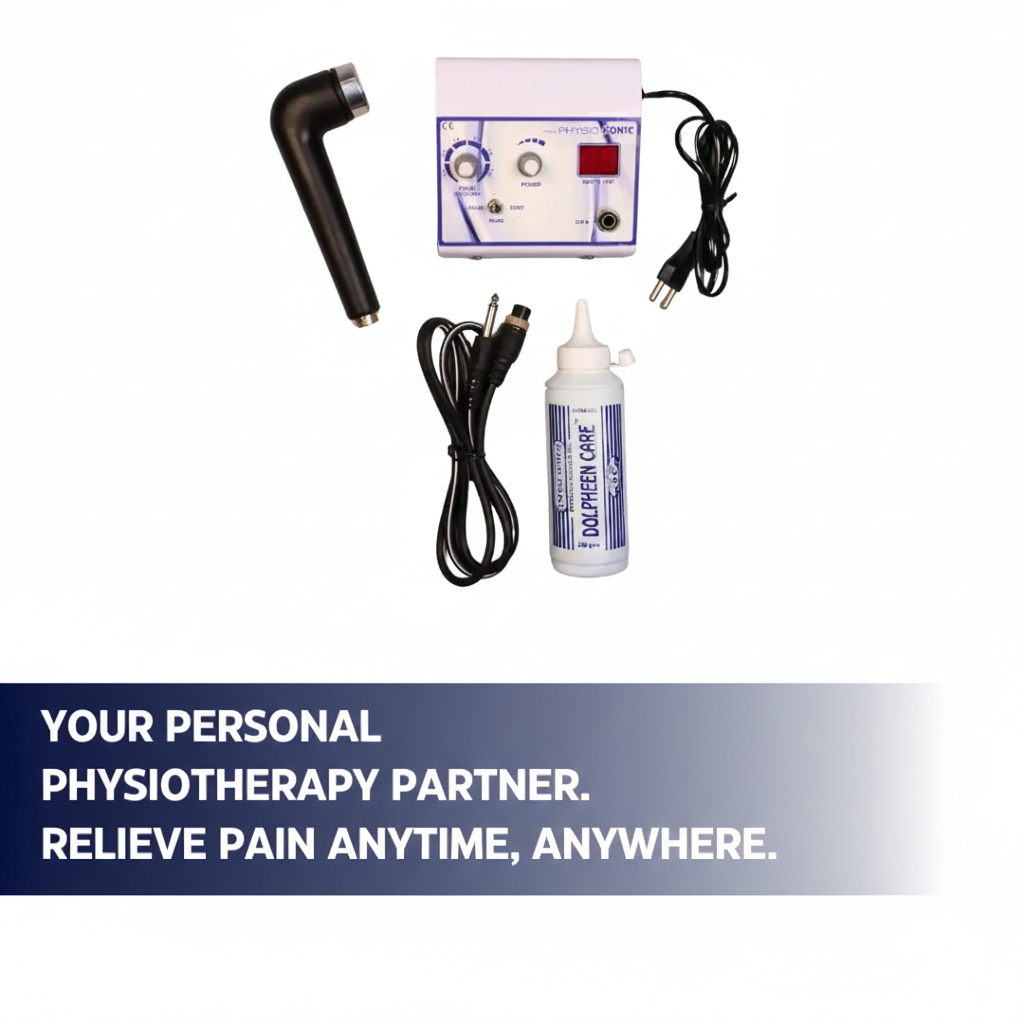
Experience professional-grade physiotherapy at your convenience with the Mini Ultrasound Therapy Device – 1 MHz. Designed for deep tissue healing and advanced pain management, this compact yet powerful therapy unit delivers therapeutic ultrasonic waves that stimulate circulation, reduce inflammation, and accelerate tissue repair.
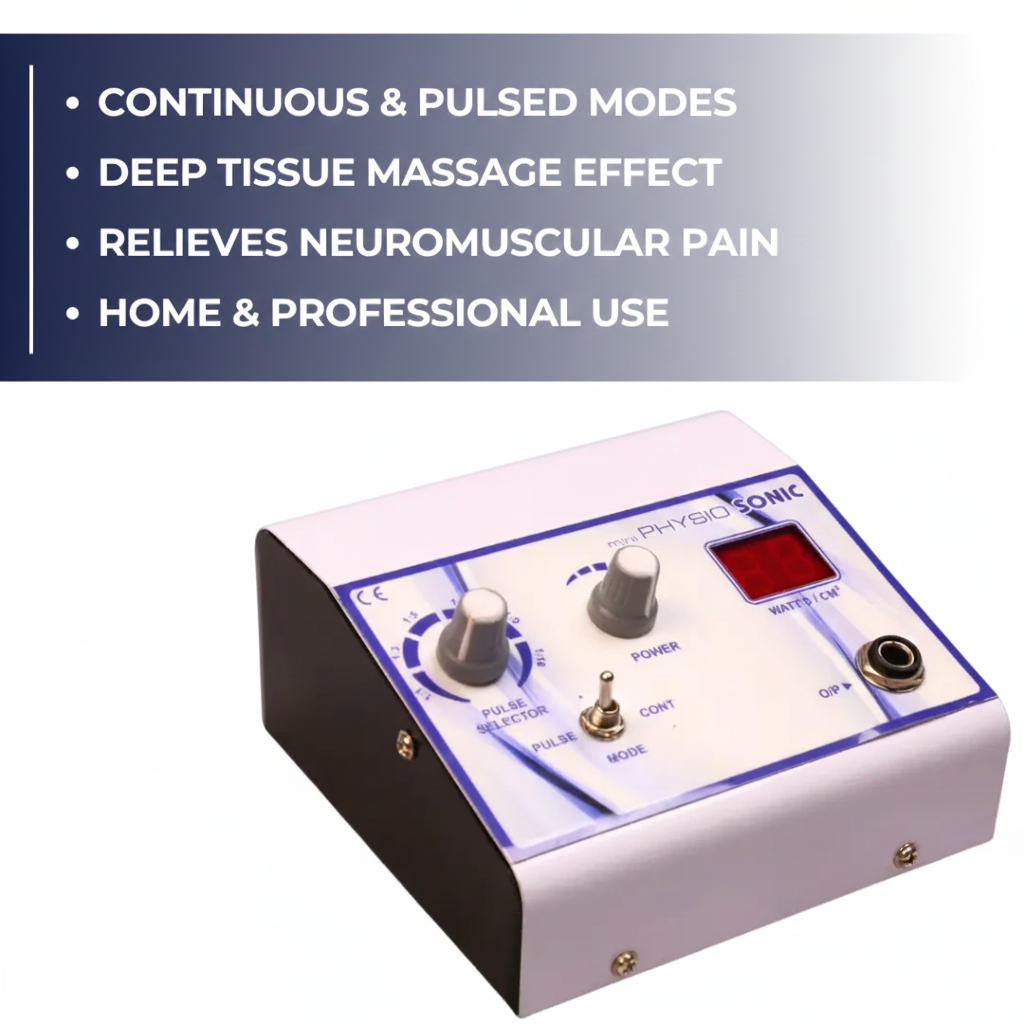
Engineered for clinics, physiotherapists, and home users, the device offers precision control, pulse and continuous modes, and consistent energy delivery for safe, effective, and targeted treatment.
Its sleek compact design, digital output display, and intuitive controls make it an ideal solution for modern rehabilitation and pain relief therapy.
Key Features
- CE certified — meets European safety and performance standards for medical devices
- Single-frequency 1 MHz operation — optimised for deep tissue penetration up to 5 cm
- Six selectable pulse duty cycles: 1:1, 1:3, 1:5, 1:7, 1:9, 1:16 for precise thermal management
- Dual output modes: Continuous for chronic/deep thermal therapy; Pulsed for acute and sub-acute conditions
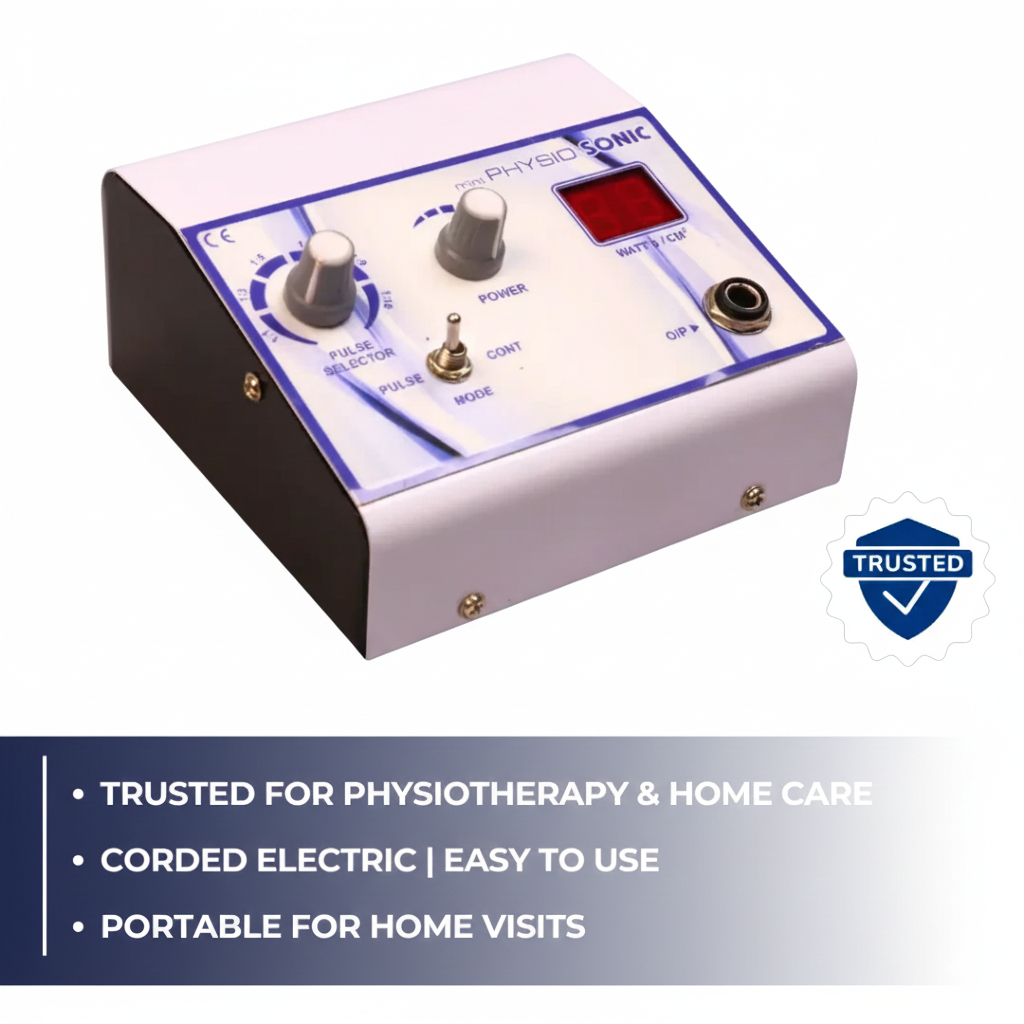
- Bright red LED digital display for real-time intensity monitoring in W/cm²
- Compact desktop enclosure — lightweight and portable for clinic or home-visit use
- Simple 3-control interface: Pulse Selector knob, Power knob, Mode toggle — minimal learning curve
- Single front-panel O/P probe output jack for quick, secure probe connection
Technical Specifications
| Parameter | Specification |
| Product Name | Mini PhysioSonic — Ultrasound Therapy Device |
| Operating Frequency | 1 MHz (single frequency — deep tissue) |
| Output Modes | Continuous (CONT) and Pulsed (PULSE) — toggle switch |
| Pulse Ratios | 1:1 / 1:3 / 1:5 / 1:7 / 1:9 / 1:16 (rotary selector knob) |
| Intensity Range | 0.1 – 3.5 W/cm² (adjustable via POWER rotary knob) |
| Intensity Display | Red LED digital display — reads in W/cm² |
| Mode Selector | Toggle switch: PULSE ◄► CONT |
| Pulse Selector | Rotary knob with 6 duty-cycle positions (1:1 to 1:16) |
| Power Control | Rotary POWER knob — continuous adjustment |
| Output Port | Front-panel O/P ► jack connector (single probe) |
| Certifications | CE marked |
| Power Supply | AC Mains 110V/ 220V (50Hz/ 60Hz) |
Control Panel Layout & Functions
| Control / Component | Function & Description |
| PULSE SELECTOR (Rotary Knob) | Selects the pulse duty cycle ratio for pulsed-mode treatments. Positions: 1:1, 1:3, 1:5, 1:7, 1:9, 1:16. Higher ratio = longer off-time = less heat generation. |
| POWER (Rotary Knob) | Adjusts the ultrasound output intensity from minimum to maximum (0.1 – 3.0 W/cm²). Turn clockwise to increase. |
| MODE Toggle Switch | Two-position toggle: PULSE (left) activates pulsed output using the selected duty cycle; CONT (right) activates continuous output for maximum thermal effect. |
| WATT'S / CM² Display | Red LED digital readout showing the live intensity value. Allows precise output monitoring throughout treatment. |
| O/P ► Jack (Output Port) | Front-panel probe connection port. Connect the transducer probe cable here before powering on. |
| Power Inlet (Rear/Side) | AC mains power input. The red indicator on the side illuminates when the unit is connected and powered. |
Pulse Ratio Guide
| Ratio | On-Time | Off-Time | Best Application |
| 1:1 | 50% | 50% | Moderate thermal — sub-acute conditions |
| 1:3 | 25% | 75% | Low thermal — acute injuries, sensitive areas |
| 1:5 | 17% | 83% | Very low thermal — acute / oedema |
| 1:7 | 12.50% | 87.50% | Minimal thermal — highly acute conditions |
| 1:9 | 10% | 90% | Near athermal — non-thermal mechanical effects |
| 1:16 | 6% | 94% | Athermal — pure mechanical / cavitation effects |
Uses & Therapeutic Indications
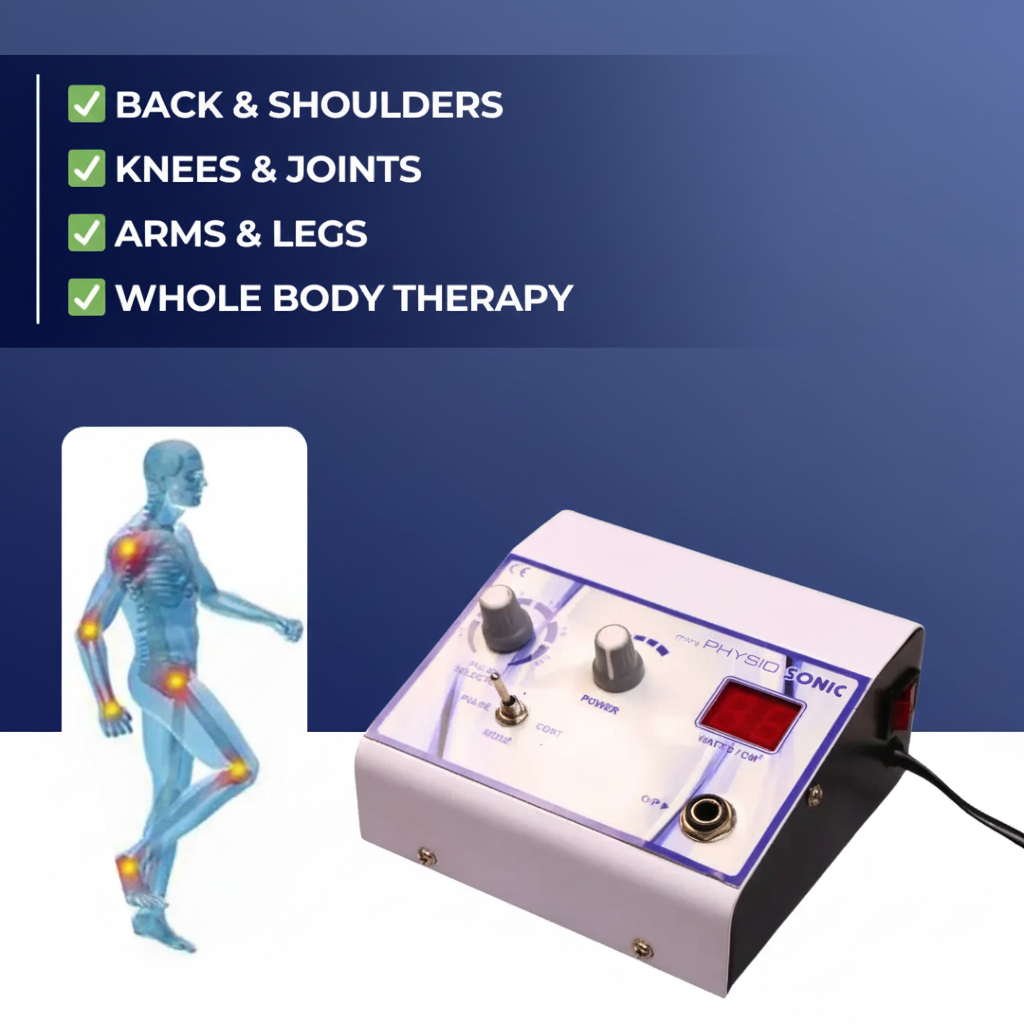
Operating at 1 MHz, the mini PhysioSonic delivers ultrasound energy capable of penetrating to depths of approximately 3–5 cm, making it effective for treating deep muscle and periarticular structures. Its thermal and non-thermal (acoustic streaming, cavitation) mechanisms produce the following therapeutic effects:
Musculoskeletal Conditions
- Muscle spasm, chronic tension, and myofascial tightness
- Soft tissue injuries: sprains, strains, ligament tears, and muscle contusions
- Tendinopathy and tendinitis (rotator cuff, Achilles, quadriceps, common extensor origin)
- Bursitis, periarthritis, and synovitis
- Osteoarthritis — shoulder, knee, hip, and lumbar facet joints
- Frozen shoulder (adhesive capsulitis) — capsule stretching and pain relief
Chronic Pain
- Chronic low back pain and lumbar disc syndrome
- Cervical spondylosis and chronic neck pain
- Myofascial pain and trigger point desensitisation
- Fibromyalgia — localised pain-relief sessions
- Post-fracture periosteal pain (once healed)
Post-Surgical & Rehabilitation
- Promotion of soft tissue healing after orthopaedic procedures
- Scar tissue softening, adhesion breakdown, and remodelling
- Post-operative oedema and swelling reduction
- Restoration of joint range of motion and tissue extensibility
Neurological & Peripheral Conditions
- Carpal tunnel syndrome (median nerve entrapment)
- Plantar fasciitis and heel spur syndrome
- Lateral epicondylitis (tennis elbow)
- De Quervain's tenosynovitis
Phonophoresis
- Transdermal delivery of topical anti-inflammatory agents (e.g., diclofenac, ibuprofen gel, hydrocortisone) using ultrasound as the delivery vehicle. Always consult prescribing guidelines before performing phonophoresis. Use appropriate coupling medium rated for this application.
Package Contents
- 1 × mini PhysioSonic Ultrasound Therapy Main Unit
- 1 × 1 MHz Transducer Probe with connecting cable
- 1 × AC Mains Power Cable
- 1 × Ultrasound Coupling Gel (or gel sachet)
- 1 × User / Operating Manual
- 1 x Power Adaptor (Universal)
How to USE
Pre-Treatment Setup
- Place the unit on a stable, flat surface within easy reach of the treatment area.
- Connect the transducer probe to the O/P ► jack on the front panel — ensure fully seated.
- Plug the AC power cable into a grounded mains outlet. The side indicator will illuminate.
- Confirm the POWER knob is at minimum (fully anti-clockwise) before switching on.
Patient Assessment & Preparation
- Confirm treatment indication and screen for all contraindications before proceeding.
- Position the patient comfortably with the target area exposed and accessible.
- Check skin integrity — do not treat over broken or infected skin.
- Apply a generous layer of ultrasound coupling gel to the treatment area or the transducer face.
Select Output Mode
- Toggle the MODE switch to the desired output:
- CONT (right position) — Continuous mode: maximum sustained thermal output. Use for chronic conditions and deep heating.
- PULSE (left position) — Pulsed mode: intermittent output reduces thermal accumulation. Use for acute injuries, sensitive patients, or non-thermal effects.
Select Pulse Ratio (Pulsed Mode Only)
- Turn the PULSE SELECTOR rotary knob to the desired duty cycle.
- For acute injuries: use 1:7, 1:9, or 1:16 for minimal thermal effect.
- For sub-acute / chronic: use 1:1 or 1:3 for moderate thermal build-up.
- (This control has no effect in CONT mode.)
Set Intensity
- Slowly turn the POWER rotary knob clockwise from zero.
- Watch the WATT'S/CM² LED display — increase to the clinically appropriate level.
- Recommended starting intensity: 0.5 W/cm². Typical therapeutic range: 0.5 – 2.0 W/cm².
- Acute conditions: 0.1 – 0.8 W/cm² (pulsed). Chronic conditions: 1.0 – 2.5 W/cm² (continuous or pulsed).
- Do not exceed 3.0 W/cm².
Administer Treatment
- Apply the probe flatly against the skin with firm, consistent pressure.
- Move the probe continuously in slow overlapping circular or longitudinal strokes — NEVER hold it stationary on energised output.
- Typical treatment duration: 5–10 minutes per area. Do not exceed 10 minutes on one site per session.
- Monitor the patient throughout. Ask about heat, tingling, or discomfort — reduce intensity immediately if reported.
End of Treatment
- Slowly turn the POWER knob anti-clockwise back to zero before disconnecting or moving the probe.
- Unplug from mains or switch off at the socket.
- Remove coupling gel from the patient's skin with a clean cloth.
- Clean the transducer face with a soft damp cloth or approved disinfectant wipe.
- Document treatment parameters (mode, pulse ratio, intensity, duration) in the patient record.
Safety Instructions
- For use by qualified physiotherapists and trained healthcare professionals only.
- Inspect the device, probe, cable, and output jack before every session. Do not use damaged equipment.
- Always apply ultrasound coupling gel before activating output. Operating without gel will damage the transducer crystal and may cause skin burns.
- Never hold the energised probe stationary — continuous movement is mandatory to prevent periosteal burns and localised overheating.
- Do not operate the probe in air (no patient contact) at therapeutic power levels.
- Never leave the patient unattended during treatment.
- Reduce intensity or stop immediately if the patient reports pain, burning, or unusual discomfort.
- Keep the device away from liquids, moisture, and flammable materials.
- Do not open, modify, or attempt self-repair of the device. Contact an authorised service technician.
Ultrasound treatment must NOT be applied in the following situations:
- Over or adjacent to malignant tumours or known cancer sites
- Over the pregnant uterus or lower abdomen at any stage of pregnancy
- Near implanted cardiac pacemakers or any implanted electronic device
- Over areas of active deep vein thrombosis (DVT) or thrombophlebitis
- Over epiphyseal growth plates in children and adolescents
- Over the eyes, testes/ovaries, or the spinal cord
- Over acutely infected, septic, or inflamed tissue
- Over open wounds, broken skin, or active skin disease in the treatment area.
Precautions
- Always check skin sensation before treatment in the target area.
- Use pulsed mode with low duty cycle (1:7 or higher) for all acute injuries to minimise thermal effects.
- Reduce intensity near bony prominences and areas with thin soft tissue coverage.
- Elderly patients and those with vascular compromise are more thermally sensitive — start low and increase gradually.
- Do not use general cosmetic gels as coupling medium — use only approved ultrasound therapy coupling gel.
- Disinfect the probe face between patients. Avoid alcohol-based wipes that degrade the probe seal over time.
FAQs
1. What is this device?
Answer: A mini 1MHz ultrasound wellness device for personal home wellness routines.
2. Is this a medical device?
Answer: No. This is a personal wellness product, not a medical device.
3. Who can use this?
Answer: Adults 18 years and older for personal home wellness use.
4. Do I need gel?
Answer: Yes, always use appropriate ultrasound coupling gel.
5. How long can I use it?
Answer: Follow user manual guidelines. Avoid prolonged continuous use.
6. Can pregnant women use this?
Answer: No. Do not use during pregnancy.
7. Can I use with a pacemaker?
Answer: No. Do not use if you have any implanted electronic devices.
8. Is this portable?
Answer: Yes, the mini compact design makes it portable for home use.
9. How do I clean it?
Answer: Wipe with soft, damp cloth after each use. Do not immerse in water.
10. What if I feel discomfort?
Answer: Stop use immediately and consult a healthcare professional if needed.
Disclaimer:
This product is intended for personal wellness use only. Not intended to diagnose, treat, cure, or prevent any disease. Consult your healthcare provider before use and for medical advice. Not a substitute for professional medical treatment.