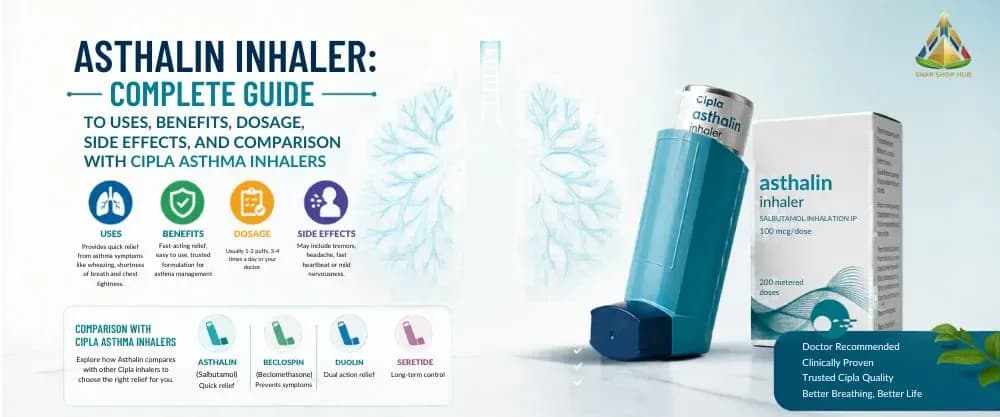
Introduction
Asthma is a long-term respiratory condition that affects millions of people worldwide. It causes narrowing of the airways, leading to symptoms such as wheezing, chest tightness, shortness of breath, and persistent coughing. These symptoms can appear suddenly and often require immediate treatment.
One of the most commonly prescribed quick relief inhalers (rescue inhalers) is a salbutamol-based medication widely used in respiratory care. This inhalation therapy helps relax airway muscles and improves airflow within minutes, making it essential for emergency asthma management.
The asthalin inhaler for asthma is widely recognized as a fast-acting bronchodilator used in both home and clinical settings. It plays a crucial role in controlling sudden breathing difficulties and preventing asthma-related emergencies.
In this guide, we will explore how this rescue medication works, its benefits, correct usage, safety guidelines, and how it compares with Cipla inhaler for asthma options, including branded salbutamol inhalers.
What is Asthalin Inhaler?
The Asthalin inhaler is a short-acting beta-agonist (SABA) medication used for quick relief from bronchospasm. It is commonly prescribed for patients suffering from asthma and other obstructive airway diseases. Mainly It is a rescue inhalation device containing salbutamol, designed to quickly open narrowed airways and restore normal breathing.
Active Ingredient
- Salbutamol (also known as Albuterol)
Key Functions:
- Relaxes airway muscles
- Improves airflow in lungs
- Provides fast relief from breathing difficulty
- Acts as a bronchodilator
How It Works in the Body
When inhaled, the medication directly reaches the lungs and acts on airway receptors.
Mechanism:
- Inhaled medicine reaches bronchial tubes
- Activates beta-2 receptors
- Smooth muscles in airways relax
- Airways widen (bronchodilation)
- Breathing becomes easier within minutes
This is why it is considered a fast-acting rescue inhaler used during asthma attacks.
Onset and Duration
| Parameter | Effect |
| Onset | 2–5 minutes |
| Peak effect | 30–60 minutes |
| Duration | 3–6 hours |
Uses of Asthalin Inhaler
This salbutamol inhaler for asthma relief is used in multiple respiratory conditions where quick airway opening is required.
1. Asthma Attack Relief
It is commonly used during sudden asthma flare-ups, including:
- Wheezing
- Breathlessness
- Chest tightness
- Coughing episodes
2. COPD Management
In chronic obstructive pulmonary disease, it helps:
- Improve airflow
- Reduce breathing difficulty
- Manage sudden exacerbations
3. Exercise-Induced Bronchospasm
Used before physical activity to prevent:
- Shortness of breath
- Exercise-related airway narrowing
4. Allergy-Triggered Breathing Issues
Provides temporary relief during allergic airway reactions.
Benefits of This Quick Relief Inhaler
The main advantage of this bronchodilator therapy is its speed and reliability.
Key Benefits:
- Works within minutes
- Direct delivery to lungs
- Portable and easy to use
- Effective during emergency asthma symptoms
- Reduces risk of hospitalization
- Widely available and affordable
This makes it a core component of emergency asthma treatment plans.
Dosage Guidelines
⚠️ This is a prescription medicine — dosage should always be guided by a doctor.
Adults:
- 1–2 puffs when symptoms occur
- Can be repeated every 4–6 hours if required
Children:
- Lower dose depending on severity and age
- Must be supervised by a healthcare provider
Frequent need for a rescue inhaler may indicate uncontrolled asthma and requires medical reassessment.
Important Safety Warning
Overuse of bronchodilator inhalers may lead to:
- Reduced effectiveness over time
- Increased heart rate
- Masking worsening asthma condition
- Need for preventive medication adjustment
If a patient relies too often on a quick relief inhaler, doctors may prescribe a preventive inhalation therapy (steroid inhaler) instead.
Side Effects
Like most respiratory medications, this salbutamol-based inhaler may cause mild effects.
Common Side Effects:
- Tremors (hand shaking)
- Mild headache
- Increased heart rate
- Nervousness
- Throat irritation
Rare Side Effects:
- Chest discomfort
- Muscle cramps
- Severe allergic reaction
When to Seek Medical Help
Immediate medical attention is required if:
- Breathing does not improve after use
- Severe chest pain occurs
- Heart rate remains elevated
- Symptoms worsen suddenly
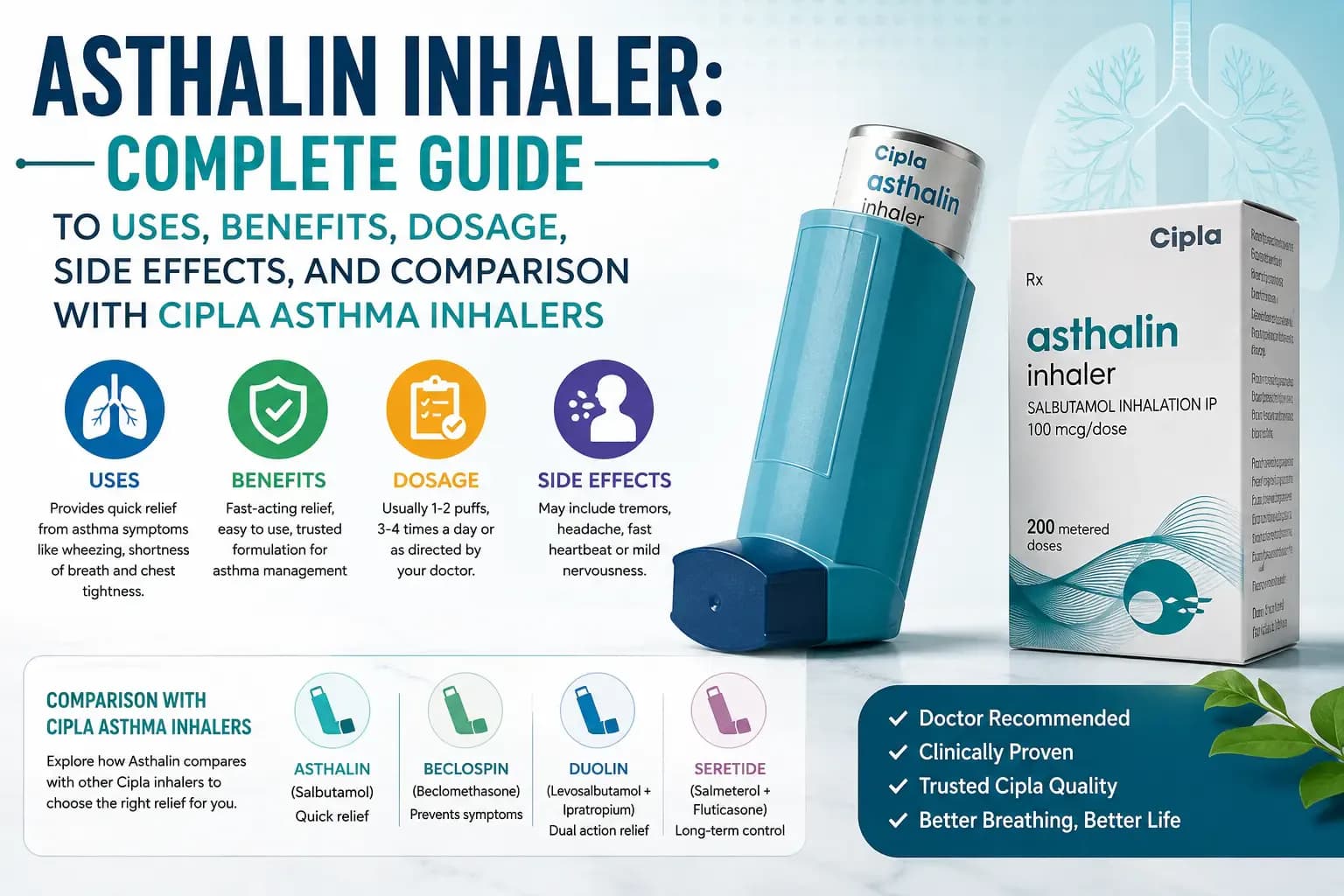
Cipla Inhaler for Asthma
The Cipla inhaler for asthma category includes a wide range of respiratory medications manufactured by Cipla Ltd, one of the leading pharmaceutical companies in India.
These inhalers are designed for:
- Emergency relief
- Long-term asthma control
- Combination therapy for chronic patients
Cipla plays a major role in making respiratory care affordable and widely accessible.
Cipla Asthalin Inhaler
The cipla asthalin inhaler is a branded salbutamol-based inhalation product used for rapid relief of bronchospasm.
Key Features:
- Contains salbutamol (bronchodilator)
- Acts as a rescue inhaler
- Provides quick relief from asthma symptoms
- Trusted pharmaceutical quality
- Widely used in hospitals and clinics
This makes it one of the most commonly prescribed emergency inhalers in respiratory care.
Comparison: Rescue Inhalers in Asthma Care
Understanding different inhaler types helps patients manage asthma better.
Rescue vs Preventive Therapy
| Type | Example | Purpose |
| Rescue inhaler | Salbutamol inhaler | Immediate relief |
| Preventer inhaler | Steroid inhaler | Long-term inflammation control |
| Combination inhaler | Dual therapy | Maintenance treatment |
Rescue inhalers are not meant for daily control but for sudden symptoms.
Generic Salbutamol Inhaler vs Cipla Asthalin Inhaler
Although many patients consider them different, both belong to the same therapeutic category when they contain salbutamol.
| Feature | Generic Salbutamol Inhaler | Cipla Version |
| Active ingredient | Salbutamol | Salbutamol |
| Purpose | Rescue relief | Rescue relief |
| Action time | 2–5 minutes | 2–5 minutes |
| Usage | Emergency use | Emergency use |
Both are effective when used correctly under medical supervision.
Asthma Management Role
A salbutamol-based inhaler is essential in asthma care because it:
- Provides immediate airway opening
- Prevents emergency escalation
- Helps manage sudden attacks at home
- Supports emergency treatment protocols
However, it does not treat underlying inflammation — only symptoms.
Proper Usage Technique
Correct inhalation technique ensures maximum drug delivery.
Steps:
- Shake inhaler well
- Exhale fully
- Place mouthpiece in mouth
- Press while inhaling deeply
- Hold breath for 10 seconds
- Exhale slowly
Using a spacer device improves effectiveness significantly.
Looking for practical guidance on inhaler timing, proper usage, and mistakes to avoid? Read our complete guide on Asthalin spray use for asthma symptom relief.
Storage Instructions
- Store below 30°C
- Avoid direct sunlight
- Do not freeze
- Keep cap tightly closed
Safety and Medical Guidance
To ensure safe respiratory care:
- Use only under medical prescription
- Do not self-adjust dosage
- Monitor frequency of use
- Combine with preventive therapy if needed
- Consult doctor if symptoms increase
Reliable asthma management requires both rescue and preventive treatments.
Frequently Asked Questions (FAQs)
1. What is Asthalin inhaler used for?
It is used for quick relief from asthma symptoms like wheezing, chest tightness, and breathing difficulty.
2. How fast does it work?
It starts working within 2–5 minutes after inhalation to quickly open the airways.
3. Is Cipla inhaler for asthma different?
It refers to Cipla’s range of asthma inhalers, including both rescue and preventive inhalers.
4. Can it cure asthma?
No, it only provides temporary relief and does not cure asthma.
5. What is Cipla Asthalin inhaler?
It is a salbutamol-based rescue inhaler manufactured by Cipla for fast asthma relief.
6. Can it be used daily?
It should only be used daily if prescribed by a doctor, as frequent use may indicate uncontrolled asthma.
7. What type of medicine is Asthalin inhaler?
It is a bronchodilator (salbutamol) that relaxes airway muscles to improve breathing quickly.
8. Who can use Asthalin inhaler?
It is used by patients with asthma or COPD as prescribed by a doctor for relief from breathing difficulty.
9. What are the side effects of Asthalin inhaler?
Common side effects include mild tremors, headache, increased heart rate, and slight nervousness.
10. Do I need a prescription for Cipla Asthalin inhaler?
Yes, it is a prescription medicine and should be used only under medical supervision.
Conclusion
Salbutamol-based inhalation therapy remains one of the most important tools in asthma management. It provides rapid relief during emergencies and helps patients regain normal breathing within minutes.
This rescue inhaler is widely used across the world and remains a cornerstone of asthma treatment protocols.
However, proper asthma management requires a combination of rescue medication and preventive therapy under medical supervision for long-term control and improved quality of life.